









Ozempic Paradox Losing Weight but Moving Less, Doctors Warn
Ozempic Paradox Losing Weight but Moving Less, Doctors Warn
This article is for informational purposes only and does not constitute medical advice. Consult a qualified healthcare professional before making health decisions.
Everyone assumed the same thing .
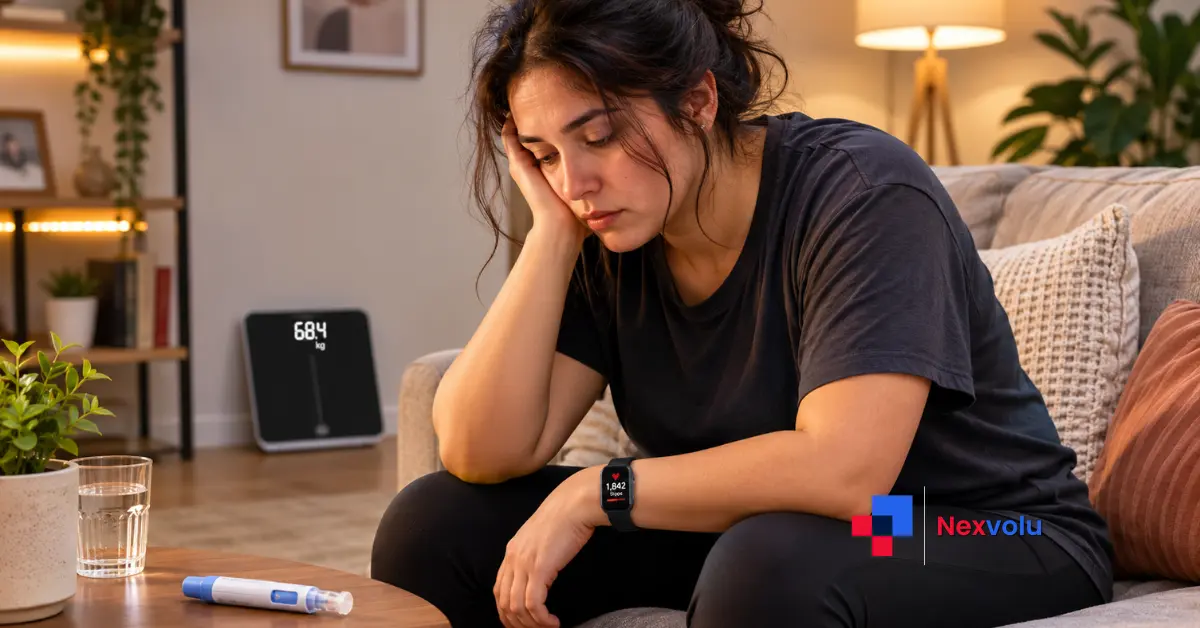
Ozempic Paradox Lose weight on Ozempic, feel lighter, start moving more. It’s completely logical shed the pounds, take the pressure off your joints, and suddenly the idea of a walk or a gym session doesn’t feel impossible. That was the widely held theory. That was what doctors expected to see.
The science just disagreed. Loudly.
A landmark study presented at ENDO 2026, the Endocrine Society’s annual meeting in Chicago, found exactly the opposite: adults who lost weight on GLP-1 medications like Ozempic, Wegovy, Mounjaro, and Zepbound didn’t start moving more. They moved less. Significantly less. And researchers say the implications are a serious health warning for the millions now on these medications worldwide.
Here’s what the data actually showed and what it means for anyone taking these drugs right now.
What Did the 2026 Study Actually Find About GLP-1 Users and Exercise?
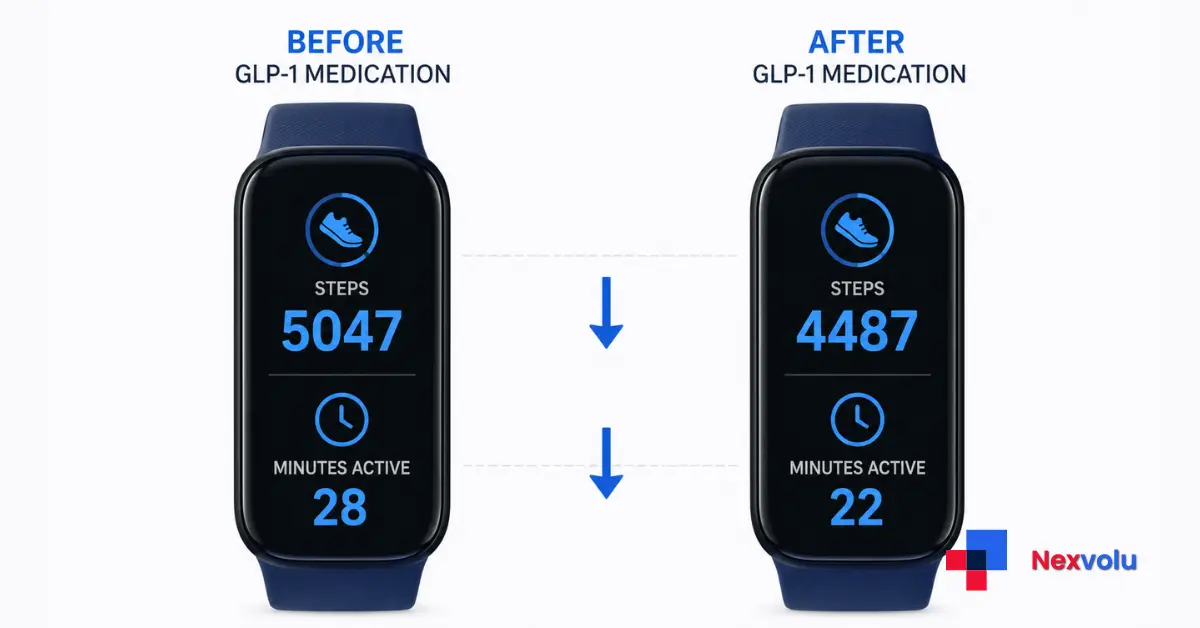
A study of 753 adults with obesity, tracked using Fitbit wearables, found daily step counts fell by 560 steps per day and moderate-to-vigorous activity dropped by nearly 6 minutes daily after starting GLP-1 medications. Researchers found zero evidence that weight loss from these drugs led to more physical movement.
The Finding That Surprised Even the Researchers
The study was led by Dr. Sajana Maharjan, MD, of HSHS St. John’s Hospital in Springfield, Illinois, and it pulled from one of the most credible databases available the NIH’s All of Us Research Program, which links real electronic health records with actual Fitbit activity data.
No surveys. No self-reporting. Real wearable data, measured before and after starting medication.
Out of 1,950 adults with obesity who started a GLP-1 medication, 753 had enough consistent wearable data to analyze. The group skewed female 78.6% with an average age of 52.7 years.
What the researchers actually measured told a clear story:
- Daily steps dropped from an average of 5,047 before medication to 4,487 afterward a loss of 560 steps every single day
- Moderate-to-vigorous physical activity (MVPA) declined from 27.9 minutes to 22.2 minutes per day nearly 6 full minutes of active movement gone daily
Both declines were statistically significant (P < .001). This wasn’t random variation or noise in the data.
The steepest declines appeared in two specific groups: men and people managing musculoskeletal pain, such as joint or muscle aches. Factors like age, prior stroke, or heart failure didn’t change the results meaningfully.
And the finding that matters most? Not one shred of evidence suggested that losing weight on these medications naturally pushed people toward more activity. The assumption everyone started with turned out to be wrong.
According to the Endocrine Society’s official press release, Dr. Maharjan concluded that weight loss alone does not lead to more movement and exercise must be treated as non-negotiable alongside GLP-1 treatment, not optional.
This is also the first large-scale study to analyze data from wearable fitness trackers specifically among adults taking GLP-1 receptor agonists which is part of why it’s drawing serious attention from clinicians.
Why GLP-1 Drugs May Actually Make You Move Less
Here’s where it gets counterintuitive.
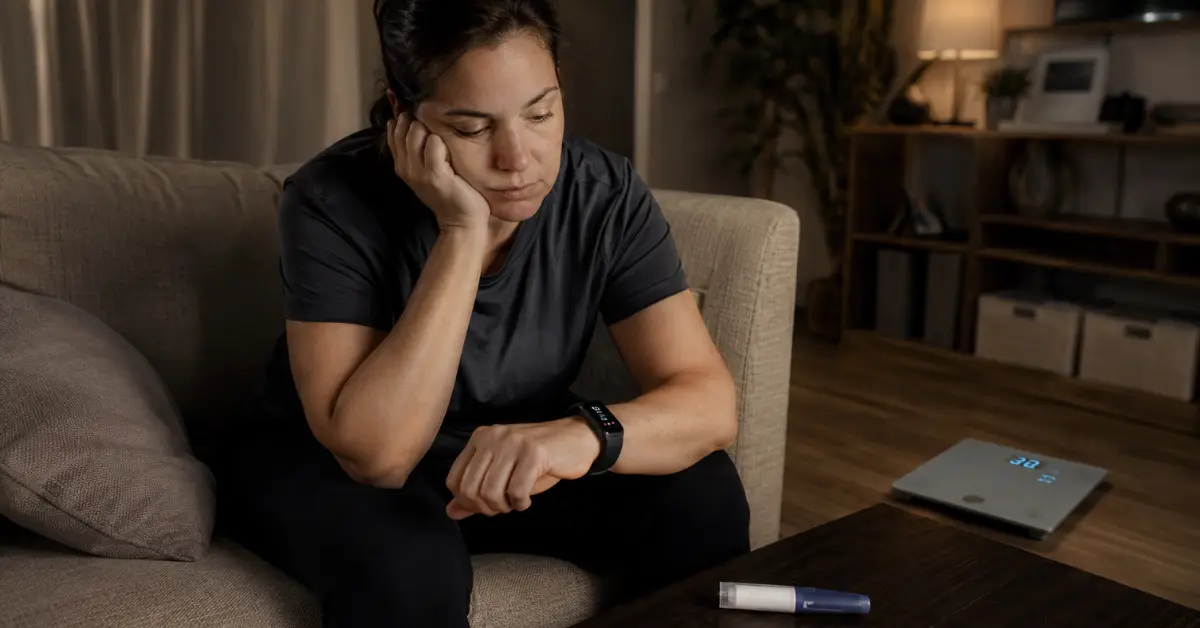
GLP-1 medications suppress appetite dramatically. When you’re eating far less than before, your calorie intake takes a steep drop and so does the fuel your body has for physical activity. Fatigue sets in. Clinicians treating patients on Ozempic and similar drugs hear the same complaint constantly: I feel tired.
Dr. Mir Ali, medical director of MemorialCare Surgical Ozempic Paradox Weight Loss Center in California, noted in comments to Healthline that patients commonly experience fatigue during weight loss on these medications, making the thought of exercise feel more like a burden than a benefit.
Then there’s musculoskeletal pain. People with joint or muscle problems showed the steepest drops in activity levels which makes intuitive sense. If someone is already dealing with physical pain, and the medication isn’t actively encouraging movement, and fatigue is pulling in the other direction, they simply don’t exercise. The weight comes off through appetite suppression, not through movement.
The result: weight loss is not acting as the natural motivator for exercise that everyone assumed it would be. That assumption has driven clinical practice for years. This study challenges it directly.
The Muscle Loss Problem That Makes This Genuinely Dangerous
This is where the warning becomes urgent.
GLP-1 receptor agonists — including semaglutide (the active compound in Ozempic and Wegovy) and tirzepatide (Mounjaro and Zepbound) — don’t burn fat selectively. They also reduce lean muscle mass. Research has estimated that somewhere between 20% and 40% of the total weight lost on these drugs can come directly from lean tissue, not fat.
That’s not a footnote. That’s a serious problem.
Muscle is what drives your metabolism. It protects your joints. It keeps you physically capable as you age. Lose enough lean tissue during rapid weight loss, and you can end up lighter on the scale but weaker, slower, and with a metabolism that’s actually worse than when you started.
Now layer in the ENDO 2026 finding: people on these medications are simultaneously moving less.
Calorie restriction. Reduced physical activity. Lean muscle loss. All three are happening at once for many GLP-1 users — and that combination is precisely what researchers are sounding the alarm about. You can lose weight on these medications without the scale telling you anything is wrong, while quietly losing the muscle that determines your long-term health.
As Dr. Maharjan put it at ENDO 2026: doctors can no longer assume that patients will start becoming active once they lose weight. The data says that’s not happening.
What Doctors Are Now Saying You Must Do
The ENDO 2026 study hasn’t yet been published in a peer-reviewed journal it was a conference presentation. But the data comes from a rigorous, wearable-tracked, real-world cohort, and clinicians across the US report it matches exactly what they see in their own practices.
The clinical guidance taking shape is direct:
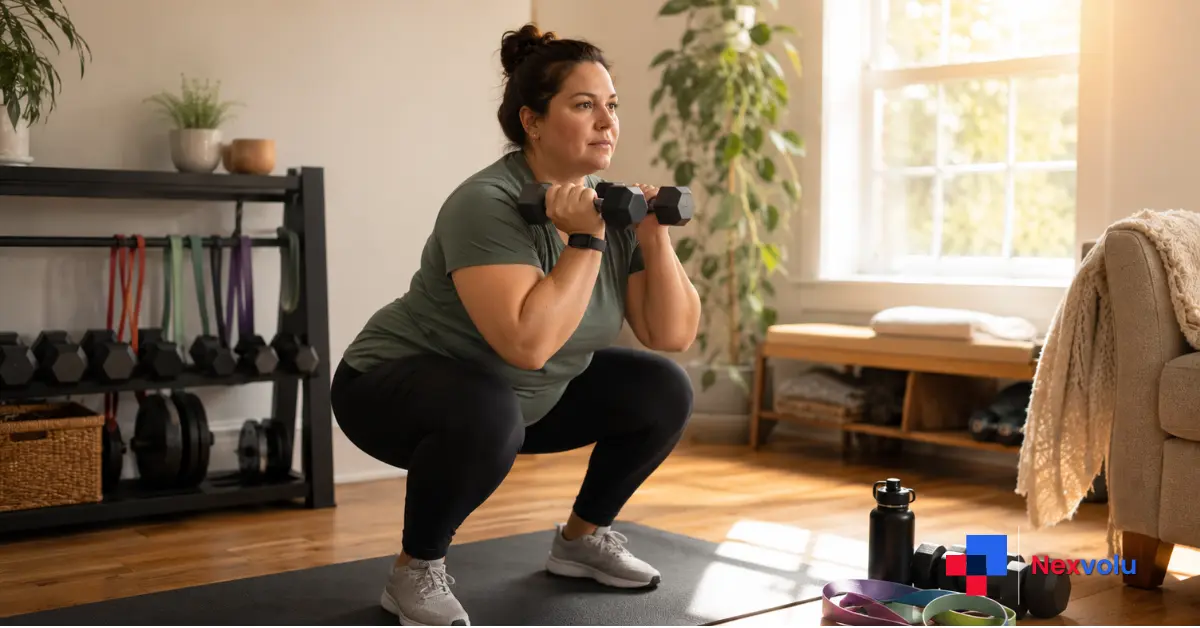
Start resistance training from day one. Not when you feel ready. Not after you’ve lost some weight. From the moment you begin a GLP-1 medication, your body needs the signal that muscle is still required. Lifting weights, using resistance bands, doing bodyweight exercises like squats and push-ups — at least two sessions per week is the minimum threshold most experts recommend.
Combine strength work with cardio. Resistance training protects muscle. Aerobic activity walking, swimming, cycling supports heart health and long-term weight maintenance. Both matter, but strength training is the priority for GLP-1 users specifically.
Aim for 30 minutes of activity, five days a week. Dr. Ali’s recommendation is practical: if 30 minutes at once isn’t feasible, break it into smaller segments. Consistency matters far more than intensity, especially early on.
Men and people with joint pain need targeted support. These groups showed the steepest declines in the ENDO 2026 data. If you’re in either group, general advice to “exercise more” isn’t enough. Physical therapy, pain management referrals, and structured exercise programs designed around your limitations are worth discussing with your doctor.
Prioritize protein. Eating sufficient protein helps preserve muscle during the calorie restriction these medications create. Most current guidance for GLP-1 users points to 60 to 75 grams of protein per day as a practical starting target.
MUST READ: Finance
Dr. Maharjan’s clinical conclusion, shared via Healio, was precise: structured exercise counseling should begin at the time the medication is prescribed with a clear emphasis on resistance training, and with physical therapy referrals built in for patients who need them. Exercise needs to be prescribed, not suggested.
Frequently Asked Questions
Do GLP-1 users need to exercise even if they’re already losing weight on the medication?
Yes weight loss alone doesn’t preserve muscle. GLP-1 medications reduce both fat and lean muscle mass, and physical activity is the primary defense against that muscle loss. Without regular exercise, especially resistance training, patients risk losing strength and function even as the scale shows improvement. Exercise is now considered essential, not optionalOzempic Paradox Losing Weight.
Why am I moving less on Ozempic even though I physically feel lighter?
Fatigue is the most common culprit. GLP-1 medications drastically reduce appetite and calorie intake, which leaves the body with less fuel for physical activity. Clinicians regularly report that patients feel tired during active weight loss on these drugs, making movement feel harder even though the physical load on joints and muscles has technically decreased.
How much of the weight lost on Ozempic or Wegovy is actually muscle?
Research estimates that between 20% and 40% of total weight lost on GLP-1 receptor agonists like semaglutide or tirzepatide can come from lean muscle tissue rather than fat. This is why resistance training is strongly emphasized for GLP-1 users — it signals the body to preserve muscle while fat is being reduced.
What type of exercise is most important for people on Ozempic or Wegovy?
Resistance training should be the anchor weight lifting, resistance bands, or bodyweight exercises like squats, rows, and push-ups. At least two sessions per week is the standard recommendation. Aerobic exercise like walking, cycling, or swimming supports cardiovascular health and weight maintenance but doesn’t replace the muscle-preserving role of strength work.
Who showed the biggest drop in physical activity in the ENDO 2026 GLP-1 study?
The steepest declines in daily steps and moderate-to-vigorous activity were found in men and in people with musculoskeletal pain, such as joint or muscle problems. Age, prior stroke, and heart failure did not significantly affect the results. These higher-risk groups are being flagged by clinicians as needing more targeted, structured support for staying active on GLP-1 medications.
Is the ENDO 2026 study on GLP-1 and exercise peer-reviewed?
Not yet. The study was presented at ENDO 2026 in June 2026 and has not yet undergone peer-reviewed publication. However, it used objective Fitbit wearable data from the NIH’s All of Us Research Program making it one of the most rigorous real-world examinations of this question conducted to date. Clinicians are treating the findings as credible and actionable.
Should doctors prescribe exercise alongside GLP-1 medications?
Based on the ENDO 2026 findings, the emerging clinical consensus is yes explicitly and from the start. Simply advising patients to “stay active” isn’t sufficient. Structured exercise counseling, resistance training guidance, and targeted support for patients with joint pain should be part of the treatment plan from the moment a GLP-1 prescription is written.
The scale going down doesn’t automatically mean your health is going up.
For millions of people taking GLP-1 medications like Ozempic, Wegovy, Mounjaro, and Zepbound, the weight loss is real but so is a risk that wasn’t on the radar until now. A 2026 study using real wearable data found that people actually moved less after starting these medications, not more. And because GLP-1 drugs also reduce lean muscle tissue alongside fat, that drop in activity isn’t just a missed opportunity. It’s a compounding health risk that doctors are now treating as urgent.
The answer isn’t to stop taking the medication. It’s to treat exercise as part of the prescription — starting day one, built around resistance training, and designed around individual needs rather than generic encouragement.
Weight loss is only half the outcome. Staying strong enough to enjoy it is the other half.
References:
- Endocrine Society. “Exercise decreases among people taking GLP-1 medication.” ENDO 2026 Press Release. June 13, 2026. URL: Endocrine
- Medical Daily. “GLP-1 Users Walk 560 Fewer Steps Per Day After Starting Ozempic or Wegovy, Fitbit Study Presented at ENDO 2026 Finds.” June 2026. URL: Medicaldaily
- ScienceDaily. “People taking GLP-1 weight loss drugs like Ozempic started moving less.” June 14, 2026. URL: Sciencedaily
- Healio. “Exercise declined in patients with obesity after starting a GLP-1.” June 13, 2026. URL: Healio
- Healthline. “Ozempic, Wegovy: Why People Using GLP-1s Are Less Likely to Exercise.” June 13, 2026. URL: Healthline