OpenAI just built the most powerful model it has ever shipped. Then it handed early keys to roughly 20 companies and the U.S. government and locked everyone else out. That’s the strange reality of GPT-5.6 restrictions. On June 25, 2026, the White House asked OpenAI to limit the release of its next-generation model to a small set of government-approved partners, citing national-security concerns. Millions of people expected the next ChatGPT upgrade. What they got instead was a velvet rope. So what do these GPT-5.6 restrictions actually mean for the tools you use every day and for the small business quietly running half its workflow through ChatGPT? Let’s break it down in plain English.
Table of contents
- What a “government-gated AI model” actually means
- Why the White House hit pause on GPT-5.6
- GPT-5.6 and Anthropic: the pattern nobody’s connecting
- What it means for everyday users and small businesses
- What UK businesses relying on ChatGPT need to know
- Frequently asked questions
- The bottom line
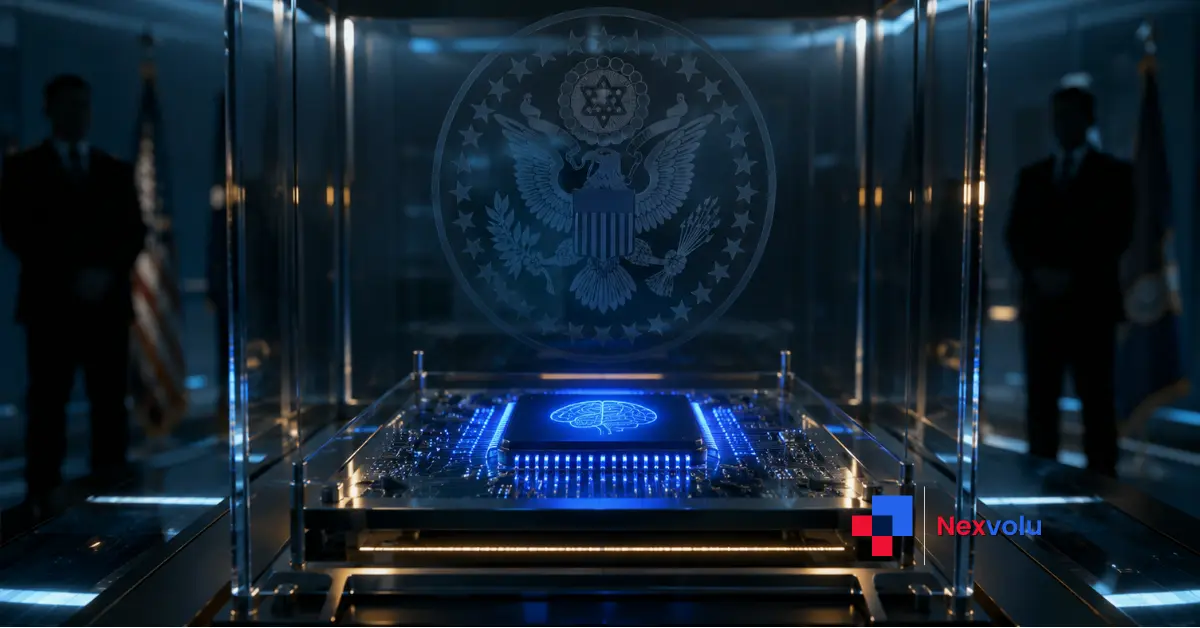
What a “government-gated AI model” actually means
A government-gated AI model is an advanced AI system a company can release only to a small group of partners the government has approved, rather than to the public. With GPT 5-6 restrictions, OpenAI limited early access to roughly 20 vetted companies at the White House’s request, citing national-security risks tied to the model’s capabilities.
Think of it like a new prescription drug that clears the lab but sits behind regulatory approval before it reaches the pharmacy shelf. The product exists. It works. You just can’t get it yet. OpenAI confirmed GPT-5.6 Restrictions comes in three flavors Sol, the flagship, Terra, the balanced everyday option, and Luna, the fast and affordable one. All three landed under the same lock.
What makes this moment different is who turned the key. This wasn’t OpenAI being cautious on its own. The request came from the White House’s Office of Science and Technology Policy and the Office of the National Cyber Director, and it’s the first time the U.S. government has preemptively asked an American AI company to restrict a model before release.
Why the White House hit pause on GPT-5.6 Restrictions
The official reason is cybersecurity. Frontier models are getting good uncomfortably good at finding and exploiting software vulnerabilities. The worry isn’t that GPT 5-6 restrictions writes a rude email. It’s that the wrong user could point it at critical infrastructure.
This didn’t come out of nowhere. On June 2, 2026, the White House signed Executive Order 14409, “Promoting Advanced Artificial Intelligence Innovation and Security,” which set up a framework giving the government up to 30 days of pre-release access to advanced “frontier” models. GPT-5.6 Restrictions is the first big test of that framework in the wild.
OpenAI, for its part, isn’t thrilled. The company said it believes GPT-5.6 Sol is “better at helping people find and fix vulnerabilities than reliably carrying out end-to-end attacks,” and pushed back on the precedent directly: “We don’t believe this kind of government access process should become the long-term default. It keeps the best tools from users, developers, enterprises, cyber defenders, and global partners who need them.”
GPT-5.6 and Anthropic: the pattern nobody’s connecting
Here’s the part most coverage glosses over. OpenAI isn’t the first. Two weeks earlier, on June 12, 2026, rival Anthropic was forced to disable its most advanced models, Fable 5 and Mythos 5, after the U.S. Commerce Department used national-security export controls to bar the company from giving any foreign national access to them.
One quick correction worth making, because it changes the story: Anthropic’s pullback wasn’t voluntary restraint. It was a government directive an export-control order the company had to comply with, locking out customers and even some of its own foreign-national employees. So the through-line between Anthropic and OpenAI isn’t two companies choosing caution. It’s a government deciding, twice in a month, which advanced models get released and to whom.
| Anthropic (Fable 5 / Mythos 5) | OpenAI (GPT-5.6) | |
|---|---|---|
| Date | June 12, 2026 | June 25, 2026 |
| Trigger | Commerce Dept. export-control directive | White House request (OSTP + cyber director) |
| Effect | Models disabled for everyone | Limited preview to ~20 vetted partners |
| Driver | Government, not voluntary | Government request, not voluntary |
Two data points make a line. And that line points toward a new normal where the most capable AI gets a government checkpoint before it reaches the rest of us.

What it means for everyday users and small businesses
If you’re reading this between ChatGPT prompts, here’s the reassuring part: nothing breaks today. Your ChatGPT still works. GPT-5.5 and the existing models are untouched. GPT-5.6 was never the version sitting in your chat window it’s a brand-new release that simply hasn’t reached general availability. This is a delay, not a deletion. OpenAI says it plans to roll GPT-5.6 out to ChatGPT, Codex, and the API “soon,” once the government signs off.
That said, the bigger story matters if you run a business on these tools. ChatGPT crossed 1 billion monthly active users in June 2026, and small businesses have leaned in hard – the U.S. Chamber of Commerce reports 58% of small businesses now use generative AI, up from 40% in 2024. A March 2026 Goldman Sachs survey found 76% of small businesses using AI, with 93% reporting a positive impact.
So what actually changes for you?
- Your timeline isn’t yours anymore. If your roadmap assumed the next model would land on a predictable schedule, build in slack. Government review can add weeks.
- First access is becoming a moat. Roughly 20 approved partners get to build on GPT-5.6 before anyone else. If your competitor is on that list, they get a head start you can’t buy.
- “Best available” beats “latest.” Don’t rebuild a workflow around a model you can’t reliably get. Anchor your processes to what’s stable today, and treat new models as upgrades, not foundations.
- Have a backup brain. Keeping a second provider in your toolkit and knowing how to switch is no longer paranoia. It’s continuity planning.
For a small team, the practical lesson is simple: the AI you rely on now answers to forces outside your control. Plan like it.
What UK businesses relying on ChatGPT need to know
The restriction is a U.S. national-security action, so the most immediate effects play out in America. But if you’re a UK business, two things deserve your attention.
First, access ripples outward. When Washington gates a flagship model, the staggered rollout reaches international markets later meaning UK firms may wait even longer than U.S. ones for GPT-5.6. Anthropic’s export-control order already locked out foreign nationals entirely, so the precedent for cross-border friction is set.
Second, your own regulatory clock is ticking separately. The EU AI Act’s main obligations for high-risk AI systems are scheduled to land around August 2026 (with some provisions facing possible delays), and because the Act has extraterritorial reach, UK companies serving EU customers are already in scope. The UK itself is taking a lighter, principles-based, sector-led approach for now. The takeaway: don’t assume the rules you operate under will mirror Washington’s. Keep an AI register, name a risk owner, and document which models power which workflows so a sudden change on either side of the Atlantic doesn’t catch you flat.

Frequently asked questions
Is GPT-5.6 banned?
No. GPT-5.6 isn’t banned it’s restricted. OpenAI released it as a limited preview to about 20 government-approved partners on June 25, 2026, instead of to the public. The company says wider access to ChatGPT, Codex, and the API is planned once the government approves a broader rollout.
Will my ChatGPT stop working?
No. The restriction only affects the new GPT-5.6 models. Your existing ChatGPT and the GPT-5.5 line keep running exactly as before. You’re not losing access to anything you already use today.
Why did the White House restrict GPT-5.6?
The White House cited national-security concerns about the model’s advanced cybersecurity capabilities. The request came from the Office of Science and Technology Policy and the Office of the National Cyber Director, under a framework set by Executive Order 14409.
What are GPT-5.6 Sol, Terra, and Luna?
They’re the three versions of GPT-5.6. Sol is the most powerful flagship model, Terra balances efficiency and power for everyday use, and Luna is built for speed and lower cost. All three were placed under the same release restriction.
Did the same thing happen to Anthropic?
Yes, with a sharper edge. On June 12, 2026, a U.S. Commerce Department export-control directive forced Anthropic to disable its Fable 5 and Mythos 5 models for everyone. It was a government order, not a voluntary choice.
When will GPT-5.6 be available to everyone?
There’s no firm public date.
GPT-5.6 is a turning point that has little to do with the model itself. The capability was ready; the access wasn’t. For everyday users, life continues as normal. For businesses, the lesson is quieter and more lasting: the tools you depend on now sit inside a national-security conversation, and the next great upgrade may arrive on the government’s schedule, not yours.
References
- Axios – OpenAI releases powerful new GPT-5.6 model under restrictions (June 26, 2026): Axios
- Axios – Trump administration asks OpenAI to limit next model release (June 25, 2026): Axios
- CNN Business – White House asks OpenAI to limit its next model release (June 25, 2026): Cnn
- TechCrunch – OpenAI limits GPT-5.6 rollout after government request (June 26, 2026): Techcrunch
- Politico – Trump administration steps in to limit OpenAI’s latest model launch (June 25, 2026): Politico
- Anthropic – Statement on the US government directive to suspend access to Fable 5 and Mythos 5 (June 12, 2026): Anthropic
- The White House – Executive Order 14409: Promoting Advanced Artificial Intelligence Innovation and Security (June 2026): Whitehouse
- Reuters – ChatGPT app hits 1 billion monthly active users in record time (June 2, 2026): Reuters
- U.S. Chamber of Commerce – Small Business Use of AI Surges: Uschamber
- Goldman Sachs – Survey: Small Businesses Embrace AI (March 17, 2026): Goldmansachs