











Per-Seat SaaS Pricing Is Dying: Save Your 2026 Bill
Picture this: your finance team just locked in next year’s software budget. Then three renewal quotes land in the same week each one higher than last year and one vendor has quietly added a “per-credit” charge you’ve never seen before. That’s not a billing glitch. It’s the new normal.
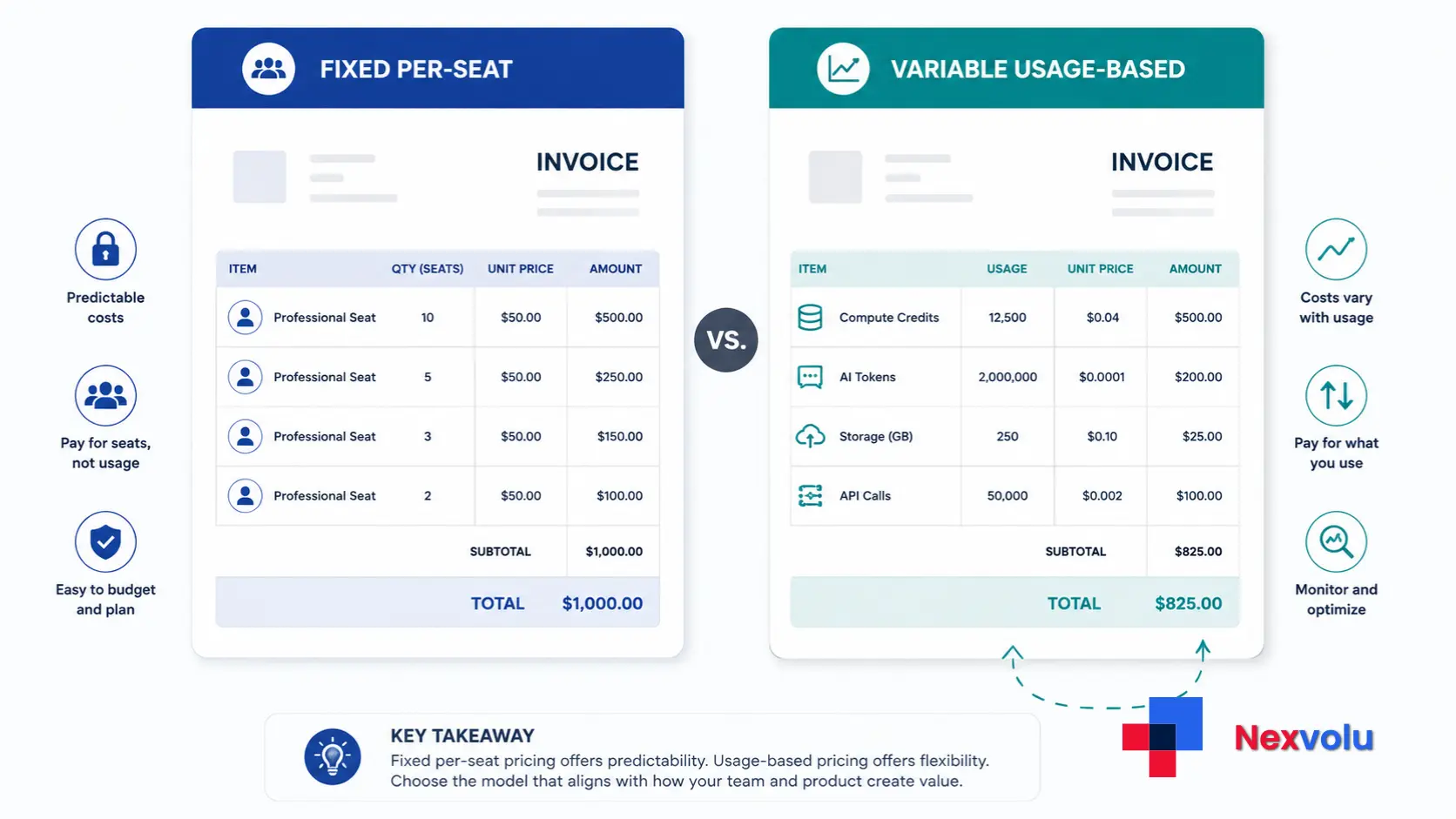
Per-seat SaaS pricing the tidy “pay per user, per month” model that ran software budgets for two decades is being dismantled in real time. And the bill lands on you, the buyer. Vendors are shifting from charging for access to charging for consumption: API calls, credits, AI tokens, and outcomes.
This guide is buyer-side, not pundit-side. Forget the “death of SaaS” think-pieces. You’ll get the concrete stuff how the change hits your software bill and contracts, the renewal tactics that actually protect your budget, and why American and British buyers need slightly different playbooks. Let’s get to it.

Table of Contents
- What Does the Death of Per-Seat SaaS Pricing Actually Mean?
- Why Your Vendors Are Quietly Switching
- How the Shift Changes Your Software Bill and Contracts
- Renewal-Negotiation Tactics That Stop Your Bill Exploding
- US vs UK: How AI-Era Pricing Hits Buyers Differently
- Frequently Asked Questions
What Does the Death of Per-Seat SaaS Pricing Actually Mean?
The death of per-seat SaaS pricing means vendors are replacing fixed per-user fees with usage-based and hybrid models that bill for what you consume API calls, credits, AI tokens, or outcomes. Pure per-seat pricing isn’t vanishing overnight. It’s being wrapped in variable charges that make your annual bill far harder to forecast.
Here’s the thing: this isn’t a fringe trend anymore. According to Stripe’s 2026 analysis of Revenera’s Monetization Monitor, 74% of software suppliers had adopted usage-based models, and 56% expected usage-based revenue to grow by 2027. Metronome’s 2025 State of Usage-Based Pricing report put adoption even higher, with around 85% of SaaS leaders using some form of consumption pricing.
The reason it matters to you is simple. A per-seat contract is predictable count your users, multiply, done. A usage-based contract moves with your activity, so your spend can climb without anyone adding a single new login. For a deeper primer, see our explainer on how usage-based pricing works.
Why Your Vendors Are Quietly Switching
One word explains most of it: AI.
AI features cost vendors real money to run every token and compute minute carries a price. Per-seat billing can’t absorb that, so vendors pass the variability straight through to you. The result is a wave of price changes dressed up as “innovation.”
The numbers back this up. SaaStr reported that B2B SaaS prices rose roughly 11.4% in 2025, against an average G7 inflation rate of just 2.7%. And the surprises keep coming after you sign. Zylo’s 2026 SaaS Management Index found that 78% of IT leaders faced unexpected charges tied to consumption-based or AI features in the past year, while 77% hit costs that only surfaced after the contract was signed.
Read that again. Most buyers are getting billed for things they didn’t see at signing. That’s the core risk of the new model and it’s exactly why AI is reshaping software costs faster than most budgets can track.
How the Shift Changes Your Software Bill and Contracts
This is the part most articles skip. Here’s exactly what changes on your invoice and in your paperwork:
- New variable line items. Expect “credits,” “tokens,” “API calls,” or “workflow runs” sitting alongside or replacing your seat count.
- Overage charges. Go past your bundled allowance and the per-unit rate often jumps, sometimes steeply.
- The pricing-model-change loophole. A vendor can honour your per-seat cap, then “repackage” you into a new SKU at a higher rate. Your cap protected the old product, not the new one.
- Decoupled AI credits. AI add-ons are frequently billed separately from your base plan, so they dodge your existing discount.
- Auto-renewal traps. Quiet renewals at fresh rates, often with only 30 days’ notice.
The stakes are bigger than a single invoice. Zylo’s 2026 index found that renewals account for 87% of total software spend across organisations. So the renewal table — not the initial purchase — is where your budget is actually won or lost.
Renewal-Negotiation Tactics That Stop Your Bill Exploding
You have more leverage than you think, especially in 2026’s buyer-friendly market. Use these seven tactics:
- Start 90 days early. Time is leverage.
- Lock your rate for the full term. Include any renewal extension period.
- Cap annual uplifts contractually. Tie them to CPI or a fixed 5–7% ceiling.
- Close the model-change loophole. Demand same-functionality price protection across renames, SKUs, and repackaging.
- Protect variable rates mid-term. Fix per-token and per-API rates, not just the seat price.
- Right-size and harvest unused licenses. Cut dead seats before you renew.
- Bring usage data and a competing quote. Benchmarks beat gut feel every time.
Start the clock early, because the data rewards it: Tropic’s 2026 procurement analysis found that buyers who begin renewals well ahead of the deadline save meaningfully more than those who scramble at the wire. On the contract itself, Zylo recommends capping annual uplifts and locking rates for the full term vendors rarely volunteer either, but often agree when asked.
Try this before your next renewal: pull 12 months of usage data and one competing quote, then walk into the conversation with both. You’ve already shifted the power balance. For the full process, our SaaS contract negotiation checklist breaks it down step by step.
US vs UK: How AI-Era Pricing Hits Buyers Differently
The shift is global, but it doesn’t land the same way on both sides of the Atlantic.
| Factor | US Buyers | UK Buyers |
|---|---|---|
| Who owns the spend | Procurement + FinOps teams | Often the owner or finance lead at an SME |
| Tax on top | Sales tax varies by state | 20% VAT added, usually reclaimable if registered |
| Biggest risk | Consumption overages at enterprise scale | Flat percentage hikes on a smaller base |
| Strongest lever | Price caps, master agreements, FinOps benchmarking | Shorter terms, DMCCA subscription protections |
In the US, software cost control has become a formal discipline. The FinOps Foundation’s 2026 State of FinOps report found that 90% of practitioners now manage SaaS spend, up from 65% a year earlier so American buyers increasingly negotiate with hard usage data behind them.
In the UK, the pressure is blunter. Microsoft 365 prices are rising an estimated 10-15% for UK customers in 2026, and accountants have flagged steep QuickBooks increases too. For a lean SME, a 15% jump plus 20% VAT on top genuinely stings. British buyers do have a new card to play: the Digital Markets, Competition and Consumers Act introduces clearer rules on subscription contracts, adding pressure on vendors around renewals and cancellations.

This article is for general information only and isn’t financial, tax, or legal advice. Confirm VAT treatment and contract terms with a qualified professional before you sign.
Frequently Asked Questions
Is per-seat SaaS pricing really dying?
Per-seat pricing is declining, not disappearing. Most vendors now blend a base seat fee with usage-based components rather than dropping seats entirely. Pure per-seat is becoming the exception, especially for AI-heavy products, while hybrid models that mix seats, usage, and outcomes are quickly becoming the industry default.
What is usage-based SaaS pricing?
Usage-based pricing charges you for what you actually consume instead of how many people have access. Common metrics include API calls, credits, AI tokens, storage, or workflow runs. It lowers the entry cost but makes bills less predictable, since your spend rises automatically as activity grows without adding a single new user.
How do I stop SaaS renewal prices from increasing?
Start negotiating at least 90 days early, lock your rate for the full contract term, and cap annual uplifts at CPI or a fixed 5-7%. Bring real usage data and a competing quote to the table. Finally, add language protecting your price even if the vendor renames or repackages the product.
What is a price cap in a SaaS contract?
A price cap is a contractual ceiling on how much a vendor can raise your fees at renewal. It’s usually tied to inflation (CPI) or set as a fixed percentage, such as 5-7%. Caps turn open-ended price exposure into a predictable worst case, which makes year-to-year budgeting far easier.
Do UK businesses pay VAT on SaaS subscriptions?
Yes. UK businesses generally pay 20% VAT on SaaS subscriptions. If you’re VAT-registered, you can usually reclaim it, so the real cost is the net figure. Unregistered small businesses absorb the full 20%, which makes any per-renewal price rise hurt more. Always confirm current treatment with your accountant.
How early should I start a SaaS renewal negotiation?
Begin at least 90 days before the renewal date for important contracts. Early starts give you time to gather usage data, benchmark prices, and line up alternatives all of which strengthen your position. Vendors lean on deadline pressure, so the earlier you engage, the less leverage they hold.
The Bottom Line
Per-seat pricing isn’t being killed off so much as quietly rewritten into something that costs you more by default. Three things to remember: vendors are shifting risk onto buyers, the renewal table is where your budget is won, and the protections you need rate locks, uplift caps, and model-change clauses only exist if you ask for them. Whether you’re running US procurement or a UK SME budget, the move from access to consumption-based pricing rewards the buyer who shows up prepared.
Share this with someone who’s about to face a software renewal and tell us in the comments: what’s the strangest new line item you’ve spotted on a SaaS invoice lately?
References
- Stripe. “Usage-based pricing strategy for SaaS.” 2026. Stipe
- Metronome. “State of Usage-Based Pricing 2025.” 2025. Metronome
- SaaStr. “The Great SaaS Price Surge of 2025.” 2025. Saastr
- Zylo. “2026 SaaS Management Index / 175+ SaaS Statistics.” 2026. Zylo
- FinOps Foundation. “State of FinOps 2026.” 2026. Data.finops
- Tropic. “SaaS Procurement Predictions for 2026.” 2026. Tropicapp