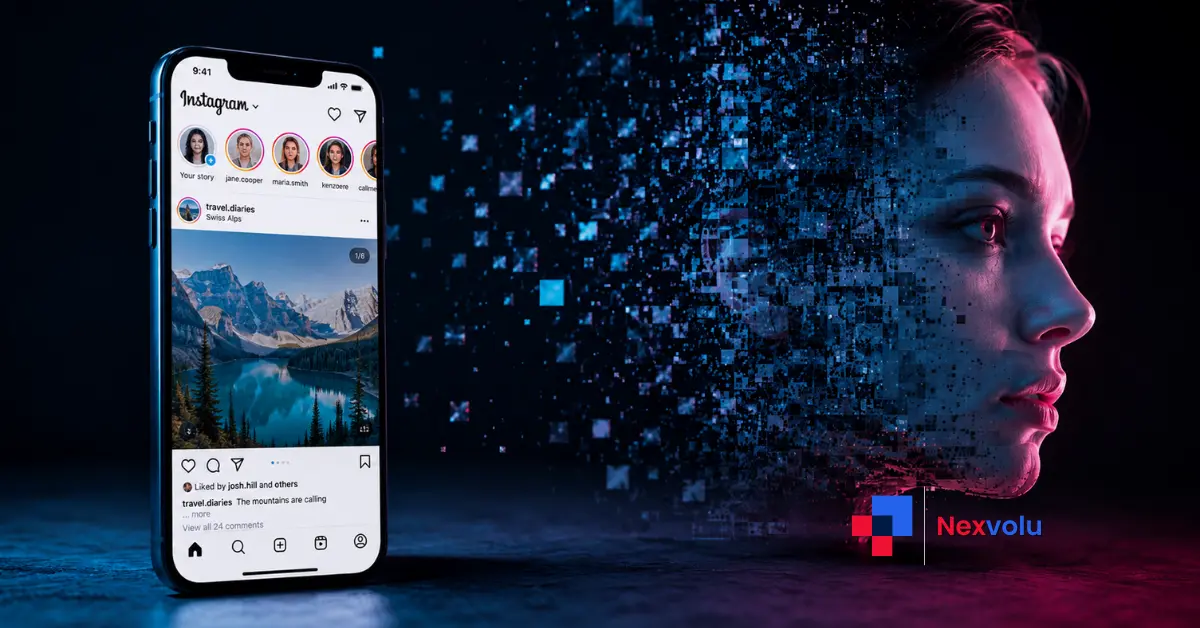
Meta’s Instagram AI Rollback Exposes a Bigger Trust Problem
Meta removed its controversial Instagram AI feature only three days after launch, revealing that “public” does not mean “available for anyone to remake with AI.”
On July 10, 2026, Meta removed a new Muse Image capability that let people generate AI images by @-mentioning public Instagram accounts. The company had launched it on July 7 as part of a wider wave of creative tools. Users, privacy advocates, and talent representatives quickly objected to the default setup, the use of real people’s photos, and the lack of notification when someone referenced an account.
The reversal was fast. The lesson is bigger: AI products lose trust when companies treat consent as a settings problem instead of a product-design requirement.
TL;DR: Meta removed the part of Muse Image that let users @-mention public Instagram accounts and use their photos as references for AI creations. The rollback followed criticism over automatic eligibility, consent, likeness misuse, and absent notifications. Muse Image itself and more than 30 AI effects announced for Instagram Stories remains available.
What Instagram AI feature did Meta remove?
Meta removed the Muse Image capability that let a person @-mention a public Instagram account and use that account’s public photos as visual references for a new AI-generated image. Meta did not cancel Muse Image or all of Instagram’s new AI effects. It withdrew this account-referencing mechanism after saying it had “missed the mark.”
Meta introduced Muse Image as the first image-generation model from Meta Superintelligence Labs. Its wider tools can generate images from prompts, edit existing pictures, blend references, use presets, and support creative effects across Meta services.
The controversial feature connected that generator to Instagram’s public identity layer. A user could reference a public account in a prompt and ask Meta AI to build a visual using photos tied to that profile.
That connection made the tool feel personal. It also created the risk.
Why did the Instagram AI feature trigger such a fast backlash?
The backlash centered on four design choices rather than on AI image generation alone:
- Public accounts were eligible by default. People had to find a setting and turn the reuse option off.
- The feature used recognizable identity cues. A public photo can contain a face, clothing, setting, or creative work that a generated image can distort.
- Instagram did not plan to notify the referenced person. Someone could be used in an AI creation without knowing it happened.
- The opt-out did not resolve past generations. Reporting from WIRED noted that changing the setting could stop future use, but would not automatically delete images already created.
A public profile gives people permission to view a post under Instagram’s rules. It does not create intuitive consent for synthetic reuse in every possible context.
That distinction matters because an AI remix can place a person in a scene that never happened. The output might be harmless a birthday card or travel joke. It might also be humiliating, deceptive, sexualized, commercial, or politically manipulative.
What did Meta say about the Instagram AI feature?
Meta updated its official Muse Image announcement on July 10. The company said its intent was to provide a useful creative tool while giving people control over whether their public content could be referenced.
Then came the key admission: Meta had heard the feedback, the feature “missed the mark,” and it was no longer available.
The timeline is unusually revealing:
- July 7, 2026: Meta launched Muse Image and public-account referencing. Public profiles became usable as AI image references unless the control was changed.
- July 8-10, 2026: Users, advocates, and talent groups objected. Criticism focused on consent, privacy, copyright, likeness, and misuse.
- July 10, 2026: Meta removed the @mention account-reference feature. The company kept Muse Image but rolled back its most controversial social layer.
This was not a slow policy adjustment. It was a launch-week reversal.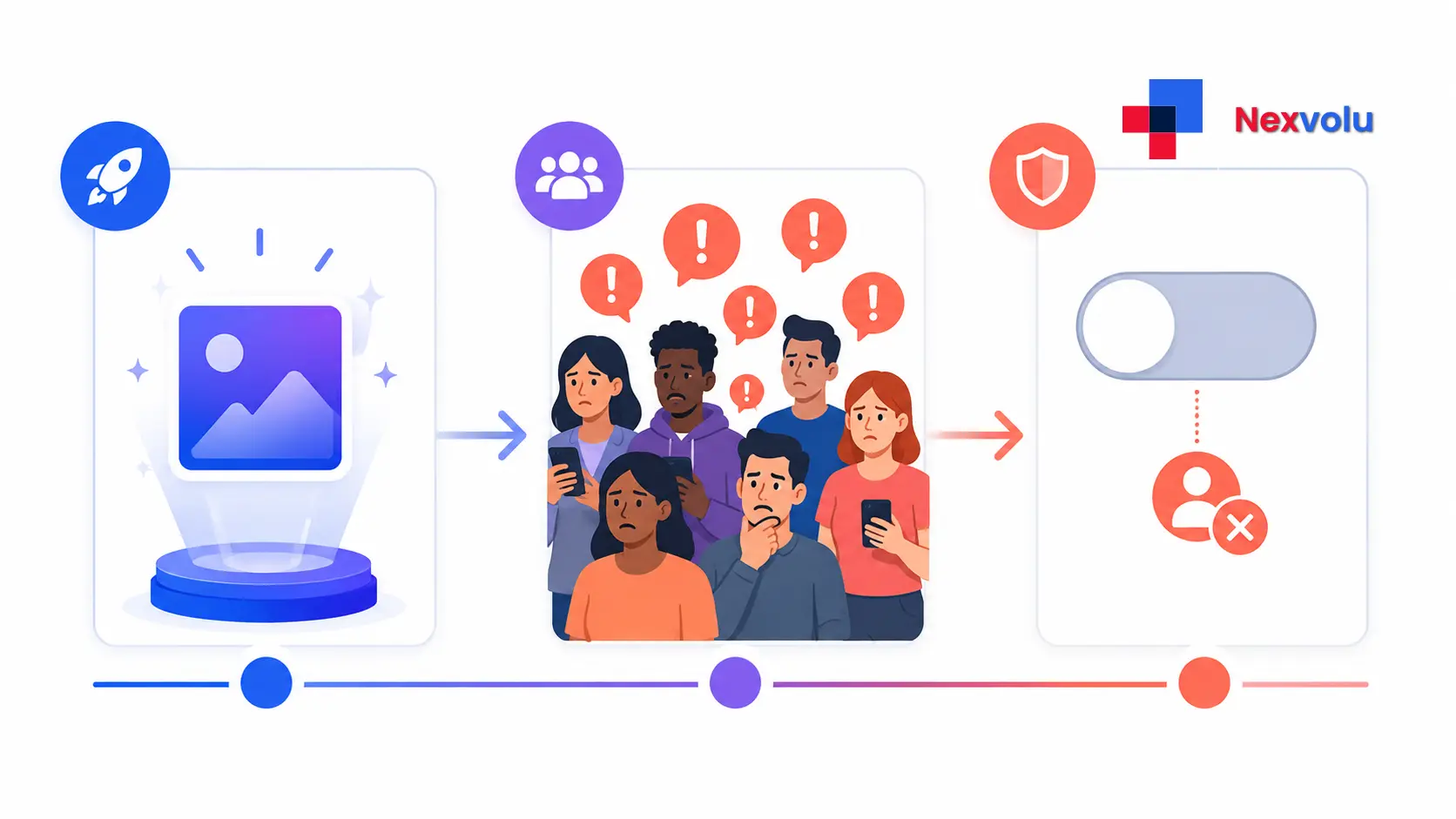
What Instagram AI feature tools remain after the rollback?
The answer is important because some headlines can sound broader than the actual change.
Meta removed the ability to reference public Instagram accounts by @-mention for AI image generation. It did not remove the full Muse Image model.
The following broader tools remain part of Meta’s rollout:
- Prompt-based image generation and editing in Meta AI.
- Presets that restyle or transform a user-supplied photo.
- More than 30 Muse Image-powered effects announced for Instagram Stories in the United States.
- A redesigned effects browser for previewing Story transformations.
- Other Muse Image integrations across supported Meta services and planned surfaces.
This distinction prevents two opposite mistakes. Meta has not abandoned generative imagery on Instagram. But the rollback is also more than a cosmetic wording change: it removes the shortcut that pulled another person’s public profile directly into the generation workflow.
Personal analysis: Why the Instagram AI feature failed
Here is my analysis based on the documented rollout, not a claim of first-hand product testing.
The Instagram AI feature treated consent as a control hidden behind the product. Meta should have treated consent as the doorway into the product.
An opt-out switch can be technically real and still fail the trust test. Most people do not review every setting after every app update. Public-account users may include creators, journalists, teenagers, small businesses, public figures, and ordinary people who simply prefer discoverability. They did not all make the same decision about AI reuse merely by keeping a profile public.
The strongest version of this feature would have used explicit opt-in permission, clear notice before a likeness was referenced, a visible record of generated uses, and a simple removal path. For collaborations, Meta could have asked the tagged person to approve the generation. That small moment of friction would have reduced novelty, but it would have created legitimacy.
Instead, the launch placed the burden on the person whose identity supplied the value.
That is why the rollback matters beyond Instagram. Consumer AI companies keep presenting controls as proof of consent. Users judge consent differently: Was the choice understandable, timely, specific, and made before the risky action? If the answer is no, the existence of a toggle will not restore trust after the fact.
My bottom line: Muse Image was not rejected because people hate creative AI. This particular connection between AI generation and real public identities was rejected because Meta tried to make permission implicit.
What should Instagram users do now?
The removed feature should no longer allow public-account @mentions as image references. Still, users who care about future AI reuse should review their Instagram settings rather than assume every related pathway has disappeared.
On mobile, open your profile, tap the menu, find Sharing and reuse, and review the options governing whether posts and Reels can be reused with Instagram and Meta AI features. Wording and availability can vary by account, region, and rollout stage.
Also consider these practical steps:
- Keep sensitive personal photos off a public profile.
- Review tagged images and old public posts.
- Save screenshots if you discover unauthorized or misleading AI content.
- Use Instagram’s reporting tools for impersonation, harassment, or non-consensual imagery.
- Check the settings again after major Meta AI announcements.
Switching an account to private offers a stronger boundary, but it may not suit creators or businesses that depend on public discovery. The better long-term answer is not forcing everyone to hide. Platforms must build safer public participation.
What does the rollback mean for creators and public figures?
Creators have two connected interests: protecting identity and using new creative tools. A product can support both, but only if permission is granular.
For example, a creator might approve an AI collaboration with a brand while rejecting unrestricted public remixes. A musician might welcome fan artwork but object to generated endorsements. A journalist may maintain a public profile without accepting fictional images that appear to place them at an event.
That nuance disappears under a single default toggle.
The creator concern is not merely ownership of pixels. It is control over context. A likeness can carry reputation, commercial value, and personal safety risks. Once a synthetic image spreads outside the original platform, corrections rarely travel as far as the visual.
Share this Nexvolu analysis with someone who assumes a public post is the same thing as permission for AI reuse.
Frequently Asked Questions
Why did Meta remove the Instagram AI feature?
Meta removed the feature after users, privacy advocates, and talent representatives criticized its consent model. It allowed people to reference public Instagram accounts when generating AI images, while eligible accounts were controlled through an opt-out setting. Critics argued that public visibility did not equal permission for synthetic likeness reuse.
Is Meta Muse Image completely gone?
Muse Image is not completely gone. Meta removed the public-Instagram-account @mention capability that supplied profile photos as references. The wider image model, prompt-based creation, photo editing, presets, and more than 30 Instagram Story effects announced for the United States remain part of Meta’s creative AI rollout.
Can Meta AI still use my Instagram photos?
The removed capability should no longer let another person generate an image by @-mentioning your public account. Other reuse or AI-related settings may still apply to posts and Reels. Review Settings → Sharing and reuse on mobile, because wording, availability, and controls can differ by account and region.
Did Instagram notify people when their photos were used?
Instagram’s original implementation did not promise a notification when someone referenced a public account for an AI creation. That absence became one of the strongest objections. Without notice, a person could not easily see the generated context, object quickly, preserve evidence, or request action before the image spread elsewhere.
Was the controversial feature opt-in or opt-out?
The feature relied on an opt-out control for eligible public accounts. Users who did not want their Instagram content referenced by Meta AI had to find the Sharing and reuse setting and turn the relevant options off. The backlash showed why default eligibility can feel coercive when identity and likeness are involved.
Will the Instagram AI feature come back?
Meta has not announced that this exact public-account referencing feature will return. A redesigned version is possible, but it would need clearer consent, notification, approval, and removal controls to avoid the same backlash. Muse Image continues, so Meta still has both the technology and the incentive to test social integrations.
The bottom line
Meta’s three-day Instagram AI feature rollback is a clean example of the difference between control and consent.
The company offered a setting. Users wanted a meaningful choice before their public identities entered someone else’s AI prompt. Those are not the same standard.
Muse Image will keep evolving, and Instagram will keep adding AI creation tools. The question for Meta is no longer whether it can connect those tools to billions of social photos. It is whether it can do so without making people feel that their faces, work, and reputations are raw material by default.
Subscribe to Nexvolu for clear AI updates without the launch-day hype and tell us: would an explicit approval request make this kind of feature acceptable to you?
References
- Meta. “Introducing Muse Image: Image Generation Built for Your World.” July 7; updated July 10, 2026.
- Instagram. “New Effects in Stories from Meta AI.” July 7, 2026.
- WIRED. “Meta Now Lets Anyone Use Your Instagram Photos in AI Images—Unless You Opt Out.” July 7; updated July 10, 2026.
- BBC. “Outcry as Meta Lets Users Make AI Images From Public Instagram Profile Pics.” July 2026.
1 thought on “Instagram AI Feature Removed After Meta Backlash”