




OpenAI Limits GPT-5.6 Who Gets It and Why (2026)
Why You Can’t Use OpenAI’s Best AI Yet – Washington Decides
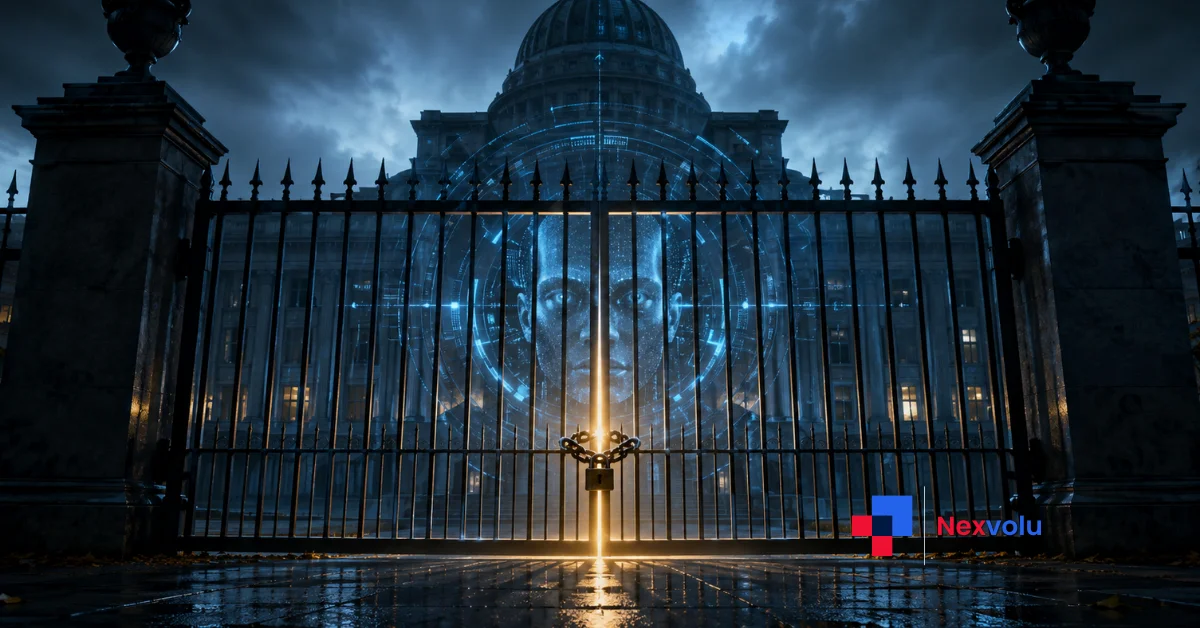
OpenAI limits GPT-5.6 and because of that, the most powerful AI the company has ever built shipped on June 26, 2026 to almost no one. GPT-5.6 didn’t launch with an open sign-up button. Instead, it launched with a gate. And standing at that gate is the U.S. government.
For the first time, access to a leading American AI model runs through Washington. In fact, OpenAI released GPT-5.6 to a tiny group of vetted partners at the government’s request, so most developers, businesses, and everyday ChatGPT users stayed locked out. This explainer cuts through the headlines: who actually gets GPT-5.6, when the rest of us can expect it, and why a government sign-off now sits between you and the best AI on the market.
Table of Contents
- Why did OpenAI limit GPT-5.6?
- Who Counts as a “Trusted Partner” Now That OpenAI Limits GPT-5.6?
- When Will Regular Users Get GPT-5.6 After OpenAI Limits It?
- Why Washington Sits in the Release Path as OpenAI Limits GPT-5.6
- What OpenAI Limiting GPT-5.6 Means for AI Access
- Frequently Asked Questions
Why did OpenAI limit GPT-5.6?
⚡ OpenAI limits GPT-5.6 at the request of the U.S. government, which asked the company to start with a small group of vetted “trusted partners” before a wider launch. According to OpenAI’s June 26, 2026 announcement, the step is temporary because the company is still coordinating with the administration on frontier-model safety.
Indeed, the decision came straight from the top. The White House asked OpenAI to hold back a full public launch, and as a result the company agreed for now. On June 26, 2026, OpenAI unveiled three new models: GPT-5.6 Sol, its flagship and “strongest model yet,” plus Terra, a lower-cost option, and Luna, the fastest and most cost-efficient of the trio.
Instead of the usual public rollout, all three went to a small, pre-cleared group. According to The Next Web’s June 2026 reporting, the initial release reached roughly 20 partners, because the U.S. government individually approved each name on the list.
OpenAI made its discomfort clear. “We don’t believe this kind of government access process should become the long-term default,” the company wrote in its announcement, warning that it “keeps the best tools from users, developers, enterprises, cyber defenders, and global partners who need them.”
Who Counts as a “Trusted Partner” Now That OpenAI Limits GPT-5.6?
Here’s the part that frustrates most people: there’s no way to apply. The preview isn’t a self-service program. Per OpenAI’s own help documentation, there is no public waitlist, no enrollment form, and no access for individual consumers.
So who’s in? Based on OpenAI’s guidance and early reporting, the circle looks like this:
- Organizations with an OpenAI account representative not individuals signing up online.
- Partners whose names the company shared with the government for approval before launch.
- Specific, scoped workspaces approval for the API doesn’t automatically include Codex, and vice versa.
- Rolling, reviewable access an invitation doesn’t guarantee the model goes live, since the company enables access in waves.
In plain terms, a “trusted partner” is a vetted enterprise or institution that Washington has signed off on. If you’re a solo developer or a regular ChatGPT subscriber, you’re not on the list yet.
When Will Regular Users Get GPT-5.6 After OpenAI Limits It?
For now, OpenAI’s official line is that GPT-5.6 Sol, Terra, and Luna will become “generally available in the coming weeks.” No exact public date has been confirmed. Unverified developer chatter points to a mid-July 2026 wider launch, but treat that as rumor, not a promise.
The real bottleneck isn’t engineering it’s approval. Sam Altman reportedly told staff the government would clear commercial access “customer by customer” during the preview. That means the timeline depends on how fast officials work through the queue, not on a flip of a switch.
Here’s a simple way to picture the access ladder right now:
| Tier | Who | Status |
|---|---|---|
| Limited preview | ~20 government-approved partners | Live now |
| Enterprise / API | Vetted organizations, rolling | Expanding in waves |
| ChatGPT public | Everyday users | “Coming weeks” – no firm date |
Share this with someone still waiting for GPT-5.6 access it explains exactly who gets it first and why.

Why Washington Sits in the Release Path as OpenAI Limits GPT-5.6
This didn’t happen in a vacuum. It rests on a legal mechanism and a recent precedent.
The mechanism is an executive order President Trump signed on June 2, 2026. As Business Insider reported, the order lets leading AI makers voluntarily submit advanced models for federal review up to 30 days before public release. Notably, the order covers reviewing models it doesn’t spell out approving individual customers, which is what makes the GPT-5.6 arrangement a step further than the text strictly requires.
The precedent is Anthropic. Days earlier, a June 12, 2026 export control order forced Anthropic to pull its most advanced models, Mythos 5 and Fable 5, over cybersecurity concerns, Reuters reported. The government later allowed Mythos 5 back to a set of U.S. organizations that defend critical infrastructure. OpenAI and the administration reportedly view GPT-5.6 as comparable in capability to Mythos so the same caution carried over.
Put together, a frontier model launch now looks less like shipping software and more like a managed security rollout: limited access, staged release, customer review, and government visibility baked in.
What OpenAI Limiting GPT-5.6 Means for AI Access
This is the question most coverage skipped, and it’s the one that actually matters.
When OpenAI limits GPT-5.6 access this way, the gap between what labs build internally and what the public can touch gets wider, because the most capable AI ships first to government-approved institutions. Critics on forums like Reddit have a sharp take: the best AI risks becoming something only vetted players access first, while everyone else gets delayed or second-class access. That’s also why the open-weight and local-model movement suddenly feels more urgent to many developers.
There’s a genuine safety case on the other side. Reviewers rate GPT-5.6 highly capable in sensitive domains cybersecurity and biological research among them so a staged rollout buys federal agencies time to probe for misuse before the tech goes everywhere. Fair enough. The worry isn’t the caution itself; it’s whether “temporary” quietly becomes permanent.
The durable takeaway: a one-flagship, everyone-at-once launch may no longer be the norm for frontier AI. Whether you see that as responsible governance or overreach, that sets the precedent and the next powerful model will likely walk through the same door.
Frequently Asked Questions
Can I use GPT-5.6 in ChatGPT right now?
Not yet for most people. As of late June 2026, GPT-5.6 is in a limited preview restricted to a small group of government-approved partners. OpenAI says there is no public waitlist or self-service signup, and individual ChatGPT consumers cannot access the models until the broader rollout begins.
What are GPT-5.6 Sol, Terra, and Luna?
They are the three models in OpenAI’s GPT-5.6 family. Sol is the flagship and most capable, built for complex coding and research. Terra is a capable, lower-cost option, and Luna is the fastest and most cost-efficient. All three launched together on June 26, 2026, under the same limited preview.
Did the U.S. government ban GPT-5.6?
No. The government did not ban GPT-5.6. It requested that OpenAI start with a limited preview for vetted partners before a wider release. OpenAI agreed voluntarily and plans broad availability within weeks, while stressing that this kind of customer-by-customer approval should not become the permanent default.
Is GPT-5.6 the first AI model the government has gated?
Not quite. Anthropic faced a June 12, 2026 export control order that forced it to pull its Mythos 5 and Fable 5 models. GPT-5.6 is the first launched directly under a government-shared access list, which makes it the clearest example yet of Washington shaping a frontier release.
When will GPT-5.6 be available to everyone?
OpenAI says general availability will arrive “in the coming weeks,” and unverified reports point to mid-July 2026. No firm public date exists. Access is being approved customer by customer during the preview, so the timeline depends on how quickly the government clears additional organizations.
Why does the government consider GPT-5.6 risky?
GPT-5.6 is rated highly capable in sensitive areas like cybersecurity and biological research, comparable to Anthropic’s Mythos. Officials worry such frontier models could be misused by hostile actors abroad. The staged release gives federal agencies time to assess those risks before the technology reaches everyone.

The bottom line
GPT-5.6 is real, it’s powerful, and for now it lives behind a government-approved gate. A handful of vetted partners get the most capable AI OpenAI has built, while the rest of us wait weeks for a broader release no one has dated precisely.
Three things to remember. First, this is a delay, not a ban broad access is still the plan. Second, the real bottleneck is approval, which officials handle customer by customer. Third, the way OpenAI limits GPT-5.6 sets a precedent: Washington now sits in the release path for frontier AI, and that may well outlast this single launch.
So where do you land does a safer rollout justify putting the government between you and the best AI? Drop your take in the comments, and share this with someone who’s still wondering why they can’t use GPT-5.6 yet.
Must Read: Technology
REFERENCES
- OpenAI. “Previewing GPT-5.6 Sol: a next-generation model.” 2026. Open AI
- The Next Web. “OpenAI releases GPT-5.6 Sol to ~20 government-approved partners.” 2026. The Next Web
- Reuters. “OpenAI defers public rollout of GPT-5.6 as US seeks early access to frontier AI models.” 2026. Reuters
- Business Insider. “OpenAI says access to its new GPT-5.6 model is limited at the US government’s request.” 2026. Business Insider
- CNBC. “OpenAI limits new AI models to ‘trusted partners’ at request of U.S. government.” 2026. CNBC