








Gas Prices Falling 2026 What You’ll Actually Save
Gas Prices Are Falling: Here’s What You’ll Actually Save
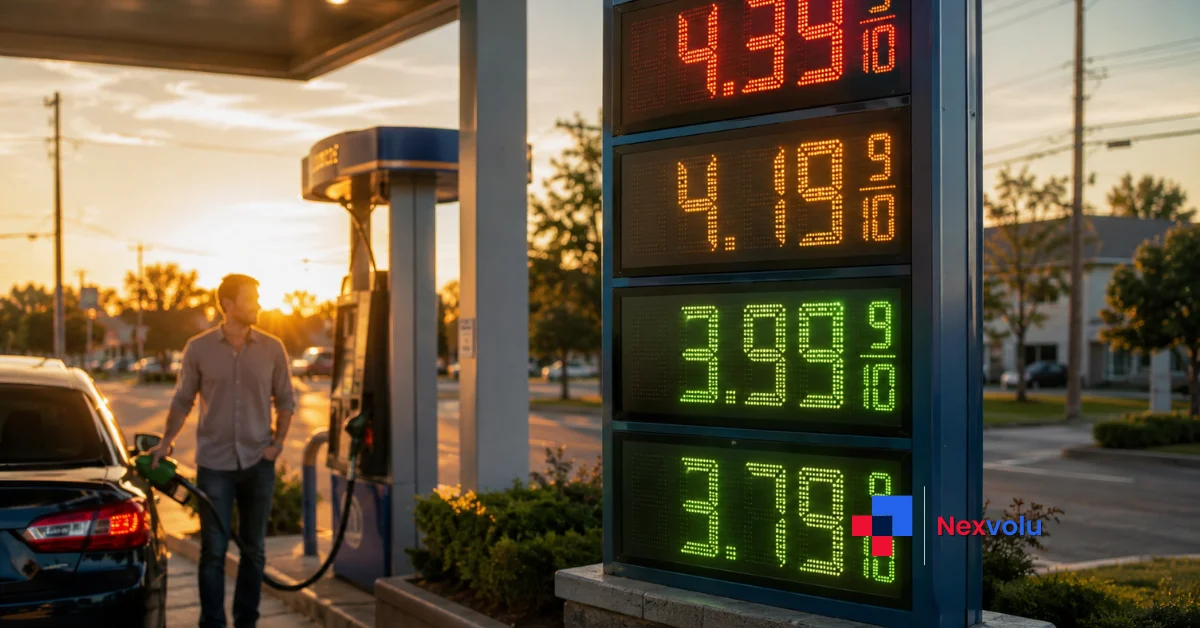
Filling up doesn’t sting the way it did three months ago. After a brutal spring at the pump, gas prices are falling and the drop is real, not a rounding error. In mid-June 2026 the US national average slipped under $4 a gallon for the first time since March, and crude oil has sunk to its lowest level since before the US-Iran war began.
Here’s the thing the headlines keep missing. Sure, they explain the politics in detail. But they skip the part you actually feel: what this puts back in your pocket every month.
That’s exactly what we’re fixing today. So you’ll get the real math for a typical American driver and a typical British one dollar for dollar, pence for pence. Then we’ll tackle the question quietly nagging everyone: will prices keep sliding, or should you fill up while they’re low?
Table of Contents
- Are Gas Prices Actually Going Down in 2026?
- Why the Iran Deal Sent Pump Prices Tumbling
- Your Wallet, by the Numbers: What US Drivers Save
- What UK Drivers Save: The RAC Numbers
- The Hidden Bonus: Groceries, Airfare, and Inflation
- Will Gas Prices Keep Falling, or Should You Fill Up Now?
- Frequently Asked Questions
Are Gas Prices Actually Going Down in 2026?
✅ Yes. As of late June 2026, gas prices are falling. The US national average dropped to about $3.93 a gallon, down from roughly $4.52 a month earlier, according to AAA. The slide followed a US-Iran framework deal to reopen the Strait of Hormuz, which sent crude oil sharply lower.
Indeed, the numbers tell a clean story. AAA reported the national average fell to $3.99 on June 18, 2026 the first dip below $4 since March 30 after nearly four straight weeks of declines. By June 24 it had eased further to about $3.93. Rewind just one month, and drivers were paying around $4.52.
In fact, that’s a swing of roughly 59 cents a gallon in four weeks. For anyone who drives to work, it adds up faster than you’d guess which is the part we’ll quantify in a moment.
One honest caveat: prices are still higher than a year ago, when the average sat near $3.19. So this is relief, not a return to cheap gas.
Why the Iran Deal Sent Pump Prices Tumbling
First, pump prices follow crude oil, and crude oil follows fear. When the Strait of Hormuz the chokepoint that carries about a fifth of the world’s oil — was shut during the US-Iran war, Brent crude rocketed past $120 a barrel. American pump prices passed $3.54 in March, a 21% jump in a single month, according to CNBC.
Then came the turn. On June 15, 2026 the US and Iran announced a framework deal to end the war and reopen the strait. Brent fell more than 5% to $82.84 in a single day, the BBC reported. By June 26, oil had drifted down to around $73.74 a barrel roughly 24% lower than a month earlier, per Fortune.
Less fear, more supply, cheaper barrels. Ultimately, that chain reaction is why your local station finally changed its sign.
Your Wallet, by the Numbers: What US Drivers Save
Most coverage stops at the barrel price. So let’s go where it counts your monthly budget.
A typical US driver covers about 13,500 miles a year in a car averaging roughly 25 mpg. So that works out to about 45 gallons a month. The price drop we’re talking about from around $4.50 to about $3.93 is 57 cents a gallon. Here’s what that saves, depending on how much you drive.
| Driver profile | Gallons/month | Monthly saving | Yearly saving |
|---|---|---|---|
| Light commuter (~9k mi/yr) | 30 | $17.10 | ~$205 |
| Average driver (~13.5k mi/yr) | 45 | $25.65 | ~$308 |
| Two-car household | 90 | $51.30 | ~$616 |
Picture this. You’ve got two cars in the driveway, a normal commute, and the usual weekend errands. As a result, that 57-cent drop quietly hands back more than $50 a month over $600 a year without you changing a single habit. That’s a car insurance payment. Or a month of groceries for one person.
The savings scale with your tank, not your income. That’s why falling gas prices ease the squeeze on low-mileage and high-mileage households alike, and why this kind of monthly budget breathing room shows up almost immediately.
💡 Key insight: A 57-cent drop sounds tiny at the pump. Stretched across a year of normal driving, it’s the difference between a tank you resent and a few hundred dollars you forgot you were losing.
What UK Drivers Save: The RAC Numbers
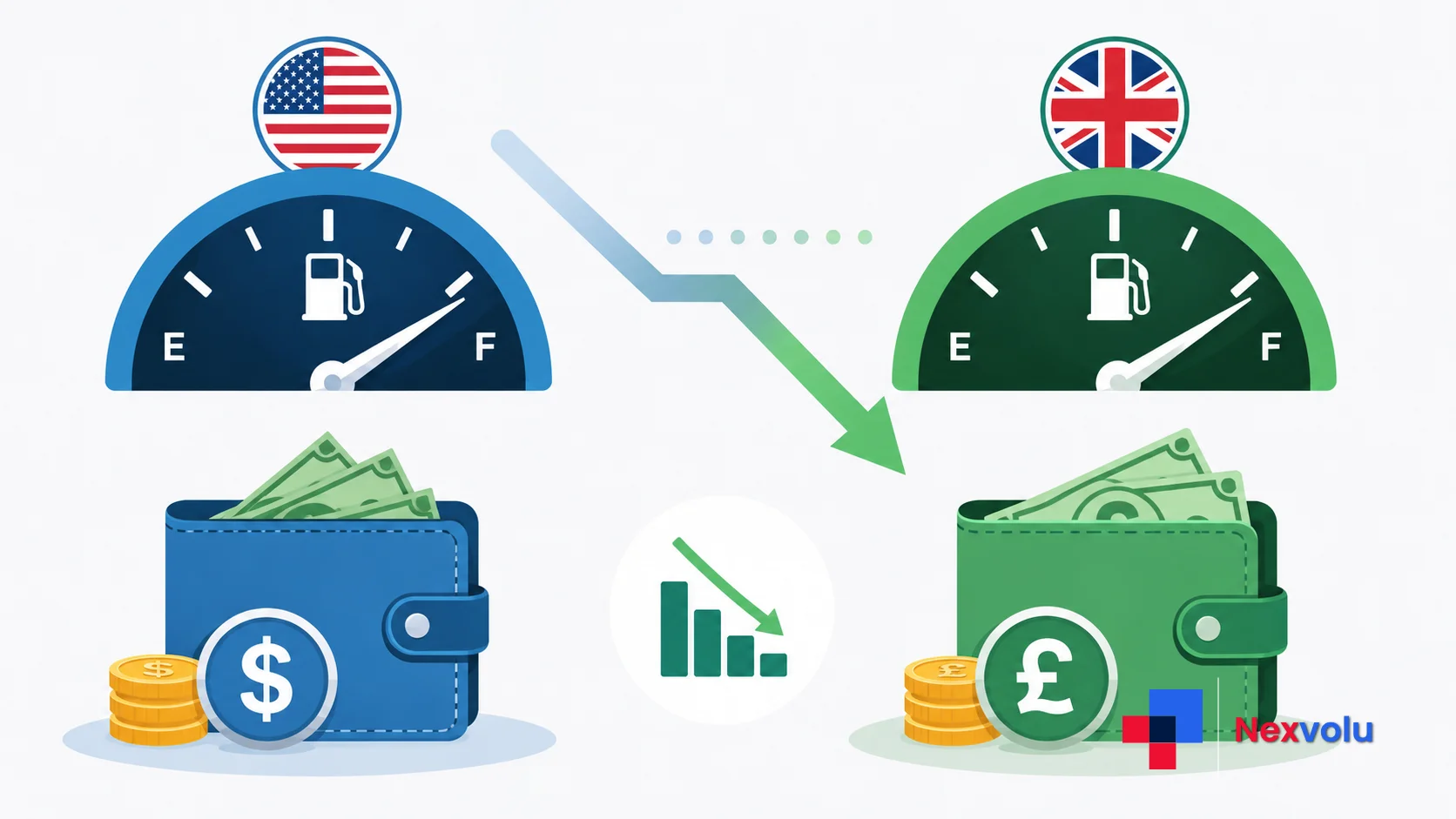
Meanwhile, British drivers are on the same rollercoaster, just a few steps behind. UK pump prices climbed for 43 days straight during the conflict before the rise finally stalled in April, according to the RAC. Petrol jumped from about 133p a litre in late February to roughly 158p, while diesel leapt from 142p to a painful 192p.
The relief is now trickling through unevenly. By mid-June 2026, diesel had eased about 8p from its April peak to around 184p a litre, though petrol was still hovering near its 2026 high at about 159p. Wholesale costs have dropped, and the RAC expects pump prices to follow.
Here’s what the diesel fall already means for a UK driver, based on typical monthly use of around 70 litres.
| Driver profile | Litres/month | Saving at 8p/litre | Yearly saving |
|---|---|---|---|
| Lower mileage | 45 | £3.60 | ~£43 |
| Average driver | 70 | £5.60 | ~£67 |
| High-mileage commuter | 110 | £8.80 | ~£106 |
Petrol drivers are still waiting for their turn. If unleaded follows wholesale costs down by even 10p a litre well within reach if oil stays low an average driver would save about £7 a month, or £84 a year. Not life-changing. But real money, and more is likely on the way.
The Hidden Bonus: Groceries, Airfare, and Inflation
Cheaper fuel doesn’t just help at the pump. In fact, it quietly leaks into almost everything you buy.
Think about how your food reaches the shelf. After all, nearly every item in a supermarket arrives by diesel-powered truck. When diesel falls and it’s falling on both sides of the Atlantic freight costs ease, and that pressure slowly works its way into grocery prices. The effect is gradual, not overnight, but it’s real.
Likewise, air travel tells a similar story. For example, jet fuel tracks crude oil closely, and it’s one of an airline’s biggest costs. Lower oil gives carriers room to hold or trim fares, especially heading into a competitive travel season.
Then there’s the big one: inflation. The San Francisco Fed noted in April 2026 that high energy costs were pushing inflation up, but expected that pressure to fade as oil receded toward pre-conflict levels. Translation — as fuel falls, one of the loudest drivers of your rising cost of living gets quieter.
Will Gas Prices Keep Falling, or Should You Fill Up Now?
This is the question with the nervous energy behind it. Nobody wants to fill up at $3.93 and watch it hit $3.50 next week or fill up cheap and feel smart when the war headlines return.
Still, the forecasts lean lower. The US Energy Information Administration expects retail gasoline prices to keep easing through 2026 as crude stays soft and cars grow more efficient. J.P. Morgan is more dramatic, projecting Brent could average around $60 a barrel in 2026 on a global oil surplus. If that plays out, today’s prices aren’t the floor.
But and this matters the peace deal is fragile. Strikes flared even after the framework was announced, and any fresh disruption to the Strait of Hormuz could send prices spiking again within days. We’ve watched it happen twice this year already.
So here’s the honest take: there’s no need to panic-fill. Buy gas as you normally would. The trend is your friend right now, and trying to time the pump perfectly usually costs more in stress than it saves in cents. If the relief holds, it pairs nicely with a cheaper summer travel season.
Frequently Asked Questions
Are gas prices going down right now?
Yes. US gas prices are falling in mid-2026. AAA reported the national average dropped below $4 a gallon on June 18 for the first time since March, easing to about $3.93 by June 24. The decline followed the US-Iran deal to reopen the Strait of Hormuz, which lowered crude oil prices.
How much will I actually save each month?
A typical US driver using about 45 gallons a month saves roughly $26 monthly, or around $308 a year, from the 57-cent-per-gallon drop. A two-car household can save more than $50 a month. Your savings depend on mileage and vehicle efficiency, not on income.
Why are gas prices falling after the Iran deal?
Gas prices fell because the US-Iran framework deal reopened the Strait of Hormuz, the route carrying about a fifth of the world’s oil. Reduced conflict risk and restored supply pushed Brent crude from above $120 in March to around $73 by late June, and pump prices followed.
Will gas prices go back up in 2026?
Possibly. Forecasters at the EIA and J.P. Morgan expect prices to stay soft or fall further on a global oil surplus. However, the peace deal remains fragile, and any renewed disruption to the Strait of Hormuz could trigger a fast price spike, as happened twice earlier in 2026.
Are UK petrol prices falling too?
Partly. UK diesel eased about 8p a litre from its April peak to roughly 184p by mid-June 2026, according to RAC data. Petrol was still near its 2026 high around 159p, but wholesale costs have dropped, and the RAC expects pump prices to fall further soon.
Do lower gas prices reduce grocery costs?
Eventually, yes. Most groceries travel by diesel-powered truck, so falling diesel reduces freight costs over time. The effect is gradual rather than instant, and it works alongside lower jet fuel and easing inflation to slowly reduce the broader cost of living.
The Bottom Line for Your Budget
Three things to remember. Gas prices are falling on both sides of the Atlantic, with the US average down near $3.93 and UK diesel finally sliding. A typical driver is saving somewhere between $200 and $600 a year, and Brits are next in line as petrol catches up. And the ripple effect cheaper groceries, steadier airfares, cooler inflation stretches the benefit well beyond the pump.
In short, the smart move isn’t to obsess over the perfect fill-up. It’s to notice the breathing room and put it to work toward savings, a bill, or the trip you’ve been postponing.
So here’s the real question: if your fuel costs just dropped by $300 a year, where would that money do the most good for you?
The dollar and pound figures here are illustrative estimates based on typical driving habits and published average prices. Your actual savings will vary. This article is for general information, not financial advice.
Must Read: General
References
- AAA. “National Average Drops Below $4/Gallon as Summer Travel Heats Up.” June 18, 2026. Gas Prices
- AAA. “Gas Prices are Falling, but Will They Keep Going Down?” May 28, 2026. Gas Prices
- BBC News. “Oil prices fall and shares jump after US-Iran deal announced.” June 15, 2026. BBC
- CNBC. “Gas prices pass $3.50 per gallon to highest level since 2024 amid U.S.-Iran war.” March 10, 2026. CNBC
- Fortune. “Current price of oil as of June 26, 2026.” June 26, 2026. Fortune
- RAC / BBC News. “Fuel prices stop rising after 43 days of increases, RAC says.” April 14, 2026. BBC
- Federal Reserve Bank of San Francisco. “Volatile Oil Markets Cloud the Economic Outlook.” April 16, 2026. FRBSF
- U.S. Energy Information Administration. “U.S. retail gasoline prices to decrease in 2025 and 2026 with lower crude oil price.” Eia GOV
- J.P. Morgan Global Research. “Oil price forecast: A bearish outlook for Brent in 2026.” JP Morgan