





Tilly Norwood: What SAG-AFTRA’s AI Actor Rules Mean
Hollywood’s First AI ‘Actor’ Is Here – And the Rules Meant to Protect Your Job Are Weaker Than You Think
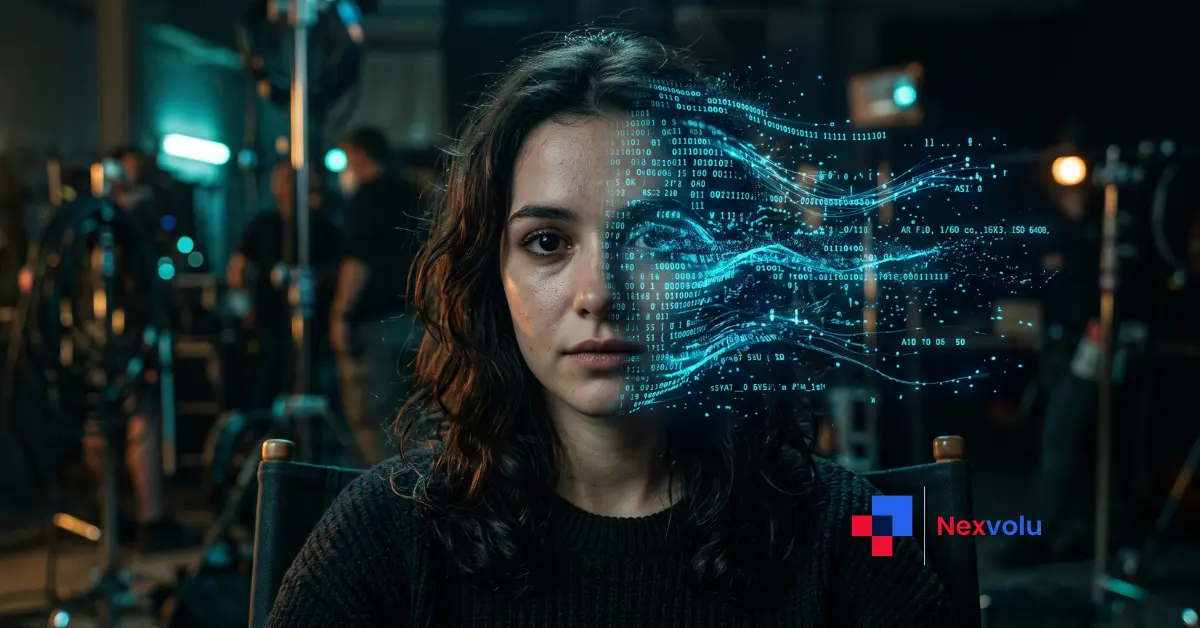
Tilly Norwood has a face, a fanbase, and agents reportedly circling. A feature film is on the way. Yet she has never taken a single breath.
Tilly Norwood is Hollywood’s first AI “actor.” The fight over whether she’s a marvel or a menace has already rewritten the rulebook for a whole industry. The scary part isn’t the technology. It’s how thin the protections look once you read the fine print. And the same logic could land on your desk fast.
Here’s the honest version most coverage skips. AI actors are here. This is exactly what’s protected, what isn’t, and why the outcome matters far beyond a movie set.
What Is Tilly Norwood?
🤖 Tilly Norwood is a fully AI-generated “actor” – a synthetic performer created by Dutch actor and technologist Eline Van der Velden through her AI talent studio Xicoia, launched alongside the London production company Particle6. She has a portfolio, social accounts, and a growing fanbase, but no body, no childhood, and no lived experience. She went viral in late 2025.
Think of her less as a character and more as a product line. Van der Velden has said Xicoia wants to scale to more than 40 AI personas that run on a proprietary “avatar personality engine,” according to Deadline. Tilly is simply the first one to break containment.
The pitch was deliberately provocative. Her creator floated the idea that Tilly could become “the next Scarlett Johansson or Natalie Portman.” That single line did more to enrage working actors than any demo reel could have.
And she keeps expanding. In 2026, the studio announced a feature film, Misaligned a comedy-drama set in a “Tillyverse.” Variety describes it as a coming-of-age story about an AI with “no real body, no childhood and no lived experience of her own.” Van der Velden even brought in a former Prime Video executive to help build out the universe.
Why Did Tilly Norwood Cause Such an Uproar?
Because the backlash wasn’t really about one cartoonish avatar. It was about consent, credit, and cash.
When Tilly went viral, SAG-AFTRA – the union representing roughly 160,000 performers didn’t mince words. “To be clear, ‘Tilly Norwood’ is not an actor, it’s a character generated by a computer program that was trained on the work of countless professional performers without permission or compensation,” the union said. “It has no life experience to draw from, no emotion.”
That phrase trained on the work of countless professional performers is the whole fight in nine words. Actors argue that companies scraped their craft to build a tool meant to replace them.
Stars piled on. Emily Blunt reacted to the news with a blunt “that’s really, really scary,” and dozens of working actors publicly refused to share representation with an algorithm. There was even a funding controversy: internet sleuths flagged that Particle6 had received a British Film Institute grant of around 161,000 dollars, which Van der Velden said went to business development, not to building Tilly.
Then came the reframe. In July 2026, Van der Velden insisted Tilly is a job creator, not a job killer, telling CBS News that Particle6 has “retrained and upskilled” more than 30 film and TV creatives. Critics weren’t buying a coming-of-age story starring something that can’t age.
What Did SAG-AFTRA Agree on for AI?
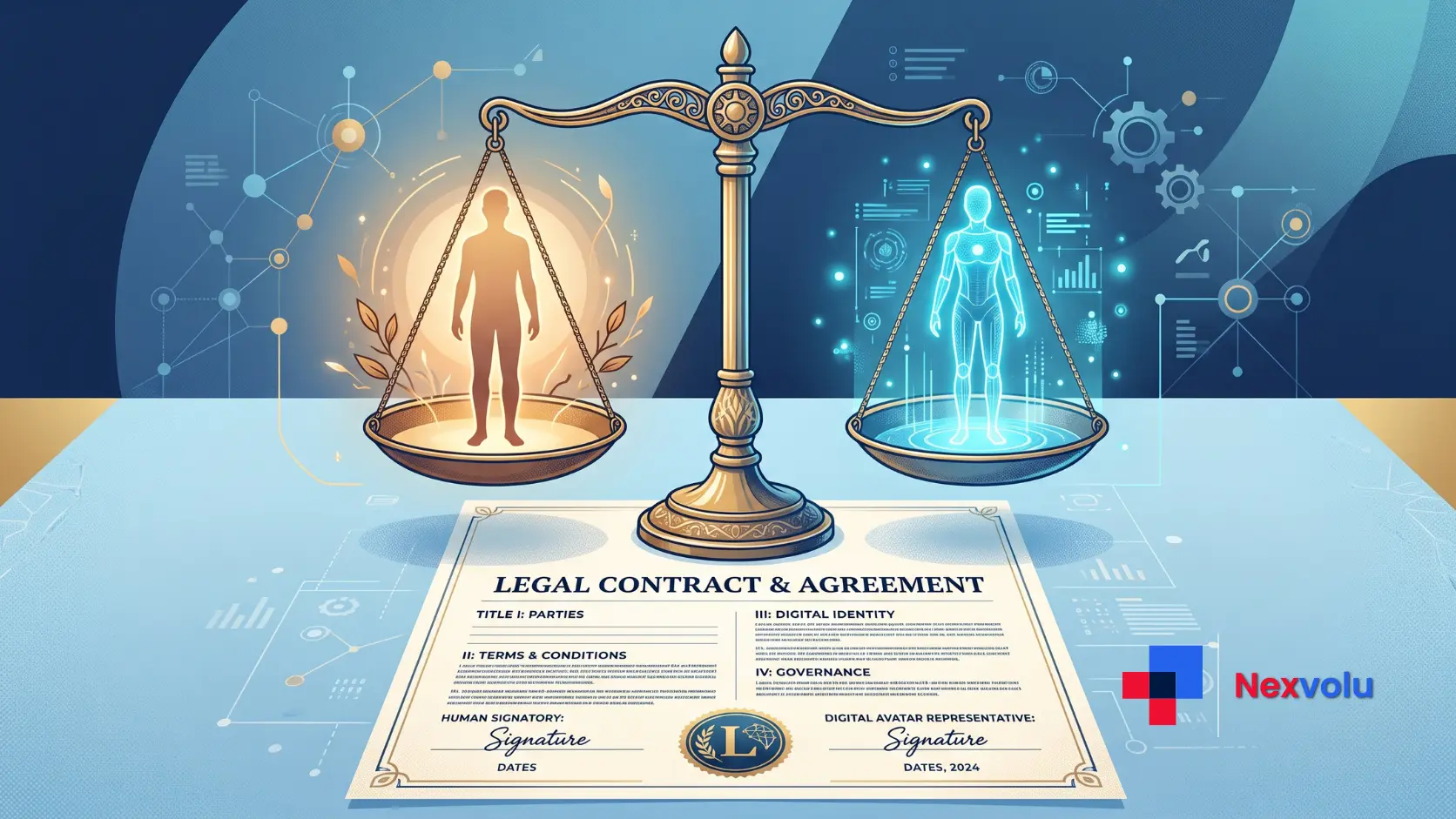
⚖️ SAG-AFTRA’s 2026 TV/Theatrical Agreement ratified in June 2026 and effective July 1, 2026 lets producers use “synthetic performers” only after giving the union advance notice and bargaining first. Studios committed to a principle strongly favoring human performers, and agreed not to hand a human role to a synthetic unless it brings “significant additional value” to the project.
The deal passed overwhelmingly – 91.42% to 8.58% – so this is now the law of the set, not a wish list. According to SAG-AFTRA, the union can take signatory producers who skip the notice-and-bargain step to arbitration for damages.
A few protections matter more than the rest. Here’s the plain-English breakdown.
| What’s protected ✅ | What’s NOT locked down ⚠️ |
|---|---|
| Producers must give notice and bargain before using any synthetic performer | Synthetics aren’t banned – they’re allowed if “truly necessary” and adding “significant additional value” |
| A stated principle strongly favoring human performances | “Significant additional value” is undefined and will be fought over case by case |
| AI likenesses can’t be used as strikebreakers during a lawful strike | No new per-use fee (“Tilly tax”) on synthetics made it into the contract |
| Arbitration and damages if a studio violates the terms | Enforcement depends on individual employment contracts and future grievances |
Read it back and the tension is obvious. The union drew a clear line – humans first – but left a door open marked “significant additional value.” Whoever gets to define that phrase effectively decides how far AI walks in.
Is an AI Actor Like Tilly Norwood Legal?
Yes – creating an AI character is legal. The friction lives in three places: training data, likeness law, and union contracts.
No statute bans building a synthetic performer. But if a studio trains a model on real actors’ performances without consent, that fuels the “stolen performances” claim and possible copyright and publicity disputes. State laws like California’s AB 2602 require clear, informed consent before a studio uses a digital replica of a real person.
Tilly sits in a gray zone. Her creators market her as a “synthetic,” not a copy of any one named actor, so replica-consent laws don’t cleanly apply. That’s exactly why unions want new rules written specifically for synthetics.
And she can’t unionize, hold a SAG-AFTRA card, or sign a contract. So the leverage isn’t on Tilly – it’s on the studios. Any SAG-AFTRA signatory that wants to use her has to honor the notice-and-bargain obligations first, or risk arbitration.
What Is the “Tilly Tax” – and Did It Actually Pass?
💰 The “Tilly tax” is a proposed fee – named after Tilly Norwood – that would make studios pay a royalty into a union fund every time they use a synthetic performer instead of a human. The goal is simple: erase the cost savings, so a studio can’t reach for AI just because it’s cheaper. As SAG-AFTRA’s national executive director put it, “we’ve got to make sure the economic incentives drive work for humans.”
Here’s the part almost every article gets wrong.
The Tilly tax did not make it into the ratified 2026 contract. It was a bargaining idea SAG-AFTRA floated ahead of negotiations, as Variety and Fortune reported – not a rule studios agreed to. What actually passed was the softer notice-bargain-arbitrate structure above.
Why does that distinction matter? Because the economic incentive to replace humans is still fully intact. A synthetic performer can still be far cheaper than a cast, a crew, and a trailer. Legal analysts reading the final deal argue the union got a foundation, not a ceiling and expect the Tilly tax to return with more leverage at the next big negotiation in 2030.
So the warning is real: the concept that could actually protect paychecks pricing AI so it costs the same as a person exists only as a proposal. For now, the cheapest option is still legal.
What Hollywood’s AI Fight Signals for Every Knowledge Worker
Don’t file this under showbiz gossip. Hollywood is just the loudest test case for a question landing in every office: when AI can do a version of your job, who decides whether it should?
The macro numbers set the stage. The World Economic Forum projects 170 million new roles and 92 million displaced by 2030 a net gain of 78 million, but with 22% of jobs churning underneath. And AI is already showing up in pink slips: the outplacement firm Challenger, Gray & Christmas says employers blamed AI for 87,714 US job cuts in the first half of 2026 alone. That figure already tops the 54,836 AI-linked cuts across all of 2025.
Notice the pattern. Actors got there first, and they fought for three things worth stealing:
- Consent – your work shouldn’t train your replacement without permission.
- Compensation – if someone reuses a synthetic version of your output, you get paid.
- Control – a human-first default, with AI allowed only when it adds real value.
That “significant additional value” test is the transferable idea. Reframe it for a marketing team, a law firm, or a newsroom, and it becomes a fair question to ask your own employer: is this tool here to make the work genuinely better, or just cheaper than me? The actors who negotiated notice-and-bargain rights basically won the right to see it coming. Most knowledge workers don’t have that yet.
📣 Following how AI is reshaping work? Share this with a colleague who thinks it’s only Hollywood’s problem and tell us in the comments where you’d draw the line in your own industry.
Nexvolu’s Verdict
🎬 The verdict: Tilly Norwood is less a movie star than a stress test and the 2026 rules prove the guardrails are real but soft, with the one measure that would truly protect workers (the Tilly tax) still stuck on the drawing board.
Best for: anyone who wants to understand AI-and-jobs beyond the outrage. Skip it if: you only came for celebrity drama.
Pros: clear notice-and-bargain protection now exists · a human-first principle is on the books · the fight created a transferable playbook (consent, compensation, control).
Cons: “significant additional value” is undefined · no per-use fee passed, so AI stays cheaper · enforcement won’t be tested until real grievances hit.
Standout: the widely-repeated “Tilly tax” never actually became a rule it’s a proposal, likely returning in 2030.
Nexvolu Editorial Score: 7/10 – a genuine labor win with a loophole big enough to drive a render farm through; strong protection on paper, unfinished where the money is.
Frequently Asked Questions
Is Tilly Norwood a real person?
No. Tilly Norwood is not a real person – she’s a fully AI-generated synthetic performer created by the studio Xicoia, with no body, no biography, and no lived experience. Everything from her face to her social posts is computer-generated. That’s precisely why SAG-AFTRA insists she “is not an actor.” In practice, she functions more like a brand or product than a performer: her creators can spin up her appearance, voice, and “personality” on demand, and they’ve said they plan to build dozens more AI characters like her. So when you see Tilly “cast” in a film, no human is performing the lead role on screen.
Who created Tilly Norwood?
Eline Van der Velden, a Dutch actor and technologist, created Tilly Norwood through her AI talent studio Xicoia, which launched alongside the London-based production company Particle6. Van der Velden is the public face of the project and its loudest defender. She’s argued that Tilly represents opportunity rather than replacement, telling CBS News that Particle6 has retrained more than 30 film and TV creatives. Critics counter that a studio built to manufacture synthetic performers has an obvious incentive to downplay the risk to human jobs. Either way, Xicoia – not any actor – owns and controls Tilly.
Is it legal to use an AI actor in a movie?
Using an AI actor is legal, but union productions add heavy conditions. There’s no law banning synthetic performers outright. However, any SAG-AFTRA signatory studio must give the union notice and bargain before using one, under the 2026 contract. Beyond that, training an AI on real actors’ work without consent can trigger copyright and right-of-publicity claims, and state laws such as California’s AB 2602 require consent to use a digital replica of a real person. Because Tilly is marketed as a “synthetic” rather than a copy of one named actor, she sits in a legal gray zone unions are now racing to close.
What did SAG-AFTRA agree on for AI in 2026?
SAG-AFTRA’s 2026 TV/Theatrical Agreement, ratified 91.42% to 8.58% and effective July 1, 2026, requires producers to notify and bargain with the union before using synthetic performers. Studios accepted a principle strongly favoring human performances and agreed not to replace a human role with a synthetic unless it adds “significant additional value.” The deal also bars AI likenesses from being used as strikebreakers and allows arbitration for damages if a studio violates the terms. It builds on the AI and digital-replica protections first won during the 2023 actors’ strike.
What is the Tilly tax?
The Tilly tax is a proposed royalty – named after Tilly Norwood – that would force studios to pay into a union fund every time they use a synthetic performer instead of a human, erasing AI’s cost advantage. Crucially, it did not pass into the 2026 contract; it remains a bargaining concept. That gap matters: without it, a synthetic performer can still be dramatically cheaper than hiring a full cast and crew, so the financial incentive to choose AI is untouched. Legal analysts expect the idea to resurface with more union leverage at the 2030 negotiations.
Will AI actors replace human actors?
Not wholesale, and not soon but the pressure is real. Audiences so far have shown little appetite for “content untethered from the human experience,” as SAG-AFTRA put it, and the 2026 contract sets a human-first default. Still, synthetics are cheaper, and studios can use them when they add “significant additional value,” an undefined phrase open to interpretation. The likelier near-term future is hybrid: AI for background elements, de-aging, and crowd scenes, with humans in lead roles. The unresolved fight is over where that line sits and who gets to move it.
Conclusion
Tilly Norwood isn’t frightening because she’s convincing. She’s frightening because she forced everyone to read the contract and the contract shows how much is still up for grabs.
Three takeaways worth keeping. First, the protections are genuine: notice, bargaining, a human-first principle, and no AI strikebreakers. Second, the loopholes are just as genuine: “significant additional value” is undefined, and the one rule that would price AI fairly – the Tilly tax – didn’t pass. Third, this is a rehearsal for your industry, not just Hollywood’s.
The actors who fought this year didn’t stop AI. They won the right to see it coming and to bargain over it. That’s the move worth copying.
So here’s the question we’ll leave you with: if your employer could do a cheaper, “good enough” version of your job with AI tomorrow, would you rather they told you first or would you rather find out like the actors did?
References
- SAG-AFTRA – “SAG-AFTRA Statement on Synthetic Performer”: SAG-AFTRA
- SAG-AFTRA – “2026 TV/Theatrical Contracts” (synthetic performer FAQ): SAG-AFTRA
- SAG-AFTRA – “Members Approve 2026 TV/Theatrical Contracts”: SAG-AFTRA
- Variety – “Unable to Stop AI, SAG-AFTRA Mulls a Studio Tax on Digital Performers”: Variety
- Fortune – “Actors union is bargaining for ‘Tilly tax’ on AI film characters”: Fortune
- Variety – “AI Actor Tilly Norwood to Make Movie Debut in Comedy-Drama Misaligned”: Variety
- Deadline – “Eline Van Der Velden Launches AI Talent Studio Xicoia”: Deadline
- CBS News – “Tilly Norwood’s creator insists the AI actor is creating Hollywood jobs”: CBS News
- World Economic Forum – “Future of Jobs Report 2025”: World Economic Forum
- Challenger, Gray & Christmas / Business Insider – AI layoffs data 2026: Business Insider