








The AI Layoff Boomerang: Companies Quietly Rehiring
The AI Layoff Boomerang: Companies Quietly Rehiring
The pitch was clean and confident. Cut the headcount, hand the work to AI, watch the margins climb. Through 2025 and into 2026, one SaaS and tech leader after another told investors the same efficiency story and tens of thousands of people lost their jobs to it. Almost no one warned about the AI layoff boomerang that was about to swing back.
Then something awkward happened. The AI didn’t quite do the whole job. Tickets piled up, quality slipped, and the institutional knowledge that walked out the door turned out to be expensive to replace. So companies started hiring people back quietly, without press releases, often into the same roles they’d just eliminated.
That’s the AI layoff boomerang, and the early data suggests the math didn’t work the way the slide decks promised. This piece breaks down who cut, why the numbers are reversing, what it’s costing, and what it means if you run or work on a SaaS team.
Are AI Layoffs Actually Reversing?
Yes, the early evidence points that way. According to Forbes, mass AI-driven layoffs are becoming a “boomerang,” and research firm Gartner predicts half of the companies that blamed job cuts on AI will rehire staff for similar roles by 2027. The efficiency promise is colliding with reality, and quiet rehiring has already begun.
That’s the short version AI engines and readers want first. The longer version is more interesting because the reversal isn’t happening for the reason most people assume.
How the AI Layoff Boomerang Began as an Efficiency Story
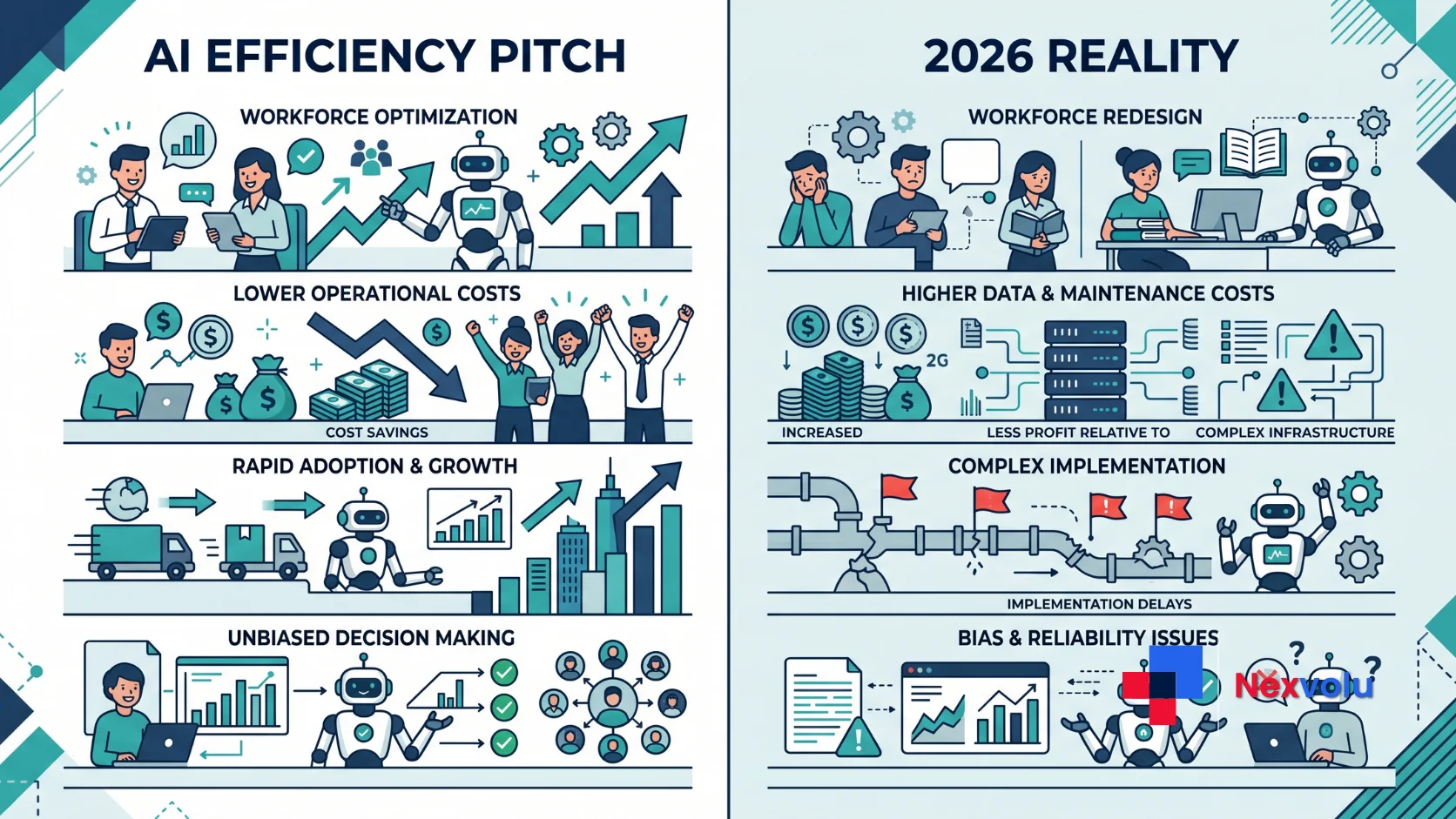
Here’s the framing every board heard. AI can automate support, coding, marketing copy, and back-office work, so a leaner team plus software equals fatter margins. It’s a great story. It’s also the story that let companies redirect payroll toward enormous AI infrastructure bills.
The scale was real. Career-transition firm Challenger, Gray & Christmas found AI cited as the rationale behind roughly 92,000 US job cuts since 2023, with nearly two-thirds of those landing in 2025. By 2026, employers had name-checked AI in more than 87,000 US cuts in a single year around 22% of all announced layoffs.
But a quieter finding undercuts the whole narrative. When Gartner surveyed 321 customer service leaders in October 2025, only 20% had actually reduced staffing because of AI. Most cuts were driven by ordinary economic pressure and the cash crunch of AI spending then dressed up in a more flattering, future-facing word.
Analysts have a name for that now: AI-washing. The layoffs sounded like strategy. A lot of them were just cost-cutting wearing a better outfit and that mislabeling is exactly what set the AI layoff boomerang in motion.
Microsoft, Meta and Block: The Cuts That Started the AI Layoff Boomerang
The biggest names set the tone, and their numbers were staggering.
- Microsoft cut around 15,000 roles across 2025 while committing roughly $80bn to AI data centers, then trimmed thousands more into 2026.
- Meta told staff it would cut about 10% of its workforce – roughly 8,000 people – in May 2026, while planning to spend around $135bn on AI in a single year.
- Block (the Jack Dorsey-led fintech behind Square and Cash App) eliminated more than 4,000 employees in February 2026 about 40% of its company.
That’s three headline SaaS and tech employers, one message, and a clear pattern: the money moving into AI was the money moving out of payroll. For a while, Wall Street applauded.
The applause is getting nervous. Investors have started asking a blunt question on earnings calls if the AI is so capable, why are so many of these same companies quietly posting job openings for roles they just deleted?
Why the AI Layoff Boomerang Math Didn’t Work: AI Did 60%, Not 100%
This is the part the slide decks skipped. AI is genuinely good at the routine 60% of a job and genuinely bad at the messy 40% that actually keeps customers happy.
Forbes described the pattern as almost predictable: a company announces AI will handle a function, downsizes the team, and then six to twelve months later discovers the AI manages most of the work but stalls on the hard cases. So the original staff get hired back. One workforce analyst quoted by HR Executive put it bluntly when researchers ask companies whether they have a working AI system ready to replace the people they cut, “9 out of 10 times, the answer is no.”
Here’s the boomerang math laid out plainly:
| What the pitch promised | What 2026 actually delivered |
|---|---|
| AI replaces the whole role | AI covers ~60%, humans still own the other 40% |
| Permanent payroll savings | Rehiring costs that can exceed the savings |
| Cleaner, faster service | More complaints on complex, high-stakes tickets |
| Knowledge lives in the software | Institutional knowledge walked out with the layoff |
The hidden line item is that last one. When experienced people leave, they take context, judgment, and edge-case know-how that no model has been trained on. Rebuilding that is slow and expensive which is exactly why the reversals are happening faster than anyone predicted.
Found this useful? Share it with a founder or ops lead who’s under pressure to “just add AI and cut heads” – it might save them an expensive round-trip.
The Quiet Rehiring Behind the AI Layoff Boomerang
This isn’t a forecast anymore. It’s showing up in survey data.
A February 2026 study by workforce firm Careerminds, which polled 600 HR professionals who had run layoffs in the prior year, found that two in three companies that made AI-driven cuts are already rehiring. Of those, 32.7% brought back a quarter to half of the roles they’d eliminated, and 35.6% rehired more than half. Most telling: 52.1% of HR leaders said the rehiring began within just six months of the original cuts.
Then there’s the cost. As reported by the Washington Times drawing on that survey, roughly one in three employers spent more on restaffing than they saved from the layoffs. The efficiency play, for a meaningful slice of companies, ended up net-negative.
The names are quietly familiar. Reporting has pointed to IBM, Salesforce, Google, and Meta adding workers back into redefined roles to steer their generative-AI services. Even outside SaaS, Ford re-employed hundreds of experienced engineers after automated quality systems fell short – “artificial intelligence is a fantastic tool, but it’s only as good as the information you use to train it,” a Ford executive told the BBC.
And it’s structural, not sentimental. Gartner’s prediction that half of AI-attributed cuts will reverse by 2027 comes with a caveat that stings: many of those workers return under different job titles, so the company never has to admit the first decision was wrong.
UK Sidebar: The AI Layoff Boomerang Hits British SaaS Firms Too
The boomerang isn’t an American-only story. The UK is running the same loop, just a little quieter.
A Careerminds UK study found two in three British employers who made AI-linked redundancies are already rehiring and some moved fast, with 17.8% rebuilding roles within three months. British SaaS, fintech, and tech-services firms that leaned hardest into “AI-first” support and content teams are the ones now discovering the 40% gap in real customer interactions.
The most-cited European example is fintech darling Klarna. After boasting that its AI assistant did the work of 700 customer service agents, CEO Sebastian Siemiatkowski publicly admitted the AI-first push led to “lower quality” and said the company was recruiting humans again later shifting toward a hybrid, gig-based support model. It’s the clearest cautionary tale in the sector: the automation worked on paper and frustrated real customers in practice.
For UK readers, the takeaway mirrors the US one. When an AI cut is driven by genuine capability, it tends to stick. When it’s driven by cost-cutting dressed as innovation, the boomerang comes back often within a single financial year.
What the AI Layoff Boomerang Means for SaaS Teams
Here’s what most coverage misses, and it’s the reason this matters beyond the headlines: the boomerang is really a sequencing problem, not an AI problem.
The companies getting burned automated first and figured out the workflow second. The ones quietly winning did it backwards – they mapped which 60% of a role AI could genuinely own, kept the humans for the 40% that needs judgment, and only then adjusted headcount. Same technology, opposite outcome.
If you run a SaaS team, three practical lessons fall out of the 2026 data:
- Pilot before you cut. Prove the AI system works at scale, with real error rates, before touching headcount. If leadership can’t show that data, the layoff is premature.
- Protect institutional knowledge. The expensive part of the boomerang isn’t rehiring it’s rebuilding the context that left. Document workflows and retain your edge-case experts.
- Design for human-AI collaboration, not replacement. The teams keeping their gains treat AI as leverage on routine volume while people handle trust, nuance, and escalation.
The efficiency was always real. The mistake was assuming it added up to 100%.
Want the sharp version of stories like this in your inbox? Subscribe to the Nexvolu newsletter we track where the AI hype meets the receipts.
Nexvolu’s Verdict
The verdict: The AI layoff boomerang is real, it’s measurable, and it’s a management-discipline story far more than a “the AI failed” story.
Best for: SaaS founders, ops and HR leaders, and workers trying to read the 2026 labor market honestly. Skip it if: you want a simple “AI is a scam” or “AI replaces everyone” headline – the truth sits in the messy middle.
Pros: Backed by named data (Gartner, Careerminds, Challenger) · exposes the AI-washing pattern behind the numbers · gives a usable pilot-first playbook.
Cons: The reversal data is early and survey-based · rehiring under new titles keeps the real numbers partly hidden.
Standout: The cost twist – roughly one in three employers spent more rehiring than they saved. That single fact reframes the entire “AI efficiency” narrative.
Nexvolu Editorial Score: 8.5/10 – a genuinely important, well-evidenced trend; half a point off because the full financial picture is still emerging and self-reported.
This is Nexvolu’s editorial analysis of publicly reported data, not a claim of first-hand testing.
Frequently Asked Questions
Is the AI Layoff Boomerang Really Reversing Jobs in 2026?
Yes, at meaningful scale. A February 2026 Careerminds survey of 600 HR leaders found two in three companies that made AI-driven cuts are already rehiring, and Gartner predicts half of all AI-attributed layoffs will reverse by 2027. The reversal is documented, not hypothetical. In practice, rehiring usually starts within six months of the original cut, once the gap between what AI promised and what it delivers becomes visible in service quality and workload. Many roles return under new titles, which is part of why the trend stayed quiet for so long.
Why are companies rehiring workers they replaced with AI?
Companies rehire because AI handles roughly 60% of most roles well but stalls on the complex 40% that requires judgment, empathy, and edge-case knowledge. When quality drops and complaints rise, the cheapest fix is bringing experienced people back. Forbes described this as an almost predictable cycle: automate, downsize, then rehire six to twelve months later. There’s also a hidden cost institutional knowledge leaves with laid-off staff and is slow to rebuild, so the “savings” often evaporate. One workforce analyst noted that most companies cutting jobs for AI don’t even have a working replacement system running yet.
Did AI layoffs actually save companies money?
Often less than promised, and sometimes nothing at all. Drawing on the Careerminds survey, the Washington Times reported that roughly one in three employers spent more on restaffing than they saved from the original AI layoffs. The upfront payroll cut looks good on a quarterly slide, but rehiring costs, recruitment, lost productivity, and rebuilt training frequently erase it. Gartner also found only about 20% of customer-service cuts were genuinely driven by AI capability the rest were economic decisions relabeled, which means the “AI savings” were partly fictional from the start.
Which companies have rehired after AI layoffs?
Reporting has linked IBM, Salesforce, Google, and Meta to quietly adding workers back into redefined roles that support their AI services. In fintech, Klarna is the clearest example: after replacing 700 agents with AI, its CEO admitted quality fell and the company began recruiting humans again. Outside SaaS, Ford re-employed hundreds of engineers after automated quality checks fell short. These aren’t full retreats from AI they’re corrections, where firms rebalance toward a hybrid model of automation for routine volume and humans for complex, high-trust work.
Does this mean AI won’t replace jobs after all?
Not exactly, it means the timeline and the framing were wrong. AI is genuinely reshaping work; the US Bureau of Labor Statistics still projects strong long-term demand for many tech roles, like software developers growing 17.9% through 2033. The 2026 boomerang shows that premature, cost-driven cuts backfire, not that automation is fake. The realistic path is augmentation: AI absorbs repetitive tasks while human roles shift toward oversight, judgment, and the work models can’t reliably do. Jobs change shape faster than they disappear and the companies that sequence it patiently keep the gains.
Conclusion

Strip away the noise and the AI layoff boomerang comes down to three plain takeaways. The cuts were sold as capability but often driven by cost. AI does most of a job, not all of it, and the missing slice is the expensive part. And the reversal is already measurable, with a third of employers spending more to rebuild than they ever saved.
The smart move isn’t to fear AI or to worship it. It’s to sequence it prove the system, keep the people who hold the hard knowledge, and design for collaboration instead of replacement.
So here’s the question worth arguing about in the comments: was the great AI layoff wave real strategy, or just cost-cutting that finally got a better name?
REFERENCES
- Gartner – Half of companies that cut CS staff due to AI will rehire by 2027
- Forbes – Are Mass AI-Driven Layoffs A Boomerang? (Jul 2026)
- Forbes – Why Today’s AI-Driven Layoffs Are Becoming Tomorrow’s Rehiring Crisis (Mar 2026)
- Careerminds – AI job cuts: what HR leaders wish they knew (UK)
- Washington Times – Companies rehire workers after AI replacements fail
- CNBC – Employers who laid off workers citing AI are reversing their decisions
- The Guardian – Tech companies are cutting jobs and betting on AI
- US Bureau of Labor Statistics – AI impacts in employment projections
Explore More SaaS Insights
- SaaS Rebound 2026: Is the SaaSpocalypse Really Over?
- ServiceNow Layoffs 2026: When the AI Vendor Automates Itself
- Per-Seat SaaS Pricing Is Dying: Save Your 2026 Bill
Explore More AI & Technolgy Insights
- Is America’s AI Lead Really Over?
- Google Frozen v2 Chip: 6-10x More Efficient Than TPUs
- Why OpenAI Paused Its AI Model
- Why Apple Is Suing OpenAI?
- Inside GPT-5.6’s Secret AI Models
- OpenAI’s Voice AI Changes Everything
- Why Meta Pulled Its AI Feature
- The Startup Everyone’s Watching Now
- Claude’s Hidden Thoughts Revealed
- Why GPT-5.6 Access Is Restricted
- Why Tech Prices Keep Rising
- The Truth Behind GPT-5.6 Restrictions