








SaaS Rebound 2026 Is the SaaSpocalypse Really Over?
SaaS Rebound 2026 Is the SaaSpocalypse Really Over? Software stocks just had their best month since 2001. In May 2026, the same sector that spent the winter in free fall came roaring back, and the financial press rushed to declare the “SaaSpocalypse” dead. So is the SaaS crash over? Mostly, yes. But here’s the part that rarely makes the headline: this SaaS rebound came with a guest list, and only about 10 companies got an invite.
That distinction matters far beyond Wall Street. If you’ve got a 401(k), a workplace pension, or a job at a software company or your employer quietly pays for tools like Salesforce, Adobe, or Slack this recovery is reshaping your financial life whether you follow markets or not. Let’s translate what actually happened into plain English.
Table of Contents
- Is the SaaS rebound real, or just a head fake?
- What the SaaSpocalypse actually was
- The two-tier market: why only 10 companies got invited
- What the uneven rebound means for your job
- What it means for your 401k or pension
- What it means for the software your company pays for
- Frequently Asked Questions
Is the SaaS rebound real, or just a head fake?
Yes, the SaaS rebound is real at the index level. After the worst start to a year on record, software stocks posted their best month since 2001 in May 2026. But the gains are lopsided. A small cluster of AI-infrastructure and security companies is carrying the recovery, while most legacy software names still sit far below their old highs.
Both things are true at once, and that’s the whole story. According to CNBC, the May rally was strong enough to pull the iShares software ETF back to roughly 3.8% down for the year yet it still badly trailed the Nasdaq, which had gained about 18% in 2026. A bounce, then. Not a full healing.
What the SaaSpocalypse actually was
Rewind to the start of 2026. SaaS software as a service is the subscription model behind almost every business app you touch, from your HR portal to your design tools. For a decade, investors loved it: recurring revenue, fat margins, predictable growth.
Then AI agents arrived, and the mood flipped overnight.
The fear was simple but brutal. If AI can write its own software and “agents” can do the work that used to need ten paid seats, why keep paying per-seat subscriptions? In the first week of February 2026 alone, Forrester reported that more than $1 trillion in market value was wiped off software stocks. A single product announcement from an AI lab could erase tens of billions in an afternoon. Traders started calling it the SaaSpocalypse, and the name stuck.
Here’s the thing, though. The crash was real, but the obituary was premature. As Goldman Sachs framed it, AI isn’t shrinking the software market it’s expanding it while shifting where the profit lands. The bank estimates that by 2030, more than 60% of software economics could flow through AI agents rather than traditional subscription seats. That’s not the death of software. It’s a violent reshuffling of who gets paid.
The two-tier market: why only 10 companies got invited
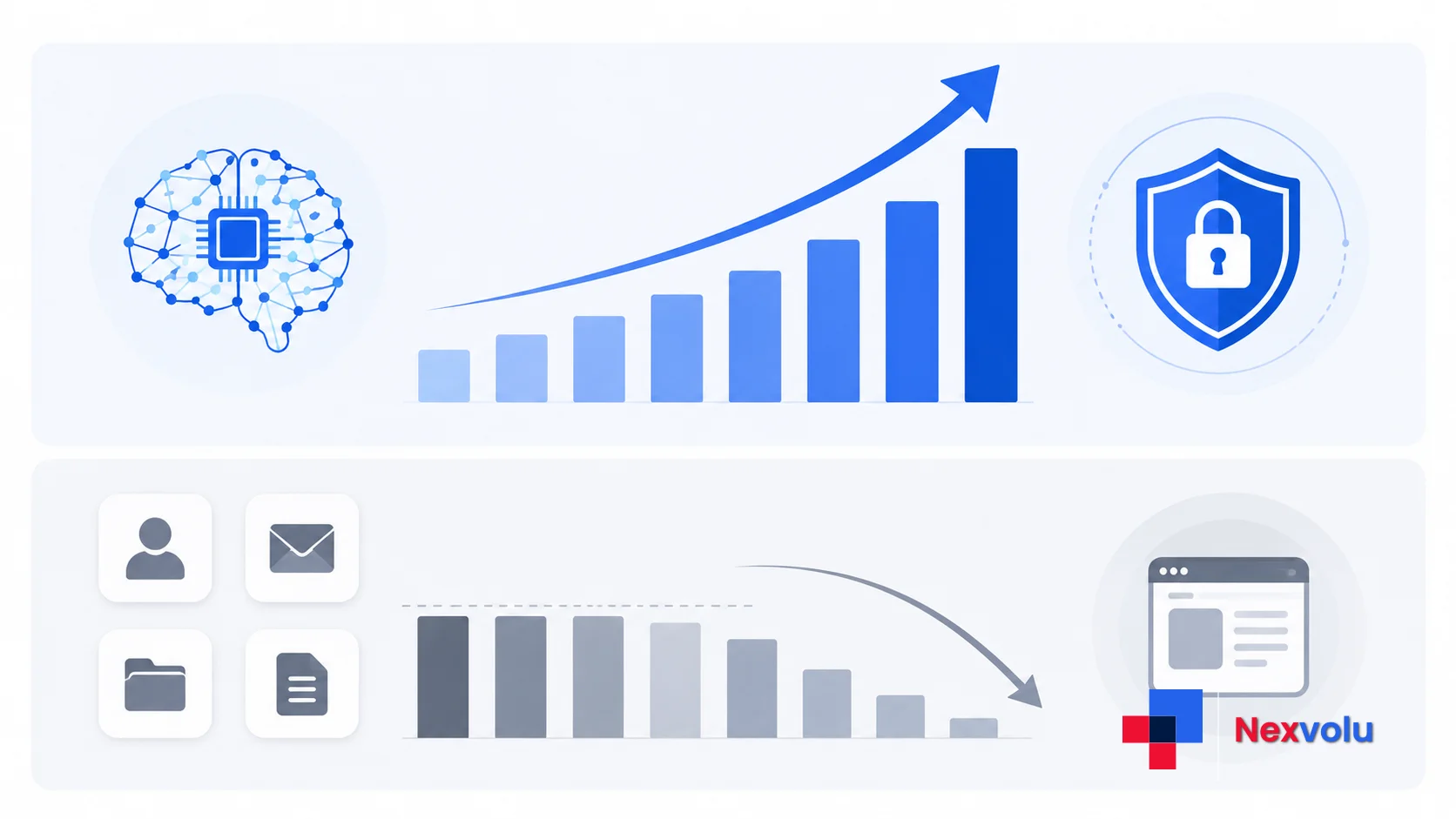
When people say “the SaaS rebound,” they picture the whole sector rising together. It didn’t. The recovery split the market cleanly in two.
On one side sit the winners: companies that sell the picks and shovels of the AI boom or guard it. Think data and AI-infrastructure names like Snowflake, Datadog, and MongoDB, plus the security players such as CrowdStrike, Zscaler, and Palo Alto Networks. AI makes their products more valuable, not less, because every AI workload needs somewhere to live, somewhere to be analyzed, and something to protect it. Jefferies analysts have openly called Snowflake “a huge winner in AI.”
On the other side sits everyone else the legacy, per-seat application vendors. This is where it stings. According to Morningstar, over a recent 12-month stretch Adobe fell about 35%, Salesforce dropped roughly 27%, and ServiceNow slid 18%, even as the broader Nasdaq climbed. By April 2026, 24/7 Wall St reported ServiceNow was down around 40% for the year despite beating earnings.
| Tier | Who’s in it | Why the market reacted this way |
|---|---|---|
| Invited (the rebound winners) | AI data/infrastructure (Snowflake, Datadog, MongoDB), security (CrowdStrike, Zscaler, Palo Alto), AI-monetizing giants (Microsoft) | AI increases demand for their products; they sell what AI needs |
| Not invited (still climbing out) | Legacy per-seat apps (Salesforce, Adobe, Workday, HubSpot, Atlassian) | Investors fear AI agents shrink seat counts and erode pricing power |
So when an index turns green, remember what’s under the hood. The cap-weighted basket reads positive because a few heavyweight winners carry it. The median software company is still digging out of a deep hole. If you want the wider picture on why a handful of giants now dominate the indexes, our breakdown of Magnificent 7 concentration risk is worth a read.
Share this: if a friend keeps hearing “software is back” on the news, send them this the rebound is real, but the invite list is short.
What the uneven rebound means for your job
Forget the ticker symbols for a second. The split market sends a real signal about work.
Legacy software companies under valuation pressure tend to do three things: tighten hiring, trim costs, and lean harder on AI internally. If you work in or around enterprise software sales, support, implementation, marketing the pressure is genuine. Companies are being told by the market to do more with fewer people.
But panic is the wrong response. The same shift is creating demand on the winners’ side: AI infrastructure, data engineering, and especially cybersecurity, where hiring stays hot because every AI rollout widens the attack surface. The skills that travel well right now are the ones that help a business adopt AI safely rather than the ones AI replaces. That’s not a guarantee it’s a direction worth steering toward.
What it means for your 401k or pension
This is where the SaaSpocalypse reaches into ordinary households, and most people never connect the dots.
If you’re in the US: your 401(k) probably leans on an S&P 500 index fund. That sounds diversified, but it isn’t as spread out as it looks. The Magnificent 7 mega-caps now make up roughly 33% of the entire S&P 500’s value, according to The Motley Fool. When a few AI-driven giants sneeze, your “diversified” fund catches the cold. The good news: software is a slice of the index, not the whole thing, so the SaaS crash dented portfolios without sinking them.
If you’re in the UK: your workplace pension likely sits in a global tracker or a “developed world” fund. Don’t let the word global fool you. Vanguard’s FTSE Developed World index held about 68.7% in US stocks as of May 2026, per Vanguard’s own data. So a British pension saver riding a “global” fund is heavily exposed to US tech including the very software names that just whipsawed.
The takeaway for both? Volatility in one sector is exactly why long-term, diversified investing exists. A wobble in software is survivable when it’s one ingredient in a broad mix. If you’re not sure how concentrated your own fund really is, that’s the question worth asking before the next headline scares you.

What it means for the software your company pays for
There’s a quieter consequence, and it lands on your desk. The pricing model behind your work tools is changing fast.
For years, software was sold by the seat: ten employees, ten licences. As AI agents do more of the clicking, vendors are scrambling toward usage-based and outcome-based pricing you pay for what the software produces, not how many people log in. Some of this is good for buyers; some of it just repackages the bill.
Expect three shifts at work: renewal conversations that look very different, vendors bundling AI “agents” into plans you already pay for, and a wave of consolidation as weaker tools get acquired or shut down. The practical move is to audit what your team actually uses before the next renewal. The SaaS sprawl that built up over the last decade is exactly what AI-era buyers are now trimming.
Frequently Asked Questions
Is the SaaSpocalypse over in 2026?
Largely, yes. After a record-bad start to 2026, software stocks staged their strongest month since 2001 in May, and the sector index turned positive. But the recovery is uneven a small group of AI and security companies drove most of the gains, while many legacy software firms remain well below their old highs.
What caused the SaaS crash in the first place?
Fear of AI agents. Investors worried that autonomous AI could replace the per-seat subscription model SaaS relies on, letting companies do the same work with fewer paid licences. That fear erased more than $1 trillion from software stocks in a single week of February 2026, even though most of those businesses kept growing.
Which software companies are winning the rebound?
The winners cluster around AI infrastructure and security data platforms like Snowflake and Datadog, and cybersecurity names like CrowdStrike and Palo Alto Networks. These companies sell what AI workloads need rather than what AI replaces, so rising AI adoption increases demand for their products instead of threatening it.
Will AI actually replace SaaS software?
Not wholesale. AI is shifting where value sits rather than deleting software. Goldman Sachs estimates over 60% of software economics could run through AI agents by 2030, but core enterprise systems are sticky and expensive to replace. The likely outcome is migration and repricing, not extinction.
How does the SaaS crash affect my retirement savings?
Indirectly, through index exposure. US 401(k) holders and UK pension savers often own large positions in US tech via S&P 500 or global tracker funds. Software is only one slice of those indexes, so the crash caused turbulence rather than disaster a reminder that broad diversification cushions single-sector shocks.
Should I change my investments because of the SaaSpocalypse?
That depends on your personal situation, and this isn’t advice for your specific case. In general, reacting to one sector’s headlines is how long-term investors get hurt. The more useful step is checking how concentrated your funds already are in a few mega-cap tech names, then deciding if that matches your risk comfort.
The bottom line
Three things to remember. The SaaS rebound is genuine, but it’s a recovery for the few, not the many. The split between AI winners and legacy laggards is the real story, and it touches your job, your pension, and your software bill. And the smartest reaction isn’t panic it’s checking how exposed you already are.
So here’s the question worth sitting with: when you hear “software is back,” do you actually know which side of the rebound your money is on?
Found this useful? Share it with someone who keeps hearing “the SaaS Rebound crash is over” and subscribe to Nexvolu Finance to get the next market shift explained in plain English before everyone else.
This content is for informational purposes only and does not constitute financial advice. Consult a qualified financial advisor before making investment decisions.
References
- CNBC. “Software stocks wrap best month since 2001 as talk of ‘SaaSpocalypse’ subsides.” 2026. CNBC
- Forrester. “SaaS As We Know It Is Dead: How To Survive The SaaS-pocalypse!” 2026. Forrester
- Goldman Sachs. “AI agents to boost productivity and size of the software market.” 2026. Goldman Sachs
- Morningstar. “For Software Stocks, It’s Been an AI Bust, Not a Boom.” 2026. Global Morningstar
- 24/7 Wall St. “Which Software Stock Has Been the Worst Performer in 2026: Adobe, Salesforce, or ServiceNow?” 2026. Wall St
- The Motley Fool. “The Magnificent Seven Stocks: Market Cap, S&P 500 Weight, and Returns.” 2026. Fool
- Vanguard. “FTSE Developed World UCITS ETF Market allocation.” May 2026. Vanguard