GPT-5.6 Is Here: What Sol, Terra, and Luna Change for You
OpenAI just split its smartest system into three and most people have no idea which one they’re actually using. On July 9, 2026, GPT-5.6 went live in three tiers with unusual names: Sol, Terra, and Luna arriving right after its unusually limited early rollout. If you’ve opened ChatGPT this week and felt like something shifted, you’re not imagining it.
Here’s the thing nobody explained clearly. These aren’t three separate apps or upgrades you buy one by one. They’re three versions of the same GPT-5.6 family, each tuned for a different job and picking the wrong one can quietly cost you money or leave real speed on the table.
So this guide decodes all three in plain English. What each tier is built for. What’s free versus locked behind a paid plan. And why Terra might be the smartest default almost nobody is talking about. No benchmark tables. Just what actually changes for you.
Table of Contents
- What It Is, in Plain English
- Meet the Three Tiers
- What’s Free vs What’s Behind a Paid Plan
- The Middle Tier: Why It’s the Real Story
- Which Tier Should You Actually Use?
- Frequently Asked Questions
What Is GPT-5.6?
GPT-5.6 is OpenAI’s latest model family, released to the public on July 9, 2026, in three tiers: Sol, Terra, and Luna. Sol is the top-end model for the hardest reasoning and agent work. Meanwhile, Terra is the balanced everyday option at a lower price. Luna is the fastest, cheapest tier for high-volume tasks.
Instead, think of it less like a single new phone and more like one phone sold in three trims. Same core engine, three different price-and-power settings. According to OpenAI’s launch announcement, all three share the same 1.05-million-token context window and a 128,000-token maximum output so the difference isn’t how much they can read, it’s how hard they think and what they cost.
Finally, one more thing worth knowing upfront: GPT-5.6 arrived alongside ChatGPT Work, a new agent built to carry out whole tasks rather than just answer questions. That launch is a big part of why the three-tier split suddenly matters to regular people, not just developers.
Meet the Three Tiers: Sol, Terra, and Luna
First, here’s the whole family at a glance, then a plain breakdown of each one.
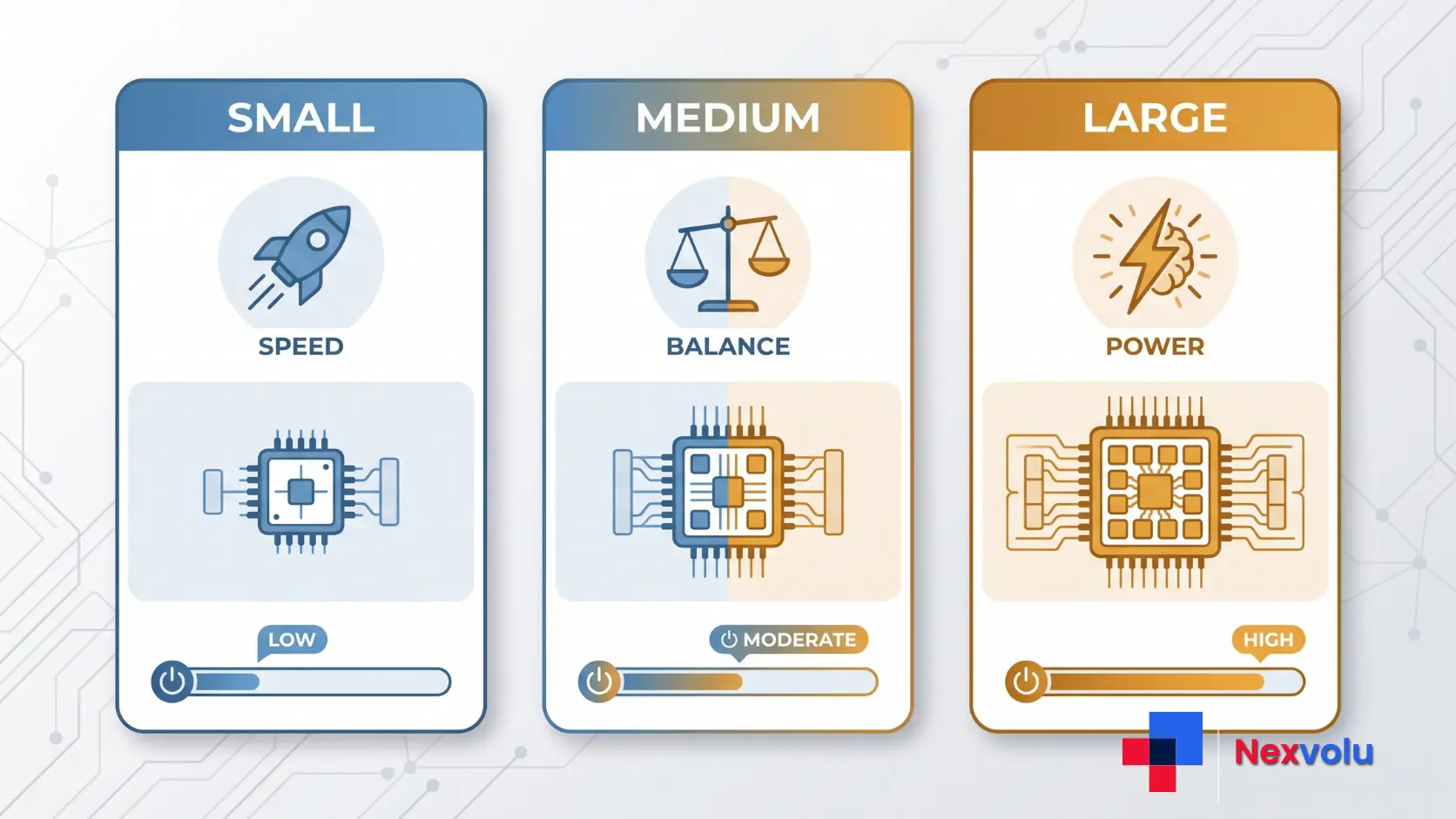
| Tier | Best for | Price (per 1M tokens, in / out) | Where you get it |
|---|---|---|---|
| Sol | Hardest reasoning, coding, long agent jobs | $5 / $30 | ChatGPT reasoning (Plus/Pro), Codex, API |
| Terra | Everyday work – best balance of quality and cost | $2.50 / $15 | ChatGPT Work, Codex, API |
| Luna | Fast, cheap, high-volume simple tasks | $1 / $6 | ChatGPT Work, Codex, API |
Sol – the flagship
Sol sits at the top. It’s built for frontier reasoning and long-horizon agent work the kind of problem where you hand off a messy task and want it seen through to the end. If you’re doing serious coding, deep research, or anything that needs the model to plan several steps ahead, Sol is the one. It’s also the priciest, which is the point: you reach for it when the answer’s quality matters more than the cost.
Terra – the everyday middle
Terra is the quiet star. OpenAI describes it as delivering performance competitive with last year’s GPT-5.5 at roughly 2x lower cost. In plain terms: near-flagship quality for everyday work, at half the price of the old top model. In short, for most real tasks drafting, summarizing, analysis, routine coding – Terra is more than enough.
Luna – the fast, cheap one
Luna is the sprinter. It’s the fastest and most affordable member of the family, made for high-volume, lower-stakes jobs: quick classifications, routing decisions, simple lookups, anything you run hundreds of times. Of course, you won’t hand Luna your hardest problem. You’ll hand it the thousand small ones instead.
What’s Free vs What’s Behind a Paid Plan
This is where most of the confusion lives, so let’s clear it up.
In standard ChatGPT conversations, GPT-5.5 Instant is still the default for everyday replies. Meanwhile, GPT-5.6 Sol powers the advanced reasoning options and those sit on paid plans like Plus and Pro. Here’s the catch that trips people up: Terra and Luna aren’t selectable in the normal ChatGPT chat box at all. Per OpenAI’s Help Center, you reach Terra and Luna through ChatGPT Work, Codex, or the API instead.
So who gets what?
- Free and Go users: GPT-5.5 Instant for chat, plus Terra inside Codex.
- Plus, Pro, Business, Enterprise: Sol reasoning in ChatGPT, all three tiers in ChatGPT Work and Codex, and full access through the API.
Bottom line: if you’re on a free plan and expecting to flip a switch to “Luna” in the chat window, you won’t find it. The three-tier menu is mostly a developer and paid-workspace feature – for now.
The Terra Angle: Why the Middle Tier Is the Real Story
Most coverage is fixated on Sol because it’s the flagship. That’s the wrong thing to watch.
In fact, the real headline is Terra. Matching GPT-5.5-level quality at about half the cost changes the math for anyone running the model at scale startups, tools, side projects, anyone paying per token. After all, last year that quality was the expensive ceiling. Now it’s the affordable middle.
💡 Key insight: For most builders, the smart default in 2026 isn’t the flagship it’s Terra for the bulk of the work, Luna for the cheap high-volume stuff, and Sol only when a task genuinely needs the extra horsepower. Routing beats loyalty to one model.
Picture this: you’re running a small support tool that answers customer questions. Route every message to Sol and your bill balloons fast. Route the easy 80% to Luna, the tricky 20% to Terra, and escalate only the rare hard case to Sol and you get near-identical quality for a fraction of the spend. That’s the whole game now. The tiers exist so you stop overpaying for simple work.
Which GPT-5.6 Tier Should You Actually Use?
Here’s the honest, no-jargon version.
- You just chat with ChatGPT casually. You don’t need to think about this. You’re on GPT-5.5 Instant by default, with Sol reasoning if you pay for Plus.
- You code, research, or run agents. Use Sol when the task is hard and the stakes are high. It’s the strongest of the three.
- You want the best value for everyday work. Terra. Near-flagship quality, half the flagship-era cost.
- You run lots of small, repetitive tasks. Luna. Fast and cheap, built for volume.
Nexvolu’s take: We’ve read the launch materials and the early developer reactions closely, and our honest recommendation is to treat Terra as your default and Sol as your escalation button, not the other way around. Too many people will reflexively pick the flagship and overpay. If you’re a regular ChatGPT user, the practical change is smaller than the headlines suggest: keep using it as normal, and only care about tiers if you touch Codex, ChatGPT Work, or the API. We’ll update this piece as real-world usage data rolls in.

Frequently Asked Questions
What are GPT-5.6 Sol, Terra, and Luna?
GPT-5.6 Sol, Terra, and Luna are the three tiers of OpenAI’s GPT-5.6 model family, released July 9, 2026. They share the same underlying system but are tuned for different jobs and priced differently. For example, Sol is the flagship, built for the hardest reasoning, coding, and long-running agent tasks. In contrast, Terra is the balanced everyday model, offering GPT-5.5-level quality at roughly half the cost. Luna is the fastest and cheapest tier, made for simple, high-volume work like classification and routing. All three share a 1.05-million-token context window and a 128,000-token maximum output, so the real difference is depth of reasoning, speed, and price, not how much they can handle at once.
Is GPT-5.6 free to use?
GPT-5.6 is partly free, but with limits. In standard ChatGPT, GPT-5.5 Instant remains the default for free and Go users, while GPT-5.6 Sol powers the advanced reasoning options on paid plans like Plus and Pro. Free and Go users can also reach GPT-5.6 Terra inside Codex. The Terra and Luna tiers, however, aren’t selectable in the normal ChatGPT chat window you access them through ChatGPT Work, Codex, or the API. So you can touch GPT-5.6 without paying, but full access to all three tiers and the model picker sits behind paid plans and developer tools. If you only chat casually, you may not notice the change at all.
Which GPT-5.6 model is best for everyday use?
GPT-5.6 Terra is the best pick for everyday use for most people and builders. In fact, OpenAI positions Terra as delivering performance competitive with GPT-5.5 at roughly 2x lower cost, which makes it the sweet spot between quality and price. For drafting, summarizing, analysis, and routine coding, Terra handles the work without the flagship price tag of Sol. Then reserve Sol for genuinely hard problems complex reasoning, long agent runs, or high-stakes code and lean on Luna for cheap, repetitive tasks you run at volume. Our advice: make Terra your default and escalate to Sol only when a task clearly needs the extra power, rather than paying flagship rates for simple jobs.
How much does GPT-5.6 cost?
In short, GPT-5.6 is priced per one million tokens, split by tier. According to OpenAI’s July 2026 launch, Sol costs $5 for input and $30 for output; Terra costs $2.50 input and $15 output; and Luna costs $1 input and $6 output. For comparison, Claude’s Opus series runs $5/$25 and Fable 5 is $10/$50, though raw per-token price tells only part of the story since reasoning models can burn very different token counts on the same task. GPT-5.6 also brings more predictable prompt caching, with a 30-minute minimum cache life and a 90% discount on cached input reads useful if you send repeated context and want to cut costs further at scale.
Can I pick Terra or Luna directly in ChatGPT?
Terra and Luna are not selectable in standard ChatGPT conversations. In the normal chat window, your options are GPT-5.5 Instant by default and GPT-5.6 Sol reasoning on paid plans – Terra and Luna simply don’t appear in that picker. Instead, to use them, you go through ChatGPT Work, Codex, or the OpenAI API, where all three tiers are available depending on your plan. Codex, for example, offers Terra to Free and Go users, and the full family to Plus, Pro, Business, and Enterprise. So if you’ve been hunting for a “Luna” button in ChatGPT and coming up empty, that’s expected the three-tier menu lives in OpenAI’s developer and workspace products, not the everyday chat box.
Is GPT-5.6 better than Claude?
GPT-5.6 and Claude are close rivals, and “better” depends on the task. OpenAI’s biggest claim for GPT-5.6 is strong long-running agentic performance, with early benchmarks showing all three tiers competing with Anthropic’s Claude Fable 5 – here’s how Claude has been evolving. On price, GPT-5.6 Luna ($1/$6) and Terra ($2.50/$15) undercut Claude Opus ($5/$25) and Fable 5 ($10/$50) at the entry and mid tiers. But raw benchmarks and token prices don’t settle it, because reasoning models spend tokens very differently on the same problem. Ultimately, the practical answer: test both on your own real workload before committing. For cost-sensitive, high-volume work, GPT-5.6’s cheaper tiers are compelling; for specific reasoning tasks, run a head-to-head yourself.
The Bottom Line
GPT-5.6 isn’t one upgrade it’s three tools wearing a family name. Sol for the hard stuff. Terra for nearly everything, at a fair price. Luna for the cheap, high-volume grind. Overall, the smartest move in 2026 isn’t picking the fanciest option; it’s matching the tier to the task and refusing to overpay for simple work.
And if you only ever chat with ChatGPT casually? Relax. The default still works, and the tier drama mostly matters to people building with Codex, ChatGPT Work, or the API.
Which GPT-5.6 tier are you reaching for first and did the pricing surprise you? Tell us in the comments, and bookmark Nexvolu for plain-English AI updates without the launch-day hype.
References
- OpenAI. “GPT-5.6: Frontier intelligence that scales with your ambition.” 2026. openai.com
- OpenAI Help Center. “Sol, Terra, and Luna availability in ChatGPT.” 2026. help.openai.com
- Simon Willison. “The new model family: Luna, Terra, Sol.” 9 July 2026. simonwillison.net
- Coursiv. “ChatGPT 5.6: Release Date, Models, Pricing & Access.” 2026. coursiv.io
2 thoughts on “GPT-5.6 Explained: What Sol, Terra & Luna Do”