









AI Layoffs 2026 Which Jobs Are Safe vs Exposed
The AI Layoff Wave Is Here and It’s Coming for These Exact Jobs
Your company just posted record revenue. Then it cut your team. If that combination feels impossible, welcome to 2026 the year executives stopped hiding behind “the economy” and started naming the real reason out loud: artificial intelligence. AI layoffs in 2026 are no longer a prediction; they’re now a line item in annual reports.
Here’s the part most headlines about AI layoffs 2026 miss: AI isn’t taking all the jobs. Instead, it’s taking specific ones and leaving others almost untouched. This article maps which functions are exposed, which are safe, and exactly what to do in the next 30 days, whether you’re an employee in the US or UK or a small employer trying to plan the quarter.
Table of Contents
- Which companies are laying off because of AI in 2026?
- Is AI really the reason – or just a convenient excuse?
- The function-by-function exposure map
- The UK angle: a cooling market makes this scarier
- What competitors won’t tell you: your 30-day plan
- Frequently Asked Questions
Which companies are laying off because of AI in 2026?
Oracle, Meta, Salesforce, Snap, and ServiceNow have all cut staff in 2026 while naming AI as a driver. Oracle shed roughly 21,000 roles in the year to May 31, 2026; Snap cut 1,000 jobs in April; Salesforce trimmed support and marketing teams as its AI agents took over cases. AI is now the most-cited reason for US layoffs.
How big is the AI layoffs 2026 wave?
The scale is what’s new. According to outplacement firm Challenger, Gray & Christmas, AI was named in 40% of all announced US job cuts in May 2026 and AI has topped the list of stated reasons for three straight months. Year-to-date, the firm has tied 87,714 cuts directly to AI, already blowing past the 54,836 it counted for all of 2025.
Which companies are naming AI directly?
A few of the names worth knowing:
- Oracle disclosed in its annual filing that “the deployment of AI technologies across our operations” contributed to workforce reductions its global headcount fell from about 162,000 to roughly 141,000.
- Salesforce cut around 4,000 customer-support roles, shrinking that team from ~9,000 to ~5,000, with CEO Marc Benioff saying the company needed “less heads” because Agentforce handles the work.
- Snap announced 1,000 cuts in April, with leadership citing “rapid advancements in artificial intelligence.”
- ServiceNow began quietly letting staff go through 2026 while pledging to hold headcount flat by not backfilling departures banking on AI productivity instead.
Not every 2026 cut is an AI story, and honesty matters here. Papa John’s, for example, announced roughly 7% corporate layoffs and 300 store closures through 2027 that’s a restructuring play, even as the chain rolls out an AI-powered ordering agent. Lumping every layoff under “AI” is exactly the confusion this article is built to cut through.
⚠️ Warning: In the US, most private-sector roles are “at-will.” A company can legally replace your function with software and let you go without cause, as long as it isn’t discriminatory. Don’t assume tenure protects you assume your tasks do, or don’t.
Is AI really the reason or just a convenient excuse?
Partly both. Not every story behind the AI layoffs 2026 wave is what it seems: some firms are genuinely automating work, while others are using AI as cover for cost-cutting they’d planned anyway analysts call it “AI-washing.” A January 2026 Harvard Business Review analysis of more than 1,000 executives found companies are often cutting based on AI’s potential, not its proven performance.
Why does the distinction matter to you? Because if the layoff is real automation, the job isn’t coming back. If it’s AI-washing, the role may quietly return under a new title once the savings story fades. Either way, the safest move is the same: make your work hard to automate.
The function-by-function exposure map
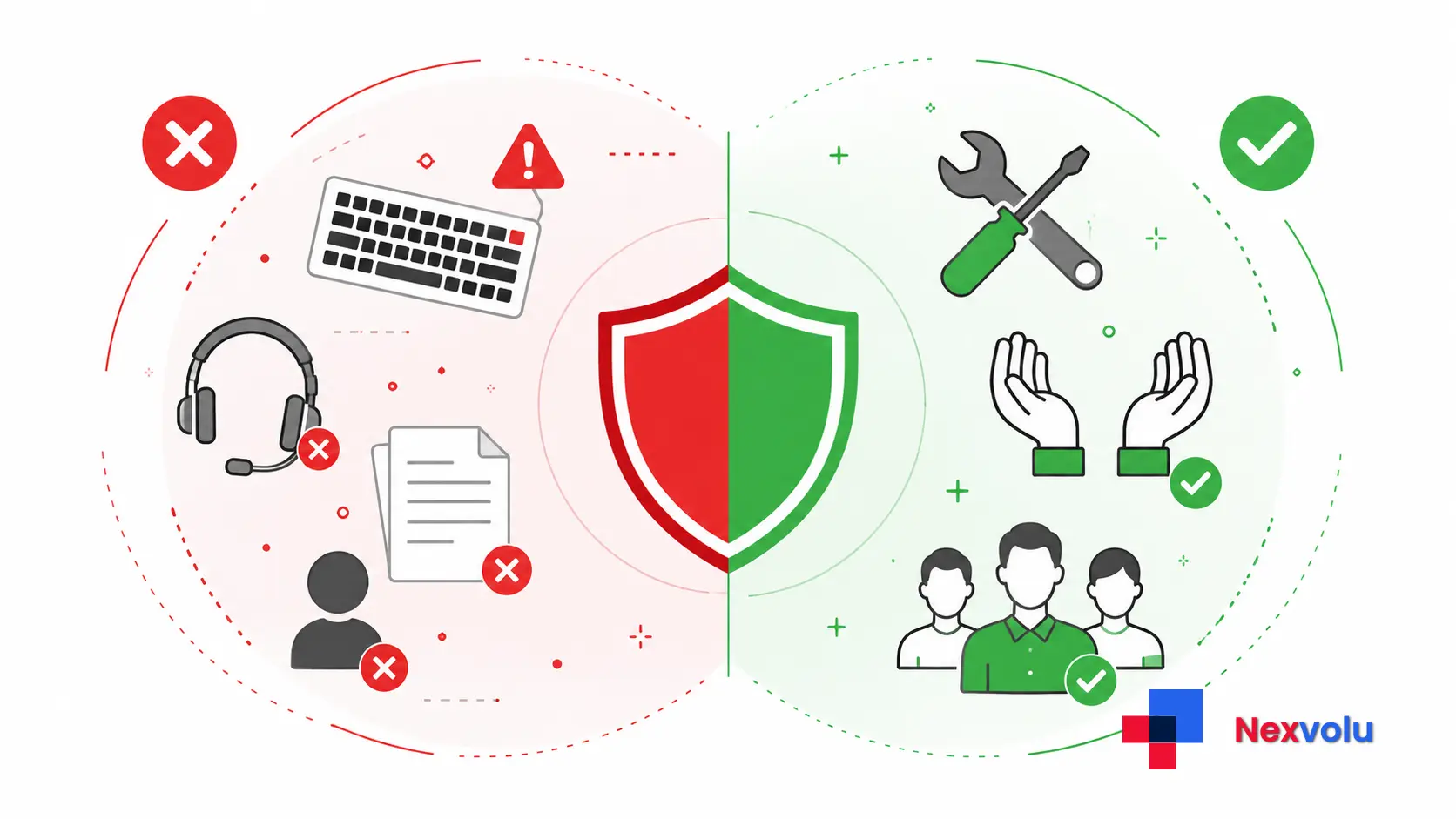
Forget your job title for a second. AI doesn’t replace titles it replaces tasks. The more your day is built on repetitive, rules-based, screen-bound work, the higher your exposure to AI layoffs 2026. Here’s how the major functions stack up.
| Function | AI exposure | What’s actually happening |
|---|---|---|
| Data entry & back-office admin | 🔴 High | OCR and AI agents now handle routine processing; clerk headcount is shrinking fast |
| Customer support (tier 1) | 🔴 High | Salesforce cut ~4,000 support roles; Forrester projects 49% of service jobs gone by 2030 |
| Content moderation & QA testing | 🔴 High | Among the first functions automated inside tech firms |
| Bookkeeping & payroll | 🟠 Elevated | Rules-based finance tasks are being absorbed by software |
| Junior software engineering | 🟠 Elevated | AI writes boilerplate code; entry-level hiring is the first to freeze |
| Marketing & content production | 🟠 Elevated | Generative tools let smaller teams ship the same output |
| Skilled trades & in-person care | 🟢 Low | Anthropic’s research puts hands-on, physical jobs at near-zero risk |
| Leadership, judgment & client trust | 🟢 Low | PwC found judgment and leadership skills are rewarded more, not less |
Ultimately, the pattern is clear, and it’s not about being “low-skill” versus “high-skill.” Instead, it’s about variance. When the work follows a predictable pattern, AI can absorb a growing slice of it. When the work demands physical presence, real-time judgment, or human trust, it holds.
There’s a flip side worth sitting with. Boston Consulting Group estimates that 50-55% of US jobs will be reshaped by AI over the next two to three years, with up to 15% eliminated over five years. Reshaped is not the same as erased. For most people, the job survives but the expectations for what you produce change radically.
The UK angle: a cooling market makes this scarier
If you’re in the UK, AI layoffs 2026 arrive with a second force stacking on top: the labour market has cooled hard. UK unemployment sat at 5.0% in early 2026, up half a point on the year, and job vacancies fell to around 707,000 the lowest level since early 2021, according to the Office for National Statistics.
Here’s why that combination stings. When AI pressure was rising in 2022, workers could quit and rebound quickly. Now, however, that has changed. Resignations have fallen sharply to roughly 173,000 in the first quarter of 2026 as people cling to the roles they have. Fewer open doors plus more automation means less room to manoeuvre if your function gets cut. The escape hatch that existed two years ago is mostly closed.
What competitors won’t tell you: your 30-day plan
Every outlet will tell you the numbers behind AI layoffs 2026. Almost none, however, tell you what to do with the next 30 days. Here’s the plan built for both employees and small employers.
If you’re an employee, your 30-day reskilling checklist:
- [ ] Days 1-3: Audit your tasks. List everything you did last week. Mark each task as “repetitive/rules-based” or “judgment/human.” The first column is your risk.
- [ ] Days 4-10: Become the person who runs the AI. Learn the top AI tool in your field well enough to direct it. The goal is to move from “task I do” to “output I oversee.”
- [ ] Days 11-18: Deepen one un-automatable skill. Pick judgment, client relationships, or hands-on expertise then ship one visible piece of work that proves it.
- [ ] Days 19-25: Document your wins. Quantify what you delivered. “Cut report time 40% using AI” is a sentence that survives a restructuring conversation.
- [ ] Days 26-30: Build one external lifeline. Refresh your profile, reconnect with three people in your network, and quietly map roles that lean on your safe-column skills.
If you’re a small employer: don’t fire first and figure it out later. Identify which functions AI can genuinely augment this quarter, retrain the people who already know your business, and redeploy them into the judgment-heavy roles AI can’t fill. Replacing institutional knowledge is far more expensive than upskilling it.
Want to go deeper on the tools side? See our breakdown of AI tools small teams are adopting and our full future-of-work outlook for 2026.

Frequently Asked Questions
Are AI layoffs real or just an excuse for cost-cutting?
Both happen. Some companies genuinely automate roles, while others use AI to justify cuts they already planned a practice called “AI-washing.” A 2026 Harvard Business Review analysis of over 1,000 executives found many firms cut based on AI’s potential rather than proven results. Either way, automation-resistant work is your best protection.
Which jobs are safest from AI in 2026?
The safest jobs involve physical presence, real-time judgment, or human trust. Anthropic’s research found roughly 30% of jobs face near-zero AI risk including skilled trades, in-person care, and leadership roles. PwC reports that judgment and leadership skills are now rewarded more, not less, as automation spreads.
Are AI layoffs happening in the UK too?
Yes. UK firms are cutting roles while a weaker labour market makes recovery harder. Unemployment reached 5.0% in early 2026 and vacancies fell to about 707,000, the lowest since 2021, per the ONS. With resignations falling, UK workers have fewer alternatives if their function is automated.
Can my employer replace me with AI and lay me off?
In the US, most private-sector jobs are “at-will,” so an employer can legally eliminate your role and adopt AI as long as the decision isn’t discriminatory. UK workers have stronger redundancy protections and notice rights. In both markets, making your tasks hard to automate is the real safeguard.
How many jobs has AI cut in 2026 so far?
According to Challenger, Gray & Christmas, AI was directly tied to 87,714 announced US job cuts year-to-date by May 2026 already far above the 54,836 attributed to AI in all of 2025. AI was named in 40% of May’s cuts, making it the most-cited single reason.
What skills should I learn to stay employable?
Focus on skills AI can’t easily copy: judgment under uncertainty, client relationships, hands-on expertise, and the ability to direct AI tools rather than compete with them. Learn the leading AI tool in your field, then pair it with one deep human skill. That combination is the most defensible position in 2026.
The bottom line
Three things to remember. First, AI layoffs in 2026 are real and accelerating indeed, AI is now the top stated reason for US job cuts. Second, exposure is about your tasks, not your title: repetitive, screen-bound work is most at risk, while judgment and hands-on work hold. Third, you have more control than the headlines suggest the 30-day plan above turns panic into a position.
The wave is here. The question isn’t whether AI reshapes your industry. It’s whether you’ll be the person running the tools or the one they replaced. So which column is most of your work in right now?
Must Read: Restrictions: What Gov Limits Mean for You
References
- Challenger, Gray & Christmas. “May 2026 Job Cut Report.” 2026. Challenger Gray
- BBC. “Tech giant Oracle cuts 21,000 jobs as it embraces AI.” 2026. BBC
- TechCrunch. “The running list: major tech layoffs in 2026 where employers cited AI.” 2026. TechCrunch
- Boston Consulting Group. “AI Will Reshape More Jobs Than It Replaces.” 2026. Boston Consulting Group
- Forbes. “Here Are The 6 Safest Jobs With Least AI Risk, According to Anthropic.” 2026. Forbes
- Harvard Business Review. “Companies Are Laying Off Workers Because of AI’s Potential—Not Its Performance.” 2026. HBR
- Office for National Statistics. “Labour market overview, UK.” 2026. ONS GOV UK