
Agentic Commerce How AI Agents Shop for You in 2026. Your next customer might not have a pulse. Instead, they’ll have a budget, a saved set of preferences, and an API connection that never sleeps. That, in short, is the strange promise of agentic commerce: AI agents that don’t just suggest products but actually buy them on your customer’s behalf, and often without a single visit to your site.
Think about what that breaks. For twenty years, marketing has been one long fight to win the click. But what happens when a bot does the clicking? When the “shopper” weighing your price against three rivals isn’t a person at all?
So here’s what’s really happening, why it’s moving faster than almost anyone predicted, and what it ultimately means for the brand you’ve spent years building.
Table of Contents
- What is agentic commerce?
- Why agentic commerce is exploding right now
- What agentic commerce means for your brand
- How to stay visible when the buyer is a bot
- Frequently asked questions
What Is Agentic Commerce?
This isn’t science fiction anymore. In fact, BCG frames agentic commerce as a structural change in how buying decisions get made, with AI agents orchestrating purchases across sites, marketplaces, and apps a shift we keep tracking in our tech updates coverage. Cloudflare, meanwhile, is building the plumbing that lets these agents transact safely; for example, it has partnered with Visa and Mastercard to verify and secure agent-driven payments. So one company studies the demand, while the other secures the rails. Either way, both point at the same future: software that shops.
BCG frames agentic commerce as a structural change in how buying decisions get made, with AI agents orchestrating purchases across sites, marketplaces, and apps a shift we keep tracking in our TECH updates coverage. Cloudflare, meanwhile, is building the plumbing that lets these agents transact safely; it has partnered with Visa and Mastercard to verify and secure agent-driven payments. One company studies the demand. The other secures the rails. Both point at the same future: software that shops.
Why Agentic Commerce Is Exploding Right Now
The tipping point arrived in September 2025, when OpenAI launched Instant Checkout inside ChatGPT, built with Stripe and powered by its Agentic Commerce Protocol. Suddenly the 700 million people who use ChatGPT each week could buy a product without leaving the chat. Soon after, Perplexity added purchasing through PayPal, and then Google folded agentic checkout into AI Mode. As a result, the old “search, click, cart, checkout” ritual got squeezed into a single sentence.
The demand signal is just as loud. According to BCG’s 2025 research, 81% of US consumers expect to use agentic AI tools to shop a shift the firm says could shape more than half of all online purchases and over $1 trillion in spending. Similarly, Adobe reported that US generative-AI traffic to retail sites jumped 4,700% year over year by July 2025. And eMarketer, for its part, projects AI platforms will drive roughly $20.9 billion in retail spending in 2026 notably, nearly four times the prior year.
Fast. Quiet. Already happening. That’s the part that should get your attention.
What Agentic Commerce Means for Your Brand
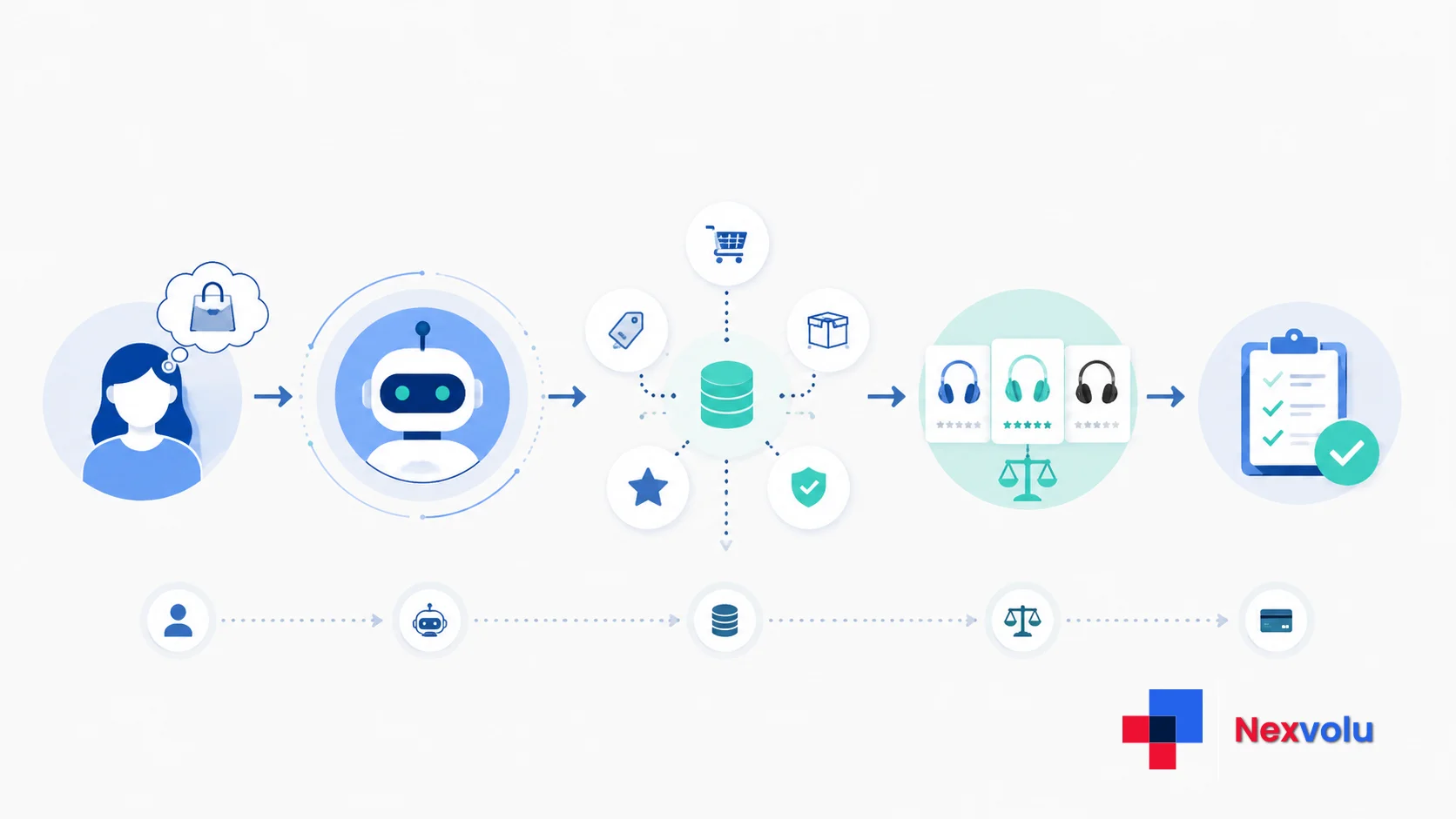
Here’s the uncomfortable truth: when an agent shops, your storefront stops being the destination. Instead, the customer talks to the agent, and the agent talks to your data. So that product page you spent a quarter perfecting? The bot may never load it.
That changes the whole game. For example, a joint ICSC and McKinsey report found that 68% of consumers had used at least one AI tool while shopping in the past three months, while 62% used AI to compare brands, prices, or reviews. As a result, the middle of the funnel the comparison stage marketers obsess over is quietly being handed to machines.
So discovery stops being about ranking on a results page and starts being about whether an AI understands and trusts your brand enough to recommend it. Marketers now call this answer engine optimization (AEO) and generative engine optimization (GEO). Granted, the skills overlap with classic SEO, but the audience changed. You’re no longer only writing for humans skimming a list. Instead, you’re writing for an agent deciding, in milliseconds, whether your product makes the shortlist.
Miss that shortlist and you don’t lose a ranking. You lose the sale.
How to Stay Visible When the Buyer Is a Bot
Most coverage of agentic commerce stops at “it’s coming.” But here’s what they skip: the agents reading your site mostly aren’t sending anyone back to it.
Cloudflare’s data tells the story bluntly. In fact, its analysis found that ClaudeBot crawled roughly 23,951 pages for every single referral it sent back to a publisher compared with about five pages for traditional Google search. In other words, agents consume your content, yet they rarely return the traffic. That gap is exactly why Cloudflare launched pay per crawl on July 1, 2025, letting site owners charge AI crawlers using the long-dormant HTTP 402 “Payment Required” code for access.
So what actually works? A few moves matter more than the rest:
- Feed the machines clean data. Expose accurate product details, pricing, and availability in structured, machine-readable formats. Agents can’t recommend what they can’t parse.
- Write self-contained answers. Clear, factual passages an AI can lift and cite beat keyword-stuffed filler every time.
- Cite real sources and stay consistent. Name your data, keep your brand language identical everywhere, and make trust easy to verify.
- Track AI referrals, not just rankings. If you’re only watching Google positions, you’re flying blind.
Share this with a marketer who still thinks SEO alone will save them agentic commerce is rewriting the rules faster than the playbooks can keep up.
Frequently Asked Questions
Is agentic commerce actually being used in 2026?
Yes. In fact, agentic commerce moved from pilot to practice in late 2025. ChatGPT, Perplexity, and Google now let users buy inside the chat or AI interface, and BCG reports that 81% of US consumers expect to shop with AI agents. So it’s a present-day shift for marketers, not a distant forecast to file away.
How is agentic commerce different from regular online shopping?
Traditional e-commerce relies on a person to search, compare, and check out manually. By contrast, agentic commerce hands those steps to an AI agent that acts on the shopper’s behalf, often completing the purchase autonomously. In short, the human sets the intent and the budget, while the agent does the comparing, clicking, and buying.
Will agentic commerce kill SEO?
Not exactly, but it reshapes it. Classic SEO targeted humans scanning search results. Agentic commerce, however, adds answer engine optimization and generative engine optimization, where the goal is being understood and recommended by AI agents. Both still matter yet optimizing only for human clicks now leaves real sales on the table.
What is Cloudflare’s role in agentic commerce?
Cloudflare builds infrastructure for the agent economy. For example, it partnered with Visa and Mastercard to secure agent-driven payments, and it launched pay per crawl in July 2025, letting websites charge AI crawlers for access using the HTTP 402 code. In short, it helps secure and monetize how agents interact with your site.
How can small brands prepare for agentic commerce?
First, start with clean, structured product data so agents can read your catalog accurately. Then write clear, citable content, keep brand details consistent across the web, and begin tracking AI-driven referrals. Above all, you don’t need a huge budget you need to be machine-readable and trustworthy before your competitors get there first.

The Bottom Line
Three things are worth remembering. First, agentic commerce is already live, not theoretical. Second, the buyer in your funnel is increasingly an AI agent, not a human. Third, visibility now depends on being readable and trustworthy to machines, not just appealing to people.
So the brands that adapt early structuring their data, earning AI trust, and tracking these new shoppers will own the next decade of digital marketing. By contrast, the ones that wait will watch the sale happen somewhere they can’t see.
If this sparked a rethink, share it with your team and keep an eye on Nexvolu for what comes next in AI and digital marketing. So here’s the real question: when a bot shops for your customer tomorrow, will it even find you?
References
- BCG. “Agentic AI, Digital Currencies and Real-Time Transactions Reshape Global Payments Landscape.” 2025. bcg
- Cloudflare. “Introducing pay per crawl.” 2025. blog.cloudflar
- Cloudflare. “Securing agentic commerce: helping AI Agents transact with Visa and Mastercard.” 2025. blog
- OpenAI. “Buy it in ChatGPT: Instant Checkout and the Agentic Commerce Protocol.” 2025. openai
- McKinsey. “The agentic commerce opportunity.” 2025. mckinsey
1 thought on “Agentic Commerce How AI Agents Shop for You in 2026”