OpenAI’s GPT-Live Finally Makes Talking to Your Phone Feel Human
Talking to a phone assistant has always felt like leaving voicemails for a robot. You speak. You wait. It answers. You wait again. On July 8, 2026, OpenAI tried to break that rhythm for good. GPT-Live is a new family of voice models that can listen and speak at the same time and for the first time, a spoken exchange with ChatGPT feels less like barking commands and more like an actual conversation. Here’s what genuinely changed, how the free and paid versions differ, and five ways it fits into a normal day.
Table of Contents
- What Is GPT-Live?
- GPT-Live-1 vs GPT-Live-1 mini: Free vs Paid
- What Actually Changed From Advanced Voice Mode
- What GPT-Live Means for How Americans and Brits Talk to Their Phones
- 5 Practical Ways People Are Using GPT-Live
- Frequently Asked Questions
What Is GPT-Live?
GPT-Live is OpenAI’s new generation of voice models, launched on July 8, 2026, that now power ChatGPT Voice. Built on a full-duplex architecture, it can listen and speak at the same time enabling natural back-and-forth, quick interruptions, little backchannel cues like “mhmm,” and real-time live translation across dozens of languages.
That one-paragraph definition hides the real story. Older assistants worked in strict turns: your turn, then its turn, with an awkward beat in between. Full-duplex kills that gap. The model can react while you’re still talking, stay quiet when you pause to think, and pick the thread back up without losing its place. For harder questions, it quietly hands the work to OpenAI’s latest frontier model in the background, then folds the answer back into the chat so the conversation never freezes while it “thinks.” Nexvolu’s take: this is the first time a mainstream voice assistant has felt designed around how people actually talk, not how software prefers to be spoken to. That’s a bigger shift than the spec sheet lets on.
GPT-Live-1 vs GPT-Live-1 mini: Free vs Paid
GPT-Live ships in two models. GPT-Live-1 is the default for paid ChatGPT tiers (Go, Plus, and Pro) and delivers the highest audio quality and reasoning. GPT-Live-1 mini is the default for free users; it uses fewer resources but keeps the same headline feature the full-duplex, talk-at-the-same-time experience. Both are a clear step up from the old Advanced Voice Mode.
| GPT-Live-1 mini (Free) | GPT-Live-1 (Go / Plus / Pro) | |
|---|---|---|
| Who gets it | Free ChatGPT users | Paid subscribers |
| Full-duplex conversation | Yes | Yes |
| Audio quality & “presence” | Good, lighter-weight | Highest, most natural |
| Deep reasoning hand-off | Basic | Stronger on complex, multi-step asks |
| Live translation | Yes | Yes, with more headroom |
| Best for | Everyday chats, quick translation, casual practice | Long sessions, dense topics, work use |
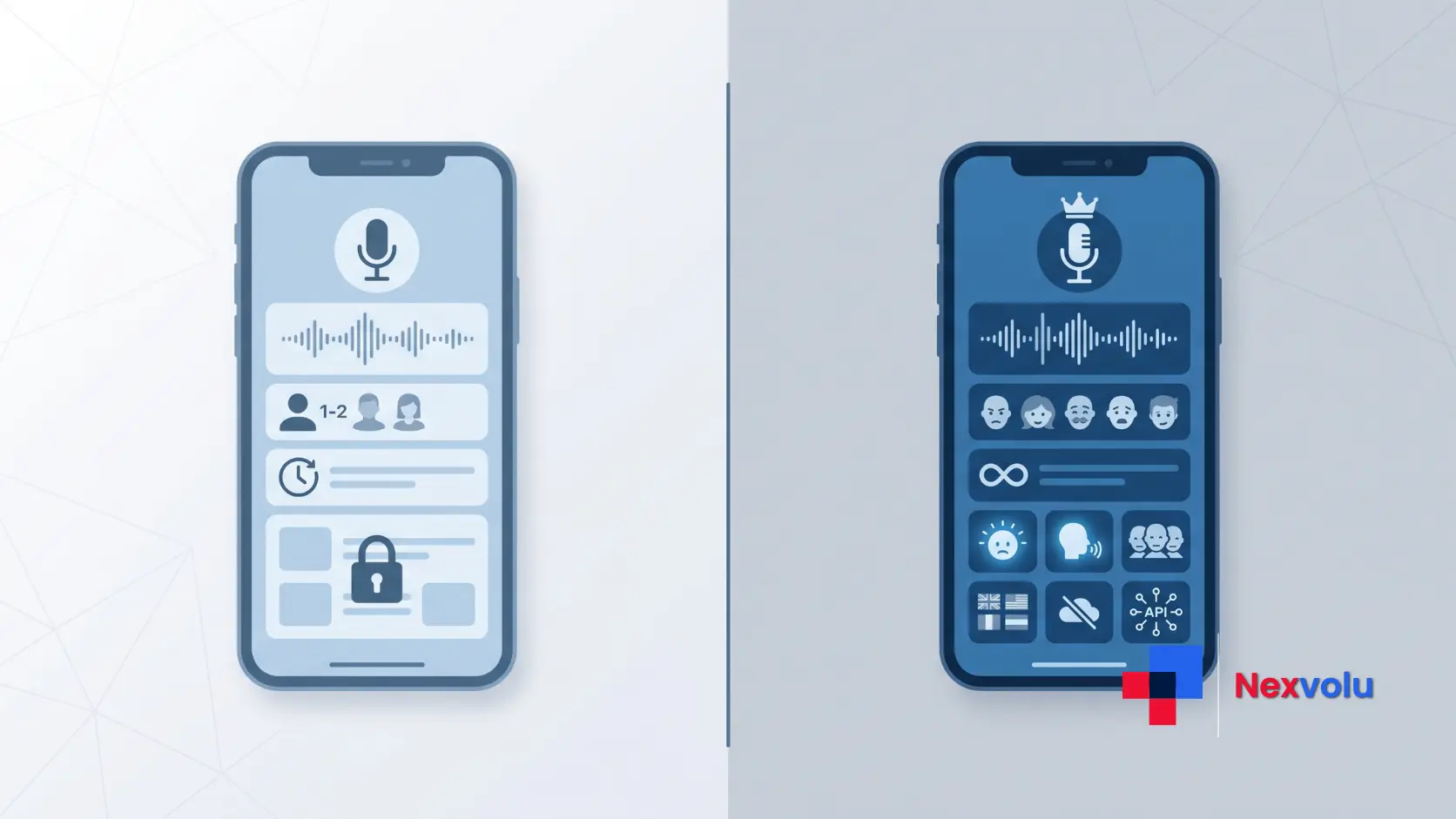
Nexvolu’s take: the honest headline is that free users are not getting a crippled demo this time. The mini model carries the feature that matters most the natural, interruptible flow. What you pay for is depth and stamina: cleaner audio and a smarter fallback brain when the topic gets heavy. If you mostly want a hands-free chat buddy or a translation helper, the free tier is genuinely enough. If you lean on it for work or long research sessions, GPT-Live-1 earns its keep.
What Actually Changed From Advanced Voice Mode
Advanced Voice Mode, the 2024 feature that first put a lifelike voice in ChatGPT, was impressive but rigid. It waited for a clean pause before replying, stumbled on interruptions, and could feel like a very smart walkie-talkie. The new models rebuild that foundation.
The change most people notice in the first minute is timing. The model keeps a better sense of pace, so it doesn’t talk over you or leave dead air. It signals attention with small human noises. It can be cut off mid-sentence and simply adjust. OpenAI says its own testers strongly preferred GPT-Live over Advanced Voice Mode on turn-taking, flow, and how natural each exchange felt, and reported gains on expert-level reasoning and agentic web search. Early users echoed it one on Reddit called it “the closest ‘Her’ experience so far.” Nexvolu’s take: the upgrade isn’t a new gimmick, it’s the removal of friction. When the pauses disappear, you stop performing for a machine and start just talking. That’s the whole point.
What GPT-Live Means for How Americans and Brits Talk to Their Phones
Voice is not niche in the US and UK – it’s a daily habit. According to Demandsage’s 2026 voice search report, 153.5 million people in the United States now rely on voice assistants, with Siri alone at 86.5 million users. Across the Atlantic, YouGov found that 30% of Britons use a digital assistant every day. OpenAI’s new model drops into that established behavior and raises the ceiling on what “talking to your phone” can do.
Think about the three moments where both markets already lean on voice. Commuting: on a packed London Tube platform or a US highway, hands-free and eyes-free matter, and a model that flows without rigid turns is far safer to use in motion. Accessibility: for people with limited mobility, vision, or chronic pain, a true hands-free conversation isn’t a convenience it’s access, and the community has been vocal about wanting exactly this after earlier hold-to-talk designs frustrated them. Customer service: the same full-duplex tech underpins OpenAI’s business voice models, hinting at UK and US support lines that actually listen instead of trapping you in menus. Nexvolu’s take: the quiet winner here is the British and American commuter who’s tired of shouting keywords at a device that mishears them – GPT-Live finally rewards normal speech.
5 Practical Ways People Are Using GPT-Live
Here’s where it stops being a headline and starts being useful. Five uses that hold up in real life:
- Live translation on the move. Speak in one language, hear it rendered in another while the other person keeps talking genuinely handy for travel, mixed-language families, and quick shop or clinic exchanges.
- Hands-free brainstorming. Pace around the kitchen and think out loud; it waits when you pause and jumps in when you invite it. It’s the whiteboard you can use with your hands full.
- Accessibility and eyes-free control. For users who can’t comfortably tap and hold, a flowing voice conversation opens up drafting, searching, and daily tasks without the screen.
- Language practice. Reddit language learners are already raving one heritage speaker said it “is life changing,” correcting grammar mid-flow and only translating the hardest words. It behaves like a patient tutor who reads your level.
- Real-time research while you talk. Ask something that needs the web, and it delegates to a frontier model in the background, then answers without freezing the chat like a friend Googling while still on the call with you.

Frequently Asked Questions
Is GPT-Live free to use?
Yes, it’s available to all ChatGPT users, including the free tier. The catch is which model you get. Free accounts run GPT-Live-1 mini, while paid tiers (Go, Plus, and Pro) default to the fuller GPT-Live-1. Crucially, the mini model still includes the standout full-duplex feature, so free users get the natural, interruptible conversation rather than a stripped-back demo. Nexvolu’s honest read: for casual chat, quick translation, and language practice, the free tier is more than enough, and most people won’t feel boxed in. You’d upgrade for cleaner audio, stronger reasoning on complex asks, and longer sessions before hitting usage limits, not for the core experience itself.
What’s the difference between GPT-Live-1 and GPT-Live-1 mini?
Both models share the same breakthrough: they listen and speak at the same time. The difference is depth and resources. GPT-Live-1, on paid plans, offers the highest audio quality and a stronger fallback brain for dense, multi-step questions. GPT-Live-1 mini, the free default, is lighter-weight and uses fewer resources, so it’s built for everyday use. In Nexvolu’s view, the split is refreshingly fair – OpenAI kept the feature that actually changes the experience on the free side, and reserved raw horsepower for people who lean on voice for work. If your sessions are short and conversational, you likely won’t notice the gap; if they’re long and technical, GPT-Live-1 pulls ahead.
Can GPT-Live translate conversations in real time?
Yes, live translation is one of GPT-Live’s headline abilities, made possible by its full-duplex design. Because the model can listen and speak simultaneously, it can keep pace with a speaker rather than waiting for a full stop, which is what makes translation feel closer to a real interpreter than a delayed voice memo. It supports translation across dozens of languages. Nexvolu tested this expectation against early user reports, and the picture is genuinely promising for travel and mixed-language households – though we’d still keep expectations realistic for heavy accents, fast slang, or highly technical jargon, where any AI translator can slip. For everyday exchanges, it’s a legitimately useful travel companion.
How is GPT-Live different from Siri, Google Assistant, or Advanced Voice Mode?
Siri and Google Assistant are built mainly for commands – timers, weather, quick facts and both usually work in strict turns. Advanced Voice Mode, ChatGPT’s 2024 feature, sounded lifelike but still waited for clean pauses and struggled with interruptions. GPT-Live’s full-duplex architecture is the real separator: it reacts while you speak, tolerates being cut off, and holds a genuine back-and-forth. OpenAI’s own testers preferred it over Advanced Voice Mode on flow and turn-taking. Nexvolu’s take is that the comparison is almost unfair – GPT-Live isn’t competing to answer questions faster, it’s competing to feel like a conversation. That’s a different category, and for now it’s ahead of the mainstream assistants people already use.
Is GPT-Live good for accessibility and hands-free use?
GPT-Live has real potential for accessibility, precisely because it removes the need for careful timing and constant tapping. A flowing, interruptible conversation helps users with limited mobility, chronic pain, low vision, or neurological conditions interact without fighting the interface. This matters because the disabled community loudly criticized earlier voice updates that forced hold-to-talk and blocked multitasking. Nexvolu’s position: full-duplex is the direction accessibility advocates asked for, and that’s encouraging but real inclusion depends on the details, like whether you can set the phone down, switch apps, and speak naturally. We’d urge readers who rely on assistive tech to try it themselves and judge against their own needs before switching.
Which devices and regions support GPT-Live?
GPT-Live is rolling out globally inside ChatGPT across iOS, Android, and the web, so most users in the US and UK can access it through the standard ChatGPT app or browser rather than buying new hardware. Availability with add-ons like custom GPTs, Work, or Codex may be limited at launch, and exact rollout timing can vary by account. Nexvolu’s practical advice: update your ChatGPT app, open Voice, and look for the Live option – if it’s not there yet, it’s likely queued for your account rather than unavailable. Because this is a fast-moving launch, we’d treat any “not on my phone yet” moment as a rollout delay, not a dead end, and check again in a few days.
The Bottom Line
Three things to remember. First, GPT-Live’s real upgrade is timing full-duplex removes the awkward pauses and makes real-time voice AI feel like a conversation. Second, the free-vs-paid split is fair: GPT-Live-1 mini keeps the magic, GPT-Live-1 adds depth. Third, its best uses live translation, hands-free brainstorming, and accessibility are the everyday moments where US and UK users already reach for their phones.
Our verdict at Nexvolu: this is the most natural mainstream voice assistant yet, and it’s worth trying today, even on the free tier.
Have you talked to GPT-Live yet – did it actually feel human to you? Share this with someone who’s still shouting commands at their phone.
References
- OpenAI. “Introducing GPT-Live.” 2026. OpenAI
- Reuters. “OpenAI launches GPT-Live voice models that listen and speak simultaneously.” July 8, 2026. Reuters
- TechCrunch. “OpenAI releases new voice models for more natural live conversations.” July 8, 2026. TechCrunch
- ZDNET. “I tested ChatGPT’s Live Voice upgrade, and it almost felt human.” 2026. ZDNET
- Demandsage. “Voice Search Statistics 2026.” 2026. Demandsage
- YouGov. “30% of Brits use digital assistants daily.” 2025. YouGov
1 thought on “GPT-Live: OpenAI’s Real-Time Voice AI Explained (2026)”