









Natural Antidepressants You Already Have
The Best Natural Antidepressants Are Already in Your Daily Routine
Health disclaimer: This guide to natural antidepressants is for informational purposes only and does not constitute medical advice. Consult a qualified healthcare professional before making health decisions. If you are in crisis or thinking about self-harm, contact your local emergency number or a crisis line right away.
Let’s start with a surprising fact about natural antidepressants: your brain doesn’t fully distinguish between a pill and a brisk walk. Both can nudge the same mood chemistry. In fact, some of the most studied natural antidepressants on earth are already sitting inside your ordinary day free and waiting.
Here’s the problem. When low mood hits, advice usually splits into two camps take medication, or just think positive. However, both skip a huge middle ground. So this article maps that middle ground: the everyday habits research links to real shifts in depression, what the science actually says, and how to start with one small change this week. Of course, none of it replaces professional care. Still, it might change how you spend tomorrow morning.
Table of Contents
- What are natural antidepressants, really?
- Move first – the closest thing to a free prescription
- Light and sleep – your mood runs on a clock
- What’s on your plate moves your mind
- The one most people underestimate
- What natural antidepressants can’t do
- Frequently Asked Questions
What are natural antidepressants, really?
Natural antidepressants are everyday habits, foods, and nutrients regular movement, morning sunlight, quality sleep, omega-3-rich food, and human connection that research links to lower depression risk and steadier mood. They work by influencing the same brain systems medication targets. However, the key difference is simple: they support treatment rather than replace it when depression turns moderate or severe.
Depression isn’t rare, and it isn’t a character flaw. The World Health Organization reported in 2025 that more than 1 billion people now live with a mental health condition, with depression and anxiety leading the list. Closer to home, the CDC found that 13.1% of Americans aged 12 and older experienced depression in a recent two-week window. Odds are, this touches you or someone you love.
Move first – the closest thing to a free prescription
If only one habit earned the title of natural antidepressant, movement would win it. Not marathons. Movement.
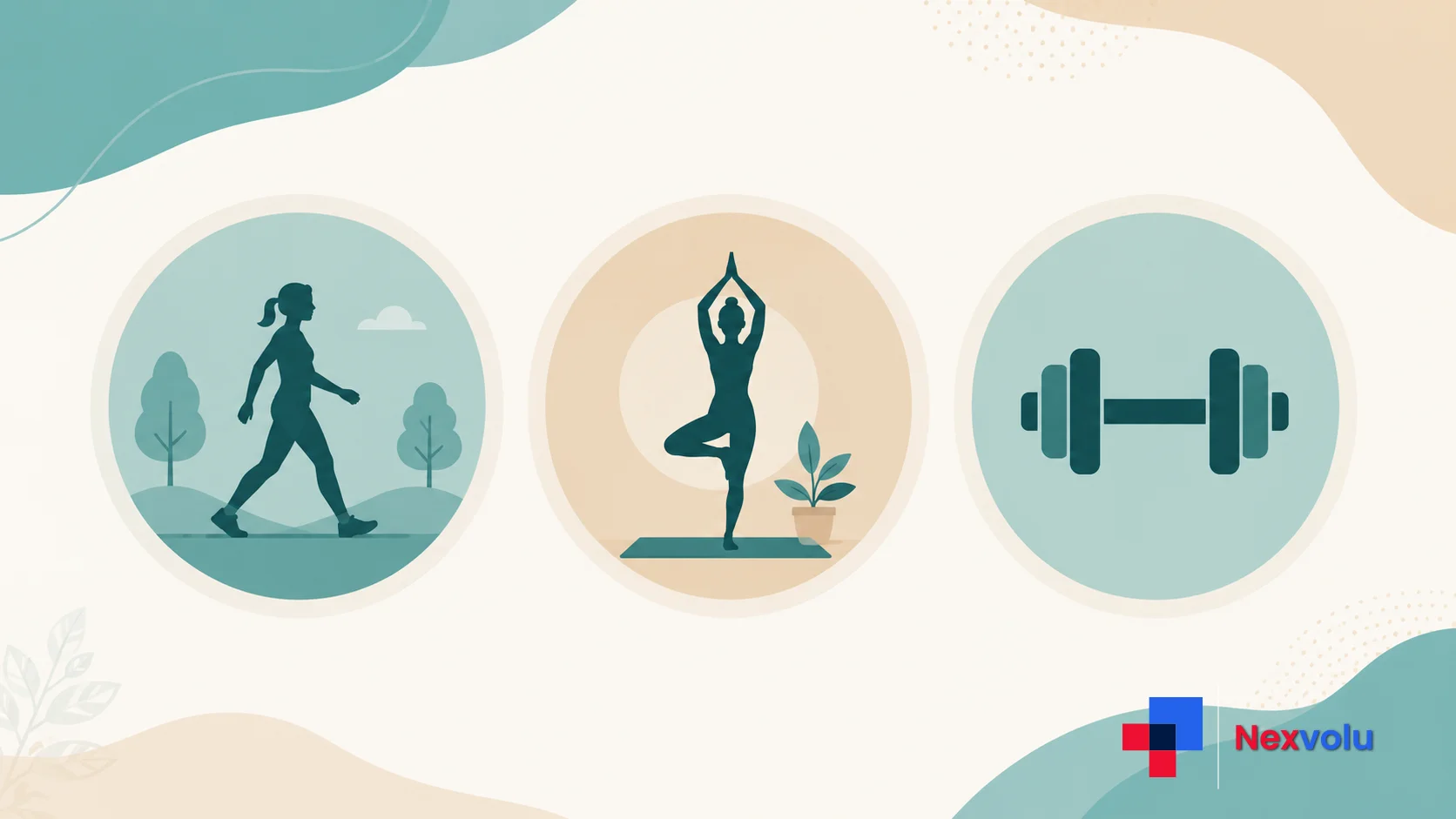
A 2024 network meta-analysis in The BMJ pooled 218 trials and more than 14,000 people. It found walking, jogging, yoga, and strength training all eased depression and the more vigorous the effort, the bigger the lift. Harvard Health puts it plainly: for some people, exercise works about as well as antidepressants, though it isn’t enough on its own for severe depression.
Still, you don’t need a gym membership. Mayo Clinic’s guidance lands at roughly 150 minutes of moderate activity a week picture a 20-minute walk most days. So start smaller than feels impressive. Five minutes counts. After all, the hardest part isn’t the workout; it’s the shoes by the door.
Key insight: Motivation usually arrives after you start moving, not before. Don’t wait to feel like it. Move, then watch the feeling catch up.
Light and sleep – your mood runs on a clock
Most of us treat morning light as background noise. It’s closer to a switch.
Sunlight early in the day helps set your circadian rhythm the internal clock that steadies serotonin during the day and the sleep you’ll get that night. Skip it, and the whole system drifts. That’s part of why winter feels heavier for so many people.
Sleep itself, meanwhile, is non-negotiable. Poor sleep doesn’t just trail behind depression; instead, it feeds it, and the loop tightens fast. The fix is unglamorous and powerful: a consistent wake time, a dim hour before bed, and daylight on your face soon after you get up. If you want the deeper mechanics, here’s how morning light resets your sleep. Two free levers, pulled daily.
What’s on your plate moves your mind
Food won’t cure depression. But the pattern of what you eat shows up in how you feel.
Diets rich in vegetables, whole grains, beans, nuts, and oily fish broadly, a Mediterranean-style way of eating track with lower depression risk across study after study. For example, omega-3 fatty acids are the standout, and they’re easy to find: salmon, sardines, and walnuts all deliver. The mechanism likely runs through lower inflammation and healthier brain-cell signaling.
Still, the bigger picture matters more than any single food. A 2023 study published in Nature Mental Health found that people who followed seven healthy lifestyle habits including a balanced diet, regular exercise, and good sleep had a 57% lower risk of depression. No single habit did that alone. They stacked.
The one most people underestimate
Here’s what most “natural antidepressant” lists bury at the bottom, if they mention it at all: other people.
Connection, then, is the antidepressant you can’t bottle. A short, real conversation does something supplements can’t namely, it tells your nervous system you’re safe and not alone. Loneliness, by contrast, behaves like a slow leak on your mood, and it’s quietly common. If you’ve felt it, you already know how much loneliness affects your health.
Picture this. It’s a grey Tuesday, your energy is flat, and the easiest thing in the world is to cancel plans and stay under the blanket. You text a friend instead “walk?” Twenty minutes later you’re outside, half-laughing about nothing. You didn’t fix your life. But the fog lifted an inch. That inch is the whole point.
What natural antidepressants can’t do
Time for the honest part.
d, these habits are real support, not a swap for treatment when depression is moderate or severe. Telling someone in a deep depressive episode to “just go for a run” isn’t only unhelpful it can deepen the shame. Sometimes biology needs medical help, and that’s not failure. In fact, it’s medicine working the way it should.
If you’ve felt hopeless, lost interest in nearly everything, or had thoughts of harming yourself for more than two weeks, treat that as a signal to reach out to a doctor or a crisis line not something to walk off. The most effective path is often the combined one: daily habits plus professional care, pulling in the same direction.

Frequently Asked Questions
What is the most effective natural antidepressant?
Regular exercise has the strongest evidence among natural antidepressants. A 2024 BMJ review of 218 trials found walking, jogging, yoga, and strength training all reduced depression symptoms, with more vigorous activity helping most. For some people it rivals medication for mild to moderate depression, though it works best combined with other healthy habits.
Can natural antidepressants replace medication?
Natural antidepressants usually can’t replace medication for moderate to severe depression. They work well as support and prevention, and for mild symptoms they sometimes match medication. But severe depression often needs professional treatment. Never stop a prescribed antidepressant on your own talk to the doctor who prescribed it first.
How long do natural antidepressants take to work?
Most natural approaches need consistency before you notice change. Exercise studies often show meaningful mood improvement within four to twelve weeks of regular activity. Sleep and light habits can shift your mood within days, while diet changes build gradually. The honest answer: weeks, not minutes but the benefits tend to last.
Does sunlight really help with depression?
Yes, sunlight supports mood for many people. Morning light helps regulate your circadian rhythm, serotonin, and sleep all closely tied to depression. Aim for ten to thirty minutes of outdoor light early in the day when possible. For seasonal low mood, a light therapy box can help, ideally with a doctor’s guidance.
What foods act as natural antidepressants?
Oily fish like salmon and sardines, walnuts, leafy greens, beans, whole grains, and berries are linked to lower depression risk. Together they form a Mediterranean-style pattern rich in omega-3s and fiber. No single food is a cure, but a steady, plant-forward diet supports brain health and steadier mood over time.
Can exercise alone treat depression?
Exercise alone can meaningfully help mild to moderate depression and sometimes works as well as medication for those cases. For severe depression, it isn’t enough on its own and should be paired with professional treatment. Think of movement as a powerful core habit, not a complete substitute for medical care.
The bottom line
The best antidepressants might already be in your day. Movement, morning light, real sleep, better food, and genuine connection each move mood chemistry in the right direction and stacked together, they’re stronger still. None of this erases serious depression or replaces a doctor, and pretending otherwise helps no one.
So pick one. Just one. A five-minute walk, ten minutes of morning sun, or a text to a friend you’ve been meaning to reach. Small mood support beats a perfect plan you never start.
Which of these everyday antidepressants will you try first and who could you bring along?
References
- World Health Organization. “Over a billion people living with mental health conditions – services require urgent scale-up.” 2025. Who.int
- Centers for Disease Control and Prevention (NCHS). “Depression Prevalence in Adolescents and Adults: United States, August 2021–August 2023.” NCHS Data Brief No. 527, 2025. CDC GOV
- The BMJ. “Effect of exercise for depression: systematic review and network meta-analysis of randomised controlled trials.” 2024. BMJ
- Harvard Health Publishing. “Exercise is an all-natural treatment to fight depression.” Health Harvard
- Mayo Clinic. “Depression and anxiety: Exercise eases symptoms.” Mayoclinic