








Cyclospora Outbreak 2026: Symptoms & Safe Foods
Cyclospora Outbreak 2026: Symptoms, Safe Foods & When to Worry
More than 1,600 confirmed cases. Over 5,100 more under investigation. Thirty-four states and climbing. The 2026 Cyclospora outbreak has turned a parasite most people can’t pronounce into the summer’s biggest food-safety scare and weeks in, investigators still can’t say exactly which food is making everyone sick.
If you’ve hesitated in the produce aisle lately, you’re not overreacting. But you’re also probably missing the parts that actually matter. This is the calm, practical guide underneath the scary maps. What is Cyclospora, really? How do you tell it apart from an ordinary stomach bug? Are your fruits and vegetables safe? Which lab test should you ask for by name? And when do your symptoms mean it’s time to call a doctor? We’ll take them one at a time.
What Is Cyclospora?
Cyclospora is a microscopic parasite – Cyclospora cayetanensis – that infects the small intestine and causes an illness called cyclosporiasis. People get it by swallowing food or water contaminated with the parasite, most often fresh produce. It doesn’t spread directly from person to person, and cases reliably climb every spring and summer.
The parasite is stubborn in a very specific way. It travels the fecal-oral route, usually through contaminated produce or water. The CDC treats May 1 through August 31 as peak “Cyclospora season.” Past outbreaks have been traced to fresh items like herbs, salad greens, and berries. That variety is exactly why a single source is so hard to pin down.
How Big Is the 2026 Cyclospora Outbreak?
The 2026 Cyclospora outbreak is far bigger than a normal year. Since May 1, 2026, the CDC has confirmed 1,645 domestically acquired cases across 34 states. It’s also reviewing more than 5,100 additional reports. For comparison, only 249 cases had been reported by the same point in 2025 – a roughly sevenfold jump.
So far, 141 people (about 9%) have been hospitalized, and no deaths have been reported. Michigan is the hardest-hit state by a wide margin, with Ohio, Kentucky, and West Virginia close behind. State tallies and independent estimates put the true total near 7,000, because many people recover without ever being tested.
One cluster has a name attached. The CDC and FDA have linked infections in five states to shredded iceberg lettuce served at Taco Bell locations in Indiana, Kentucky, Michigan, Ohio, and West Virginia. That single cluster does not explain the national surge, which remains under investigation.
| Risk level | States | What it means |
|---|---|---|
| Highest | Michigan | Epicenter; steepest case growth all summer |
| Elevated | Ohio, Kentucky, West Virginia, Indiana | Named Taco Bell iceberg-lettuce cluster |
| Watch | 29+ other states | Confirmed cases; source still under investigation |
Snapshot based on CDC and state data as of mid-July 2026; check the live CDC outbreak page for updates.
What Are the Symptoms of the Cyclospora Outbreak?
Cyclospora symptoms usually show up about a week after exposure, though the range runs from 2 days to 2 weeks or more. The hallmark is frequent, watery, sometimes explosive diarrhea. Most people also get heavy bloating, gas, stomach cramps, nausea, loss of appetite, fatigue, and noticeable weight loss.
Common symptoms include:
- Watery, frequent, often explosive diarrhea (the telltale sign)
- Bloating and increased gas
- Stomach cramps and nausea
- Loss of appetite and weight loss
- Fatigue that can outlast everything else
Less common: vomiting, body aches, headache, and a low-grade fever. Left untreated, symptoms can drag on from a few days to a month or longer and they often seem to fade, then relapse.
Cyclospora vs. a Normal Stomach Bug: How to Tell the Difference
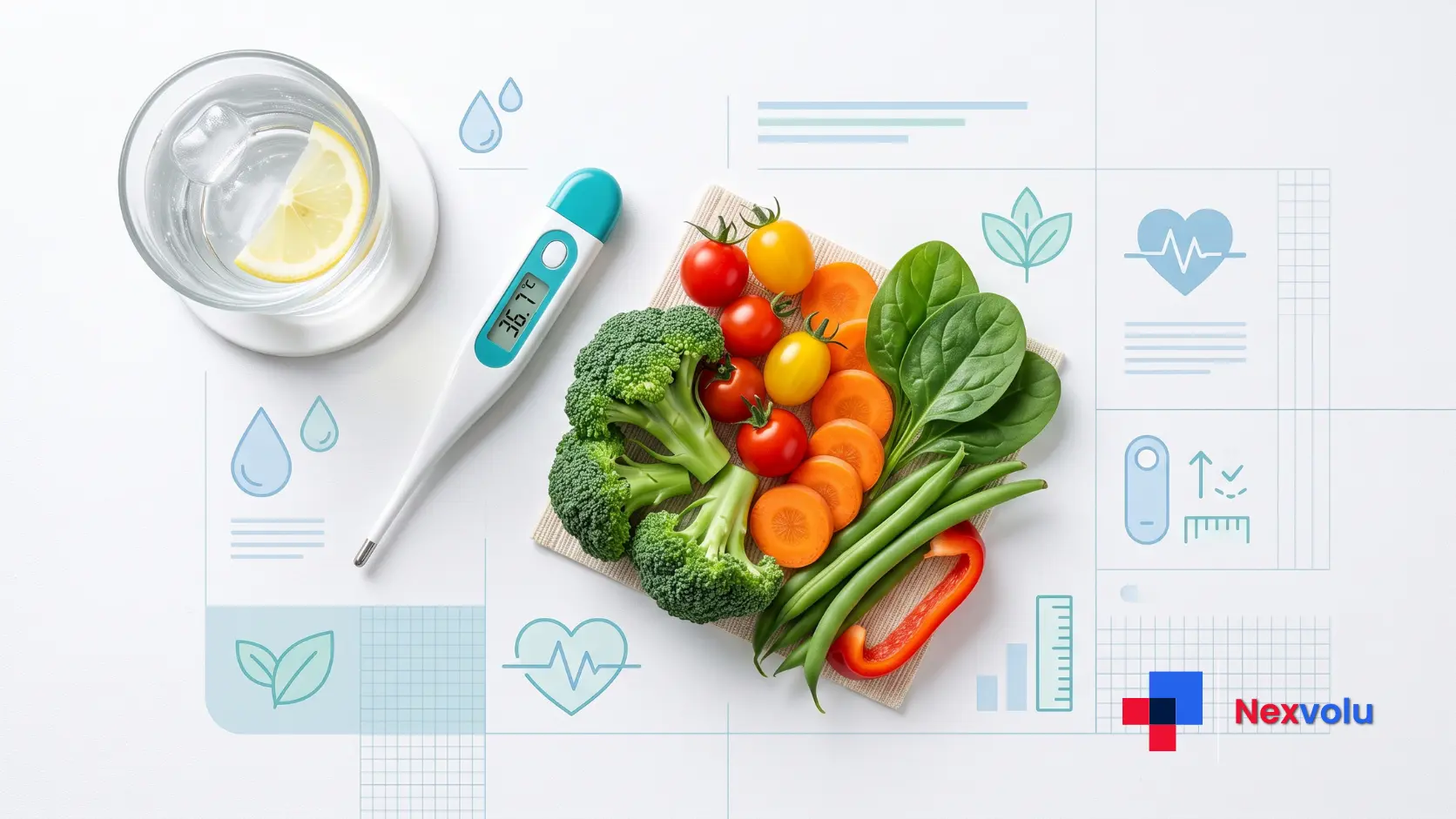
Here’s the distinction that sends most people to the doctor too late. A typical stomach bug burns out fast; Cyclospora settles in. If your “food poisoning” won’t quit after several days especially with relentless bloating and little vomiting that pattern itself is a clue.
| Feature | Typical stomach bug | Cyclospora |
|---|---|---|
| Onset | Hours after eating | ~1 week after eating |
| Duration | 1-3 days | Days to a month+, relapsing |
| Diarrhea | Watery, short-lived | Watery/explosive, persistent |
| Vomiting & fever | Common | Uncommon or mild |
| Bloating & fatigue | Mild | Heavy, lingering |
| Does it clear on its own? | Usually, with rest & fluids | Often not – needs a specific antibiotic |
The takeaway: duration plus bloating minus much vomiting is the fingerprint. That combination is your cue to ask about testing rather than waiting it out.
Is It Safe to Eat Fruits and Vegetables?
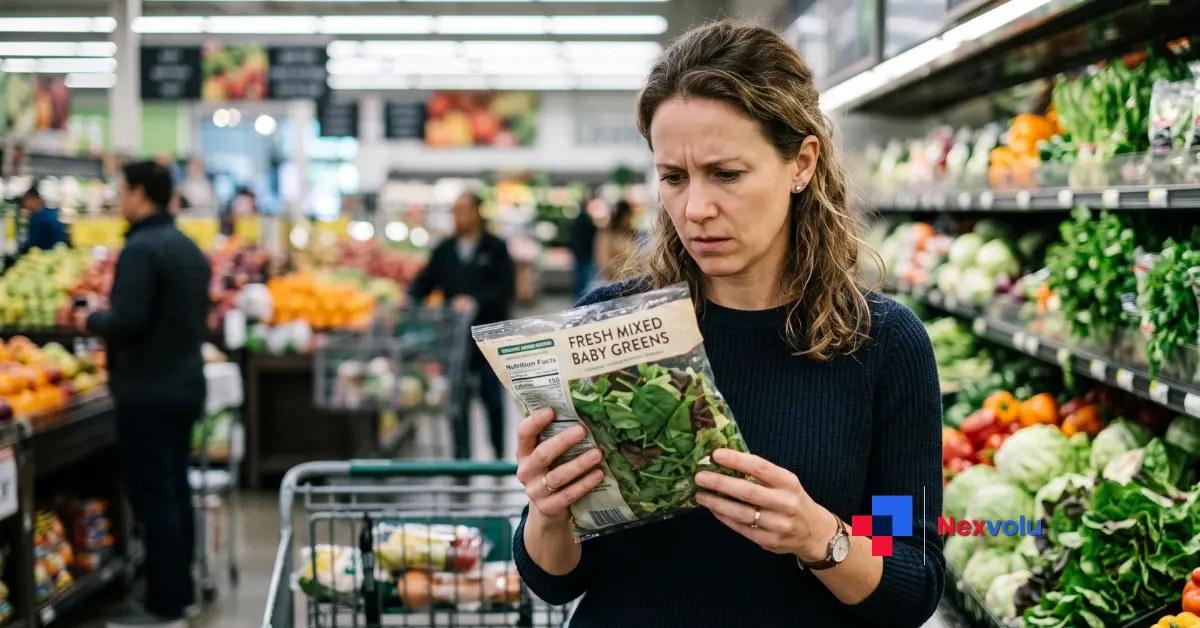
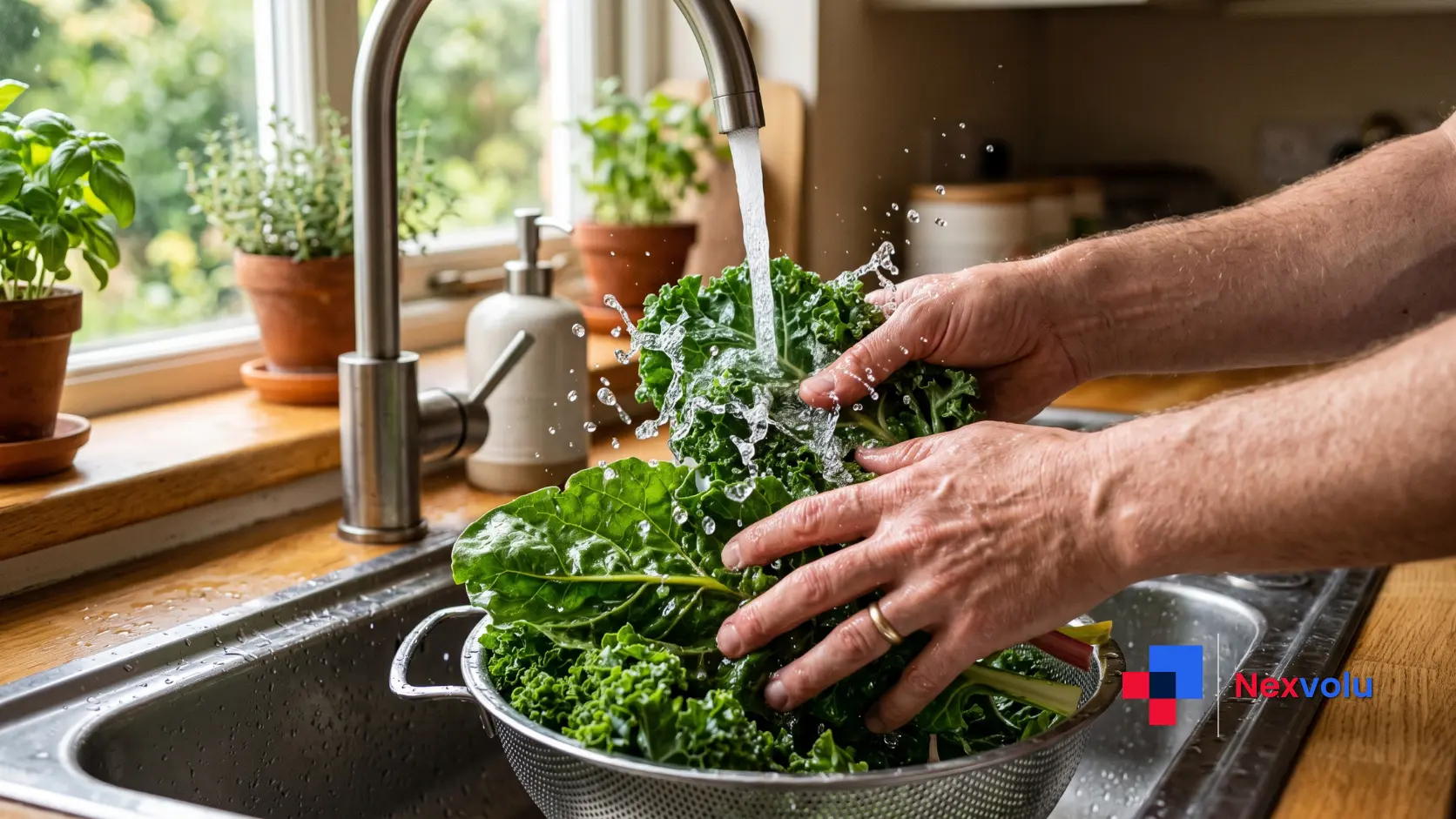
Yes – you don’t need to give up fruits and vegetables. Both Consumer Reports and the CDC stress that produce stays a vital part of a healthy diet. Wash everything thoroughly under running water (even bags labeled “prewashed”), and cook produce to 158°F (70°C) when you can, because heat reliably kills the parasite.
One honest caveat: washing lowers your risk but can’t guarantee removal, since Cyclospora clings tightly to surfaces. Cooking is the only step that kills it outright. The one specific thing to avoid right now is shredded iceberg lettuce served at Taco Bell in the five cluster states named above (Indiana, Kentucky, Michigan, Ohio, and West Virginia), per the FDA. Beyond that, normal produce hygiene – plus washing your hands before and after handling food – is your best defense.
Worried a family member has been sick too long? Share this guide – the tip about requesting the specific stool test could save them weeks of guessing.
How Is Cyclospora Treated and Why Won’t It Just Go Away?
Cyclospora doesn’t respond to the usual food-poisoning routine of rest and fluids. The standard treatment is a specific antibiotic trimethoprim-sulfamethoxazole (TMP-SMX), sold as Bactrim or Septra typically taken for 7 to 10 days. Because most labs don’t screen for it automatically, you may need to ask your provider for a Cyclospora stool test by name.
That last point is the practical heart of this outbreak. Testing for Cyclospora isn’t part of a standard stool panel, so a routine “stomach bug” workup can miss it entirely. People with healthy immune systems sometimes recover without treatment, but the illness can otherwise last weeks and keep relapsing. If you’ve had persistent diarrhea and recently ate suspect produce, the phrase “Can you test me specifically for Cyclospora?” is the most useful sentence in this article.
When Should You See a Doctor?
Consider contacting a healthcare provider if your diarrhea lasts more than a few days, keeps relapsing, or comes with signs of dehydration such as dizziness, dark urine, or an inability to keep fluids down. People at higher risk – young children, older adults, and anyone with a weakened immune system – should reach out sooner rather than later.
Mention what you ate in the two weeks before symptoms began, especially fresh produce or the named Taco Bell lettuce, and ask directly about a Cyclospora test. This isn’t about panicking over a 24-hour bug; it’s about not letting a treatable parasite masquerade as one for a month.
Why Is the Cyclospora Outbreak Source Still a Mystery?
Fresh produce is genuinely hard to trace. It has a short shelf life, so by the time people get sick and report it, the actual contaminated food is often eaten or thrown out. Cyclospora also requires a specialized lab test that isn’t routine, which slows detection at every step.
History backs this up: of four Cyclospora outbreaks in 2023, investigators never identified a source for three of them. Consumer Reports adds a harder point cuts to CDC surveillance and FDA lab capacity may have blunted the ability to spot this year’s Cyclospora outbreak sooner and trace it faster. In other words, the mystery isn’t negligence so much as a slow, under-resourced detective story playing out in real time.
Nexvolu‘s Verdict on the 2026 Cyclospora Outbreak
One-line verdict: The 2026 Cyclospora outbreak is scary in scale but low in lethality the real risk is misreading it as a passing stomach bug and losing weeks to an easily treated parasite.
- Best for knowing if: you or someone you cook for has had stubborn, bloating-heavy diarrhea that won’t quit.
- Skip the panic if: you’re healthy, symptom-free, and simply washing and cooking produce properly.
- Pros: deaths remain at zero; the illness is treatable with a common antibiotic; prevention (washing, cooking) is simple and cheap.
- Cons: the source is still unknown; standard stool tests miss it; symptoms can relapse for weeks.
- Standout point: the single most useful move isn’t avoiding produce – it’s asking your doctor to test specifically for Cyclospora, because the routine panel usually won’t.
- Nexvolu Editorial Score – 7.5/10 – high public-health importance and a genuinely actionable fix, marked down because the unidentified source leaves real uncertainty for consumers. (Editorial opinion based on published CDC, FDA, and Consumer Reports information, not a medical diagnosis.)
Frequently Asked Questions
How long does Cyclospora last?
Cyclospora can last anywhere from a few days to a month or longer, and symptoms often relapse – fading, then returning – before fully clearing. That long, stop-start course is one of the biggest differences from an ordinary stomach bug. Without the right antibiotic, the diarrhea and fatigue can linger for weeks, wearing people down even after the worst is over. People with healthy immune systems sometimes recover on their own, but treatment with trimethoprim-sulfamethoxazole (TMP-SMX) usually shortens the illness and prevents relapse. If your symptoms have stretched past several days or keep coming back, that persistence is your signal to get tested rather than continuing to wait it out at home.
Can you catch Cyclospora from another person?
Cyclospora is not spread directly from person to person, according to the CDC. The parasite needs time – usually days to weeks – in the environment before it becomes infectious. So it can’t pass through a cough, a handshake, or shared close contact the way a cold or norovirus does. Instead, people get sick by swallowing food or water contaminated with the parasite, most often fresh produce. That’s reassuring for households: caring for a sick family member won’t give you cyclosporiasis. The practical implication is that prevention focuses on food and water safety thorough washing, cooking produce when possible, and good hand hygiene – rather than isolating the person who’s ill.
Does washing produce remove Cyclospora?
Washing produce under running water reduces your risk but cannot guarantee the parasite is gone. Cyclospora clings tightly to surfaces. Studies have shown washing alone doesn’t reliably remove it, which is exactly why investigators keep struggling to clear implicated foods. The CDC still recommends washing all fresh produce thoroughly, including items labeled “prewashed,” because it lowers overall risk and removes other contaminants. The only step that truly kills Cyclospora is heat: cooking produce to at least 158°F (70°C). So wash everything as a baseline habit, cook when you reasonably can, and treat washing as risk reduction rather than a guarantee of safety during an active outbreak.
What Foods Are Linked to the 2026 Cyclospora Outbreak?
So far, only one cluster has a confirmed food: shredded iceberg lettuce served at Taco Bell locations in Indiana, Kentucky, Michigan, Ohio, and West Virginia, according to the FDA and CDC. That cluster does not explain the larger national surge across 34 states, whose source remains unidentified. Historically, Cyclospora outbreaks have been tied to a range of fresh produce – leafy greens, herbs like cilantro and basil, and berries but no single item has been named for the broader 2026 Cyclospora outbreak. Until investigators confirm a source, the safest approach is general produce hygiene rather than avoiding specific foods, aside from the named Taco Bell lettuce in those five states.
Is Cyclospora dangerous or deadly?
Cyclospora is rarely life-threatening. In the 2026 Cyclospora outbreak, about 9% of confirmed patients have been hospitalized and no deaths have been reported, per the CDC. For most healthy adults, the bigger cost is misery and lost time – weeks of explosive diarrhea, bloating, and fatigue – rather than serious danger. The exception is higher-risk groups: young children, older adults, and people with weakened immune systems can experience more severe or prolonged illness and may need longer treatment. Dehydration is the main complication to watch for. The reassuring bottom line is that Cyclospora is treatable and seldom deadly, but it shouldn’t be ignored, especially for vulnerable people.
How do I know if I have Cyclospora and not regular food poisoning?
The clearest clue is time. Regular food poisoning usually hits within hours and clears in one to three days; Cyclospora appears about a week after exposure and drags on for weeks, often relapsing. Cyclospora also tends to cause heavy bloating and fatigue with relatively little vomiting or fever, while classic stomach bugs bring more vomiting and a faster burnout. If your “food poisoning” has lasted more than a few days, keeps returning, and features stubborn bloating, that pattern points toward Cyclospora. The only way to confirm it is a specific stool test which most labs won’t run unless you ask for it by name.
The Bottom Line on the 2026 Cyclospora Outbreak
The 2026 Cyclospora outbreak is big, unsolved, and genuinely unsettling but it’s also survivable and, for most people, preventable. Keep eating your fruits and vegetables; just wash everything, cook produce when you can, and skip the named Taco Bell lettuce in the five affected states. Most of all, remember the pattern: if diarrhea and bloating outlast a normal stomach bug, don’t tough it out ask your doctor to test specifically for Cyclospora and, if needed, get the right antibiotic.
Stay alert, not anxious. If this guide made the outbreak feel less scary and more manageable, share it with someone who’s been quietly miserable for a week it might be the nudge that gets them the right test.
Have you changed how you wash or shop for produce since the outbreak started? Tell us in the comments.
Disclaimer: This article is for general informational purposes only and is not medical advice. It is not a substitute for professional diagnosis or treatment. Always consult a qualified healthcare provider before making decisions about your health.
References
- CDC HAN – Cyclosporiasis in Multiple U.S. States, 2026
- CDC – Taco Bell shredded iceberg lettuce outbreak
- CDC – Symptoms of Cyclosporiasis
- CDC – Clinical Care (TMP-SMX treatment)
- FDA – 5-State Iceberg Lettuce Investigation (July 2026)
- Consumer Reports – What Consumers Need to Know (2026)
- CIDRAP – What we truly know about the outbreak