










Trump Accounts: $1,000 Newborn Deposit Explained (2026)
Trump Accounts: The $1,000 Is Free – But Should You Add $5,000?
Trump Accounts just handed millions of American babies something rare: free money that really is free. For every eligible newborn, the U.S. Treasury drops $1,000 into a brand-new investment account. There are no strings, no repayment, and no catch on the deposit itself.
The catch is what you do next. The same law invites you to add up to $5,000 a year on top of that seed. Here, many parents make a quiet, expensive mistake. The real question is not “what is a Trump Account?” It is “should I feed it, or does my $5,000 grow better somewhere else?”
Let’s claim the free money first. Then we can run the real numbers.
TL;DR: Trump Accounts give babies born 2025-2028 a genuinely free $1,000 federal seed, so claim it. Contributions grow tax-deferred, but the IRS taxes withdrawals as ordinary income. The money also stays locked until the year the child turns 18, and it then behaves like a traditional IRA. Saving for college? A 529 usually wins. Want flexibility? A low-fee custodial brokerage often wins. Take the $1,000 no matter what, then think hard about the other $5,000.
What Is a Trump Account?
A Trump Account is a new tax-deferred investment account for U.S. children under 18, created by the One Big Beautiful Bill Act. According to the U.S. Treasury and IRS, the government seeds a one-time $1,000 deposit for babies born 2025-2028, and families may add up to $5,000 per year, invested in a low-fee U.S. stock index fund.
How does the $1,000 Trump Account deposit work?
According to the U.S. Treasury, the government makes a one-time $1,000 pilot contribution for each eligible child. A parent or guardian simply makes an election. To qualify for the seed money, the child must be a U.S. citizen with a valid Social Security number, born between January 1, 2025 and December 31, 2028.
The IRS confirms that families could not fund accounts before July 4, 2026. Parents enroll by filing Form 4547 (Trump Account Elections) with their 2025 tax return. Early adoption looks strong. The IRS reports roughly 4 million children signed up, with about 1 million already claiming the $1,000.
Here is the part the headlines gloss over. That $1,000 is not a tax-free gift like a Roth deposit. The IRS counts it as a contribution and taxes it as ordinary income once your child withdraws it. Free to receive, but not free forever.
Trump Accounts: the rules most parents miss (fine print until age 17)
The marketing says “your child’s future.” The rulebook says something more specific. These terms govern the account:
- Contribution cap: Individuals and employers can add up to a combined $5,000 per year (indexed for inflation after 2027). An employer may contribute up to $2,500 of that, and it will not count as the employee’s taxable income. Contributions from nonprofits and governments fall outside the $5,000 cap.
- Investment restriction: You must invest the money in a low-fee mutual fund or ETF that tracks a U.S. stock index such as the S&P 500. That rules out individual stocks, bonds, and international-only funds.
- The lockup: You generally cannot withdraw during the “growth period,” which ends on December 31 of the year the child turns 17. In plain terms, the money stays untouchable until the year the child turns 18.
- After 18 – it becomes a traditional IRA: Once the beneficiary reaches 18, standard traditional-IRA rules take over. A withdrawal before age 59½ usually triggers income tax plus a 10% penalty, with the usual IRA exceptions (for example, up to $10,000 toward a first home or qualified higher-education costs).
- Tax treatment: You contribute after-tax dollars, earnings compound tax-deferred, and the IRS later taxes both the growth and the seed as ordinary income.
Read that again, because it reframes everything. Marketers pitch a Trump Account as a nest egg for your kid. Structurally, it works as a retirement account for your child, not a college fund.
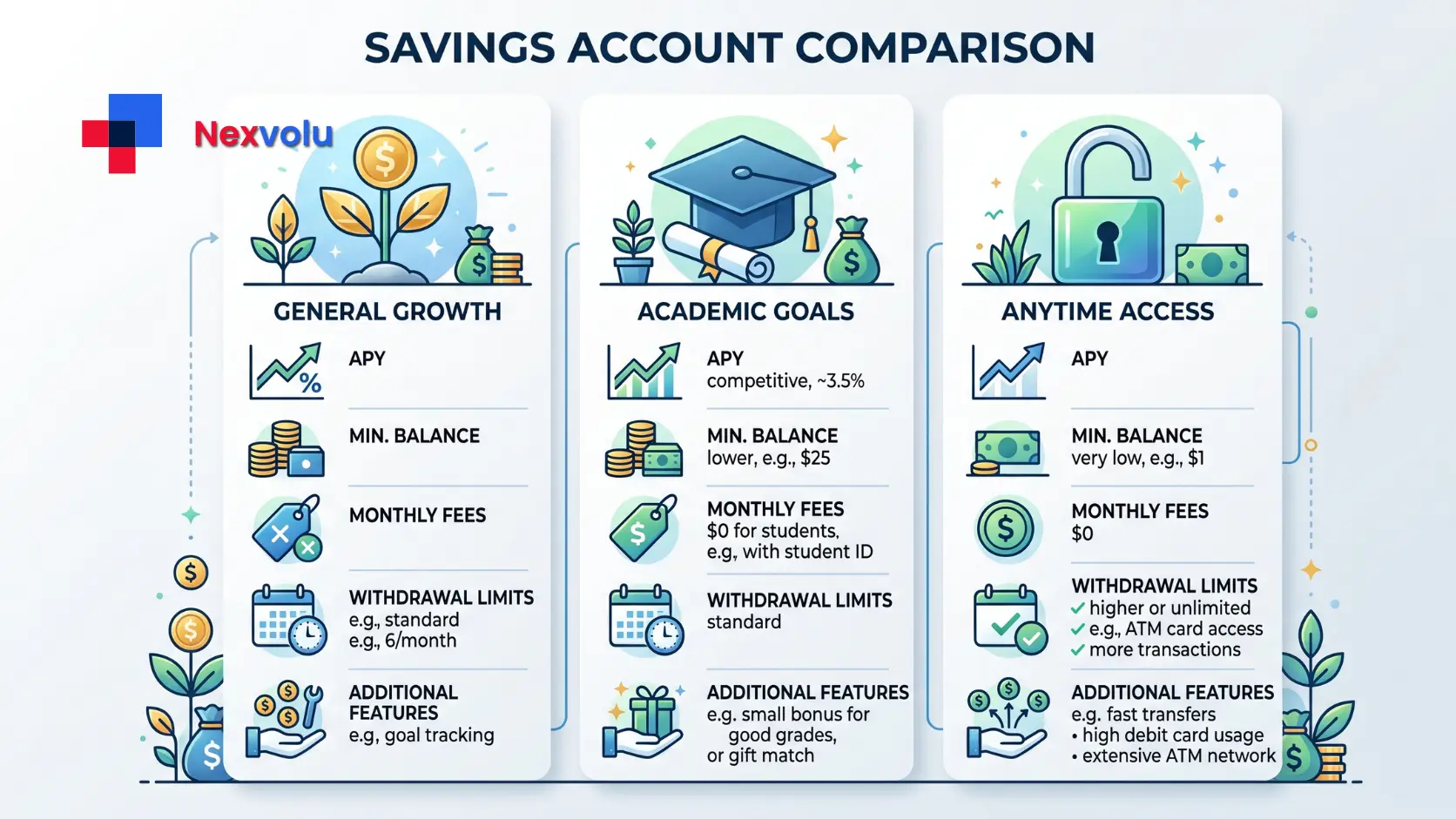
The $5,000 question: Trump Account vs 529 vs custodial brokerage
This is the section the internet keeps skipping. Everyone explains what Trump Accounts are; almost nobody tells you whether funding one beyond the free $1,000 is a smart move. So here is the honest, side-by-side math.
| Feature | Trump Account | 529 Plan | Custodial brokerage (UTMA/UGMA) |
|---|---|---|---|
| Free $1,000 seed | ✅ Yes (2025-2028 births) | ❌ No | ❌ No |
| Annual contribution cap | $5,000 combined | No IRS cap (gift-tax rules ~$19k/yr in 2026) | No limit |
| Investment choice | U.S. index fund only | Plan menu (broad) | Anything |
| Tax on growth | Ordinary income at withdrawal | Tax-free for qualified education | Capital-gains rates (kiddie-tax rules) |
| Access before 18 | ❌ Locked | ✅ Anytime (penalty if non-qualified) | ✅ Anytime (for child’s benefit) |
| Best goal fit | Child’s retirement | College / education | Flexible (car, home, business, anything) |
How Trump Accounts compound: the real math
Assume a reasonable long-run 7% average annual return. Markets vary, so treat this as illustrative, not a promise.
- $1,000 seed alone, no contributions, 18 years: grows to roughly $3,380. Add nothing else, and your child still starts adult life with real money for zero effort. That alone is why everyone should claim the seed.
- $1,000 seed + $5,000/year for 18 years: grows to roughly $173,000. About $90,000 of that is your own contributions, and ~$83,000 is growth. The U.S. Council of Economic Advisers models an even higher figure, about $303,800 by age 18 at strong market returns, so the ceiling is real.
Here is the twist. Inside a Trump Account, the IRS taxes that ~$83,000 of growth as ordinary income on withdrawal. Now put the identical $5,000 a year into two rivals:
- A 529: spend it on tuition, and the growth comes out completely tax-free. That is a clear win if college is the goal.
- A low-fee custodial brokerage: your child pays only long-term capital-gains rates (usually lower than ordinary income), and you keep full flexibility to spend the money anytime.
The verdict: claim the seed, question the extra $5,000
Take the free $1,000 every time. For the extra $5,000, though, a Trump Account usually ranks as the weakest of the three for typical family goals. The ordinary-income tax drag and the retirement-style lockup hold it back. Feed it beyond the seed in only two cases: your employer adds free money, or you truly want a retirement head start for your child and have already maxed better options.
Nexvolu Review: are Trump Accounts worth it?
⭐ Nexvolu Verdict – Trump Account (as a savings vehicle)
Free $1,000 seed: (5/5) – claim it, no debate.
As a college fund: (2/5) – a 529 is more tax-efficient.
As a flexible savings tool: (2/5) – a custodial brokerage is freer and taxed more gently.
As a child’s retirement starter: (4/5) – genuinely useful if employer contributions are involved.
Overall for most parents: (3/5) – a fantastic freebie wrapped around a mediocre optional investment.
We modeled this the way a Nexvolu reader actually thinks. The question is not “is $1,000 nice?” Obviously it is. The real question is “where does my next $5,000 work hardest?” After running the scenarios above, we landed on a more skeptical view than most coverage you will find: the seed is a gift, but Trump Accounts are a trap of convenience. The government made claiming $1,000 easy. That ease nudges parents to keep feeding a vehicle that loses on tax efficiency for the two goals families care about most: paying for college and keeping options open.
What we like: it forces low-fee index investing, it resists impulse raids, and an employer match can be genuinely powerful. What we don’t: the ordinary-income tax on growth quietly erodes the compounding everyone celebrates. Calling a locked traditional-IRA-in-disguise a “head start for your child” also oversells what parents can actually use before the kid grows up.
What the internet doesn’t tell you yet about Trump Accounts
Most articles stop at “free $1,000, contribute up to $5,000.” Here is what deeper reading of the Treasury and CRS material reveals and what almost no consumer coverage is stating plainly:
Trump Accounts: facts the news keeps skipping
- The $1,000 seed is taxable when withdrawn. It is a contribution, not a Roth-style gift. Your child pays ordinary income tax on it decades later.
- Growth is taxed as ordinary income, not capital gains. This is the single most under-reported fact. A boring low-fee custodial brokerage can be more tax-efficient on the same growth, because long-term capital-gains rates are usually lower.
- It is functionally a retirement account, not a college fund. After 18 it converts to a traditional IRA, so tapping it before 59½ for college or a first car generally means income tax plus a possible 10% penalty (with narrow exceptions). If college is the goal, that lockup fights you.
- Employer money changes the entire calculation. A $2,500 employer contribution is an instant, tax-advantaged return you can’t get in a 529 or custodial account. If your workplace offers it, the Trump Account can leapfrog the alternatives.
- “Up to $5,000” quietly means ~$90,000 out of your pocket over 18 years. The headline sells the deposit; the fine print asks for a five-figure commitment. Decide that on purpose, not by default.
Bookmark this Nexvolu breakdown and send it to any new parent who assumes Trump Accounts are automatically the smart move.

How to open Trump Accounts and claim the free $1,000
If your child qualifies, claiming the seed is worth the paperwork regardless of whether you contribute a dollar more. Trump Accounts make the enrollment step refreshingly simple. According to the IRS:
- Confirm eligibility. U.S.-citizen child, valid Social Security number, born Jan 1, 2025-Dec 31, 2028 for the $1,000 pilot seed (children under 18 can still hold an account without the seed).
- Make the election. File IRS Form 4547 with your tax-year 2025 return to request the account and enroll in the pilot program. Parents, guardians, and other authorized individuals can start the process through the official IRS/Trump Accounts flow.
- Fund the account (optional). Individuals and employers can add up to the combined $5,000 annual limit, in cash, invested in an approved low-fee U.S. index fund.
- Then decide the $5,000 question. Use the comparison above. For education, weigh a 529; for flexibility, a custodial brokerage; for a retirement head start or employer match, the Trump Account itself.
Always confirm current details on official sources and consider a quick chat with a fee-only advisor before committing years of contributions.
Frequently Asked Questions
How do Trump Accounts work?
A Trump Account is a tax-deferred investment account for U.S. children under 18, created by the One Big Beautiful Bill Act. According to the U.S. Treasury, the government seeds a one-time $1,000 deposit for eligible babies born between 2025 and 2028, and families or employers can add up to a combined $5,000 per year. The money must be invested in a low-fee fund tracking a U.S. stock index, such as the S&P 500. Contributions grow tax-deferred, but withdrawals are generally blocked until the year the child turns 18. After that, the account follows traditional-IRA rules, meaning growth is taxed as ordinary income and early withdrawals before 59½ may face a 10% penalty.
Is the $1,000 Trump Account deposit really free?
Yes and no. The $1,000 costs you nothing to receive the U.S. Treasury deposits it once for each eligible child born between 2025 and 2028 whose parent files the election. There is no repayment and no income requirement for the seed itself. However, the internet often misses a key detail: that $1,000 is treated as a contribution, not a tax-free Roth-style gift. When your child eventually withdraws the money, the seed and all its growth are taxed as ordinary income. So it is free to claim today, but the government will collect income tax on it decades from now. Even so, claiming it is a clear win free principal always beats no principal.
Is a Trump Account better than a 529 plan?
For education goals, usually no. A 529 plan lets your contributions grow and be withdrawn completely tax-free when used for qualified education expenses like tuition, which beats the Trump Account’s ordinary-income tax on growth. A 529 is also more flexible for school: you can access it before the child turns 18 without the Trump Account’s lockup. The Trump Account wins in two situations: when your employer contributes up to $2,500 tax-free (free money you can’t get in a 529), or when you truly intend the funds as your child’s retirement starter rather than a college fund. For most families saving specifically for college, a 529 remains the more tax-efficient choice for dollars beyond the free $1,000 seed.
Can you withdraw money from a Trump Account before the child turns 18?
Generally, no. Withdrawals are restricted during what the rules call the “growth period,” which ends on December 31 of the year the child turns 17. In practice, the money is locked until the year the child turns 18, with only narrow exceptions such as certain rollovers or distributions after death. Once the beneficiary reaches 18, the account behaves like a traditional IRA. That means withdrawals before age 59½ are generally subject to income tax plus a 10% early-withdrawal penalty, with standard IRA exceptions like up to $10,000 for a first home or qualified higher-education costs. This lockup is exactly why a Trump Account works better as a long-term retirement head start than as an accessible college or emergency fund.
How much can you contribute to a Trump Account each year?
Individuals and employers can contribute a combined total of up to $5,000 per year per child, a figure indexed for inflation after 2027. Within that limit, an employer may contribute up to $2,500 without it counting as taxable income for the employee, which is a genuine advantage worth capturing if your workplace offers it. Contributions must be made in cash and are not tax-deductible. Notably, contributions from nonprofits and government entities do not count toward the $5,000 cap. Remember that maxing the account means committing roughly $90,000 of your own money over 18 years, so treat that as a deliberate financial decision rather than an automatic one and compare it against a 529 or custodial brokerage first.
Trump Account vs custodial brokerage: which grows more?
Both can grow similarly before taxes because both can hold stock index funds, but the after-tax outcome often favors a low-fee custodial brokerage account (UTMA/UGMA). The reason is taxation: Trump Account growth is taxed as ordinary income when withdrawn, while custodial-account gains are generally taxed at lower long-term capital-gains rates under kiddie-tax rules. A custodial account also has no contribution limit and no lockup you can use the money anytime for the child’s benefit, from a car to a first apartment. The Trump Account’s advantages are the free $1,000 seed and potential employer contributions. If neither of those applies to your extra dollars, a custodial brokerage usually offers more flexibility and gentler taxes.
The bottom line
Trump Accounts deliver something rare: a genuinely free $1,000 for your newborn, invested and compounding from day one. Claim it. Turning down free principal never makes sense.
Still, don’t let the free seed talk you into a five-figure commitment on autopilot. The account taxes growth as ordinary income, locks the money until adulthood, and then behaves like a retirement plan. Those three features quietly make it the weakest choice for the goals most parents actually have. College savers should lean 529. Flexibility seekers should lean toward a custodial brokerage. A retirement head start or an employer match, however, lets a Trump Account earn its place.
The $1,000 is free. The other $5,000 is a decision. Now you have the math to make it on purpose.
Subscribe to Nexvolu for plain-English money breakdowns that run the numbers so you don’t have to and tell us: are you funding your child’s Trump Account beyond the free $1,000?
References
- U.S. Internal Revenue Service – Official program page
- IRS – Proposed regulations for the contribution pilot program
- IRS – Working Families Tax Cuts (Section 70204)
- Congressional Research Service – Overview and Policy Considerations (R48910)
- Council of Economic Advisers – Jump Start on Saving (Aug 2025)
- Chase – A parent’s guide to the new kids’ savings program
- Fidelity – Comparison with 529s, UTMA/UGMAs, and Roth IRAs