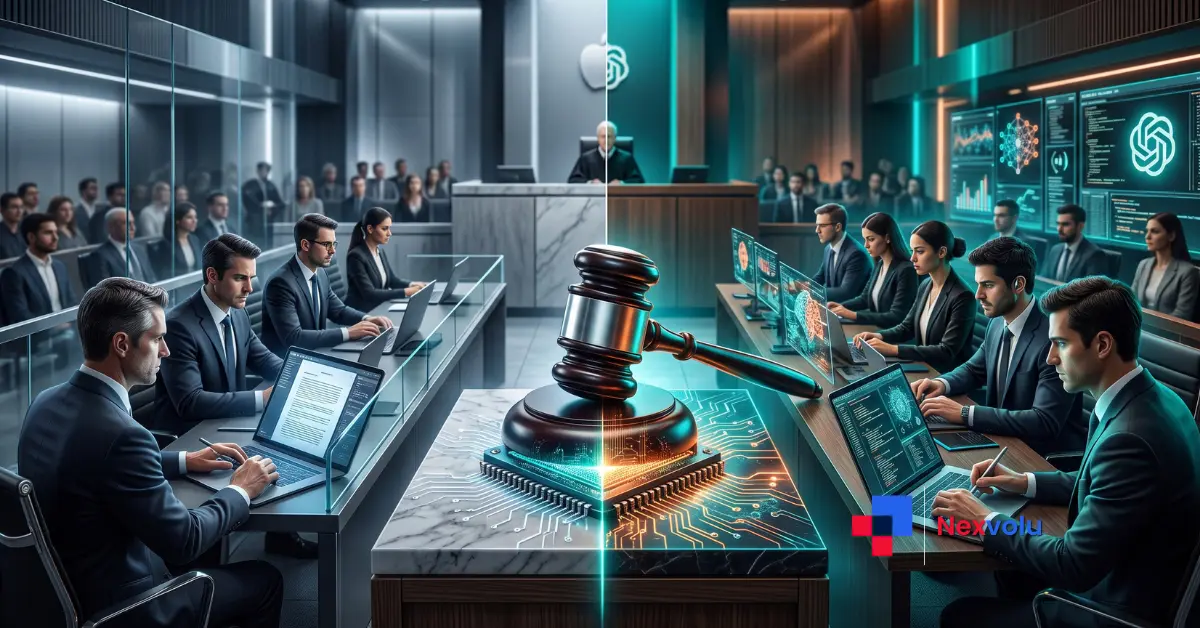
Former Partners, Now at War: Why Apple Just Sued OpenAI
Two years ago, Apple and OpenAI shared a stage as partners. On Friday, they became courtroom enemies. Apple sues OpenAI that headline is tearing across every feed this week and the accusations read less like a corporate spat and more like a spy thriller. Consider the details: secret parts carried out of job interviews, a work laptop one engineer never returned, and an authentication bug that let him slip back into Apple’s network.
Here’s what most of the coverage is missing. This case isn’t really about a few stolen files. Instead, it’s about who owns the device that comes after the iPhone. So the reason Apple sues OpenAI matters has less to do with old secrets than with the next one.
So let’s break down what actually happened, why it’s happening now, and why two of the most powerful companies on Earth are suddenly willing to burn a partnership over it.
Table of Contents
- What did Apple accuse OpenAI of?
- The allegations that read like a spy thriller
- Why Apple sued OpenAI now: Altman’s two-front war
- The real fight: Apple sues OpenAI over the next device category
- Nexvolu’s analysis: the post-smartphone scoreboard
- What happens next after Apple sues OpenAI?
- Apple sues OpenAI: Frequently Asked Questions
What did Apple accuse OpenAI of?
💡 Apple accused OpenAI of running a coordinated scheme to steal trade secrets about its unreleased hardware. According to Reuters and CNBC, the July 10, 2026 lawsuit names OpenAI, two former Apple employees, and io Products, alleging they solicited confidential designs, components, and supplier data to build a rival consumer AI device.
Notably, Apple filed the suit in federal court in Northern California. In its own words, the company claims OpenAI “and its cohorts have been engaging in a coordinated pattern of misconduct at an institutional level.” CNBC reported Apple’s lawyers described the scheme as operating “at every level” of the company.
Still, OpenAI flatly denies it. “We have no interest in other companies’ trade secrets,” a spokesperson told Axios. “We remain focused on building innovative technology that empowers people everywhere.” Nothing has been proven in court.
The allegations that read like a spy thriller
Still, strip away the legal language and the complaint tells three genuinely wild stories. Indeed, this is where the case stopped being boring.
The “show and tell” that wasn’t innocent
Apple alleges that one former employee, referred to in filings as Tan, used job interviews as an intelligence-gathering operation. He allegedly asked prospective candidates still working at Apple to bring actual parts and components from Apple facilities for “show and tell” sessions. He’s also accused of emailing himself summaries of Apple suppliers and internal industry notes before walking out the door.
Think about that for a second. Instead of a document leak, this reads as a request to physically carry hardware out of the building.
The laptop that was never returned
Even so, the second story is stranger. Apple claims a former engineer, Liu, never returned his company-issued laptop after leaving. He then allegedly exploited an authentication bug to slip back into Apple’s internal network and download dozens of confidential hardware files. According to TechCrunch, within hours of leaving he texted a chilling line: “I still have another computer.”
In fact, Apple says it only discovered that message on a colleague’s work laptop months later.
The coached exits
Finally, the third allegation is the one that turns this from “rogue employees” into “institutional strategy.” Apple claims OpenAI coached incoming hires on how to leave advising them to stay at Apple as long as possible, avoid disclosing their new employer, and keep their access alive to keep pulling confidential information.
Meanwhile, the scale is the part that stings. Apple’s complaint states that more than 400 former Apple employees now work for OpenAI (Reuters, 2026). Apple even says it flagged concerns to OpenAI back in February and got no response.
Why Apple sued OpenAI now: Altman’s two-front war
Of course, timing matters. Just two months before Apple filed, OpenAI CEO Sam Altman walked out of another courtroom a winner. On May 18, 2026, a jury rejected Elon Musk’s $150 billion lawsuit against OpenAI, ruling that the statute of limitations barred his claims. Musk an OpenAI co-founder turned rival had accused Altman of luring him into funding a nonprofit that Altman later restructured for profit.
So the pattern is hard to ignore. First, beat one former ally in court in May. Then get sued by the most valuable company on Earth in July. Altman is now fighting a two-front war against the very people he once built things with.
And both fights, oddly, orbit the same question: who controls the future of computing?
The real fight: Apple sues OpenAI over the next device category
But here’s the part the news cycle keeps skating past. Apple isn’t panicking over drawings. Instead, it’s panicking over a category.
The designer of the iPhone is now building its replacement
In May 2025, OpenAI bought Jony Ive’s hardware startup io for roughly $6.4 billion. Ive is the designer behind the iPhone, the man who literally shaped the device Apple built its empire on. So now he’s building something new with Apple’s biggest AI rival.
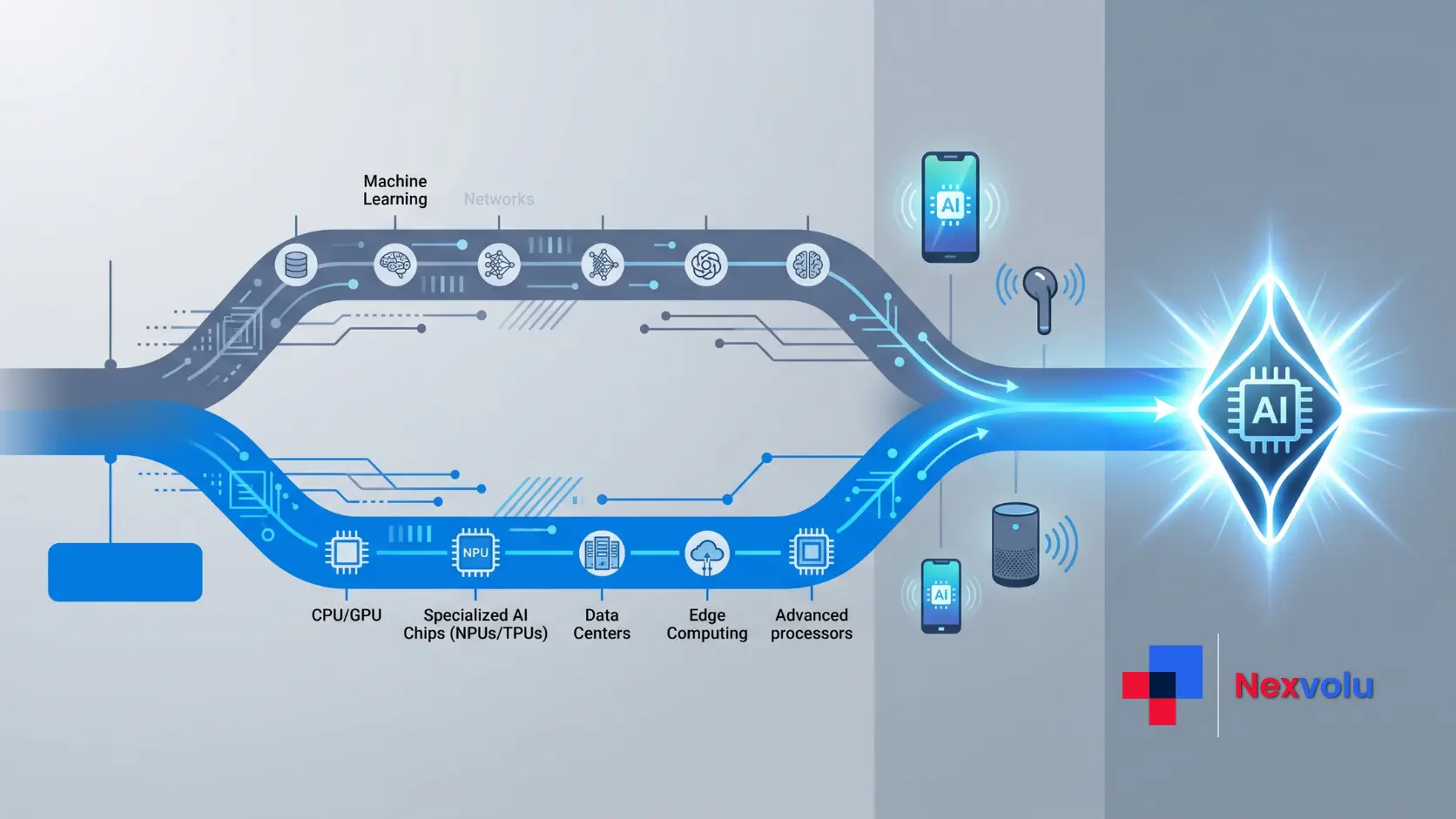
So what is that something? Reporting points to a screenless, “calm computing” device ambient, always-listening, designed to reduce screen time rather than feed it. CNBC reported the first prototypes are done and a reveal is expected in “two years or less.” Leaks describe form factors codenamed “Sweetpea” and “Gumdrop,” and a smart speaker with a camera targeted at a 2027 launch.
Now the reason Apple sues OpenAI makes sense. The person who designed Apple’s most important product is now designing its replacement and Apple is claiming, in effect, that OpenAI is trying to build the post-iPhone using Apple’s own playbook. When you frame it that way, “bring actual parts to the interview” stops sounding petty. It sounds like the opening shot of a war over the next trillion-dollar device.
Nexvolu’s analysis: the post-smartphone scoreboard
This section is Nexvolu editorial analysis and opinion – our read on the stakes, not reported fact. We haven’t handled any unreleased device (nobody outside these companies has). What follows is a framework we built to score the race honestly.
Every outlet is covering the lawsuit. Yet almost nobody is scoring the race underneath it. So here’s the Nexvolu framework we’ve been using internally to track it the four levers that decide who wins the ambient-computing era. Think of it as a scoreboard, not a prediction.
| Lever | Apple’s edge | OpenAI’s edge | Who leads today |
|---|---|---|---|
| Distribution (getting hardware into hands) | 2B+ active devices, retail, carrier deals | Starting from zero on hardware | Apple |
| The AI brain (the actual intelligence) | Playing catch-up on frontier models | Frontier models + hundreds of millions of ChatGPT users | OpenAI |
| Design DNA (making people crave the object) | Deep hardware culture but lost its icon | Hired that icon: Jony Ive | Tie |
| Trust (privacy + being in your home) | Privacy is a core brand promise | Still earning consumer trust on data | Apple |
What the scoreboard says about Apple and OpenAI
Read the board and the reason Apple sues OpenAI becomes obvious. Apple leads on three of four levers but it’s losing the one that historically decided everything: the AI brain. OpenAI is the mirror image. It has the smartest system and the designer, but no way to put a device in your pocket yet. A courtroom is one of the few tools Apple has to slow the lever it’s behind on while it catches up on the lever it’s ahead on.
Nexvolu’s verdict: This is not a distraction from OpenAI’s device it is the device story. Lawsuits like this rarely kill a product. They slow it, they make hiring riskier, and they force cleaner internal firewalls. Our bet: the case reshapes how OpenAI builds its hardware team far more than whether the device ships. Watch the talent flow, not just the docket.

What happens next after Apple sues OpenAI?
Now that Apple sues OpenAI in open court, don’t expect fireworks tomorrow. Trade secret cases move slowly, and discovery – the messiest part – is where lawyers drag internal emails, texts, and device roadmaps into daylight. That’s the real risk for OpenAI: not the verdict, but everything that surfaces on the way there.
Three things to watch:
- Talent movement. If hiring ex-Apple staff now carries legal baggage, OpenAI’s device team gets harder to staff.
- The reveal timeline. Any slip past “two years or less” will get blamed on this case, fairly or not.
- The tone between the two. Apple still ships ChatGPT inside its software. A courtroom war makes that partnership awkward, fast.
Ultimately, one thing is certain. The polite era between Apple and OpenAI is over.
Apple sues OpenAI: Frequently Asked Questions
Did Apple sue OpenAI, or just its former employees?
Both. In fact, Apple’s lawsuit names OpenAI itself as a defendant, alongside two former Apple employees referred to in filings as Liu and Tan, plus io Products the hardware entity tied to OpenAI’s device effort. That’s an important distinction. Suing only the individuals would frame this as a few rogue workers making bad choices. By naming OpenAI directly, Apple is arguing the alleged theft was organized, encouraged, and coordinated at a company level “at every level,” in Apple’s phrasing. OpenAI rejects that characterization entirely and says it has no interest in Apple’s trade secrets. Nothing has been proven, and the company is expected to fight the corporate liability claim hardest.
What is io Products, and why does it matter here?
Legendary Apple designer Jony Ive the man behind the iPhone, iPod, and iMac founded io. OpenAI then acquired it in May 2025 for roughly $6.4 billion to lead its push into consumer devices. That single fact is why this lawsuit is so loaded. Apple isn’t just accusing a rival AI lab of poaching staff it’s watching the designer of its most iconic product build a competing device with a competitor, allegedly using Apple’s own hardware knowledge. io sits at the exact intersection of design talent, hardware ambition, and the trade secrets Apple claims were taken, which is why Apple named it directly rather than treating it as a footnote.
How does the Musk vs Altman feud connect to this?
They’re separate cases, but the timing tells a story. On May 18, 2026, a jury rejected Elon Musk’s $150 billion suit against OpenAI, ruling he waited too long to sue. Musk, an OpenAI co-founder turned rival, had accused Sam Altman of twisting a nonprofit into a for-profit machine. Then, two months later, Apple sued. So within a single summer, Altman beat one former ally in court and got sued by another giant. The pattern reveals OpenAI’s new reality: as it races toward hardware and consumer dominance, the companies and people it once worked with are increasingly lining up against it in courtrooms rather than boardrooms.
What is OpenAI’s rumored consumer device supposed to be?
Specifically, reporting describes a screenless, “calm computing” device ambient, voice-first, and designed to reduce screen addiction rather than feed it. In addition, it’s meant to be context-aware, learning about you and your surroundings and quietly suggesting actions. CNBC reported the first prototypes are complete, with a public reveal expected in “two years or less.” Leaks point to multiple form factors, including an earbud-style wearable and a pen-shaped device, plus a camera-equipped smart speaker targeted for 2027. The vision is a genuine post-smartphone category a device you talk to and trust in your home, not one you stare at. That ambition is precisely what Apple’s lawsuit threatens to complicate.
Could this lawsuit delay OpenAI’s hardware launch?
Possibly, but not in the way most people assume. Trade secret cases rarely produce an injunction that halts an entire product. Instead, the bigger risk is indirect. Discovery forces internal emails, texts, and design documents into the open, which is reputationally messy. Hiring becomes riskier if recruiting ex-Apple engineers now invites legal scrutiny. And leadership attention gets pulled toward litigation instead of shipping. So the realistic outcome isn’t a canceled device it’s a slower, more cautious, more heavily firewalled development process. If the reveal slips past OpenAI’s “two years or less” target, expect this lawsuit to shoulder much of the blame, deserved or not.
Is this really about trade secrets, or about competition?
Honestly, both and that’s the point. On paper, it’s a trade secret misappropriation claim about hardware designs, components, and supplier data. Underneath, it’s a fight over who owns the next computing platform after the smartphone. Apple built the most valuable company on Earth on the iPhone, and it now faces a rival armed with frontier AI and the iPhone’s own designer. Framing it purely as theft undersells the stakes; framing it purely as competition ignores the genuinely serious allegations. Ultimately, the most accurate read is that Apple is using a legitimate legal tool to defend a category it cannot afford to lose. In the end, the courtroom is just where the device war went public.
So here’s the bottom line. The stolen-secrets headlines are the surface. The real story is a land-grab for the device that replaces the phone in your pocket and two former partners who now believe only one of them can win it.
Which side do you think comes out ahead: the company with the devices, or the company with the brains? Drop your take in the comments.
References
- Reuters. “Apple sues OpenAI, two former employees for trade secrets.” 2026. Reuters
- CNBC. “Apple sues OpenAI alleging trade secret theft, says scheme was ‘at every level’.” 2026. CNBC
- TechCrunch. “The wildest allegations in Apple’s trade secrets lawsuit against OpenAI.” 2026. TechCrunch
- Axios. “Apple sues OpenAI for trade secret theft.” 2026. Axios
- CNBC. “OpenAI has first hardware prototypes, plan device reveal in 2 years or less.” 2025. CNBC
- Wikipedia. “Musk v. Altman” (jury verdict, May 18, 2026). 2026. Wikipedia