
AI Security Bugs Now Outpace Patches: 2026 Reality
AI security bugs are rewriting the rules of staying safe online, and the change fits into one number worth pausing on: 31 minutes.
That’s how long it took an AI model to turn a freshly released security patch into a working weapon in a controlled 2026 test. Not 31 days. Thirty-one minutes. Welcome to the age of AI security bugs software flaws that artificial intelligence can now find, and weaponize, faster than you can install an update.
For most of computing history, defenders had a comfortable head start. A company shipped a fix, and attackers needed weeks sometimes months to reverse-engineer it into a real attack. You could update whenever you got around to it. That era is over.
Quick answer: AI security bugs are software vulnerabilities that AI tools now uncover at machine speed. In 2026, Anthropic’s Claude Mythos Preview found thousands of them across every major operating system and browser and Microsoft’s monthly patch counts hit record highs. The real danger is that AI can weaponize these bugs faster than most people update.
In this guide you’ll learn
- What the study found: Anthropic’s Claude Mythos Preview turned a fresh security patch into a working exploit in 31 minutes and chained “minor” bugs into critical attacks.
- Key statistics: 600+ flaws patched in July 2026 alone · average time-to-exploit collapsed from 63 days (2018) to negative 7 days (Mandiant) · users install only 54% of security updates.
- Why it matters: your update delay – not your software – is now the easiest attack surface; a two-week lag now equals two weeks of real exposure.
- Bottom line: turn on automatic updates everywhere, restart when asked, and stop skipping “minor” patches.
The AI security bugs story the headlines missed
The headlines have mostly covered the enterprise side: Microsoft drowning in a record flood of flaws, regulators briefing bank CEOs, security teams pulling overtime. But there’s a quieter story nobody’s telling the rest of us. If you tap “remind me later” on updates for two weeks straight, the math has quietly turned against you.
This isn’t a reason to panic. It’s a reason to change one small habit. Let’s break down what actually changed, how fast AI can really move, and why “update lag is the new attack surface” now applies to your phone, your laptop, and – if you run one – your small business.

In this article:
- The AI security bugs story the headlines missed
- What’s really going on with AI security bugs?
- How fast can AI turn a patch into an exploit?
- Why “update lag” is the new attack surface for AI security bugs
- The hidden danger: how AI chains low-severity security bugs
- What AI security bugs actually mean if you delay updates
- What it means for small businesses in the US and UK
- How to protect yourself from AI security bugs right now
- Nexvolu’s Verdict
- Frequently Asked Questions
What’s really going on with AI security bugs?
In April 2026, Anthropic revealed Claude Mythos Preview, an unreleased frontier model it described as dramatically better than anything before it at finding and exploiting vulnerabilities. Within weeks, it had autonomously discovered thousands of critical flaws including some hiding in major operating systems and browsers for decades. According to the BBC, one bug had survived, unnoticed, for 27 years. It’s part of a much bigger wave of AI tools reshaping everyday technology.
Then the patch counts exploded. Microsoft shipped fixes for 206 vulnerabilities in June 2026, which Dark Reading called a record at the time. A month later, July’s Patch Tuesday blew past it roughly 570 flaws by TechCrunch’s count, and more than 600 across all products, according to the Zero Day Initiative’s Dustin Childs, who put it bluntly: “the bug apocalypse has fully descended upon us.”
In fact, Microsoft credits AI for the surge. And it isn’t a bystander: the company gave about 50 engineers access to Mythos through a defensive program called Project Glasswing, racing to close holes before attackers get the same tools. In SharePoint alone, Mythos flagged 90 “critical” and 141 “important” bugs in a single month, ProPublica reported.
Here’s the uncomfortable part. Finding bugs faster is only half the story. The same capability that helps defenders can help attackers and that’s where your update habits come in.
How fast can AI turn a patch into an exploit?
This is the finding that should reset how everyone thinks about updates. In June 2026, Anthropic published research measuring how quickly AI could build “N-day” exploits attacks based on flaws that are already public because a patch just revealed them.
Security researchers call the technique “patch diffing.” When a vendor ships a fix, attackers compare the old code to the new code, spot exactly what changed, and reverse-engineer the vulnerability the patch set out to close. Historically this was slow, specialist work. That’s what bought you time.
Not anymore. Across 18 Firefox patches, Claude Mythos Preview autonomously built eight working exploits. On 21 Windows kernel patches where the source code isn’t even available it produced eight full exploit chains that took a low-privilege user all the way to full SYSTEM control. Its first Windows proof-of-concept landed in 31 minutes. Its first Firefox exploit was ready within an hour of Mozilla issuing the patch 18 days before the fixed version’s scheduled ship date.
Anthropic’s own conclusion is chilling in its plainness: “N-day has become dangerously misleading. N-hour is closer to the reality we now operate in.”
To see how big a shift that is, compare it to the attacks people actually remember.
| Year | Attack / benchmark | Time from patch to working exploit |
|---|---|---|
| 2017 | WannaCry (after the MS17-010 fix) | 59 days |
| 2020 | Mandiant N-day study (typical case) | A month or more (16 of 25 bugs) |
| 2023 | Citrix Bleed | ~14 days |
| 2026 | Claude Mythos Preview (Windows PoC) | 31 minutes |
Run the numbers and the compression is staggering. WannaCry arrived 59 days after its patch that’s 84,960 minutes. At 31 minutes, AI weaponized a patch roughly 2,700 times faster. That’s a rough, illustrative comparison across different bugs, not a like-for-like lab result but the order of magnitude is the whole point.
Why “update lag” is the new attack surface for AI security bugs
We usually picture an “attack surface” as software: open ports, risky apps, dodgy browser extensions. But the single most exploitable thing on your device right now might be the gap between when a patch ships and when you actually install it.
Security pros call this the “patch gap.” For you, it’s just that stretch of days you spend ignoring the little update badge. In the old world, that lag was mostly harmless an exploit didn’t exist yet. The rise of AI security bugs has turned the same lag into a live liability, because now the exploit can exist before you’ve finished your coffee.
Moreover, it’s not a fringe worry. Google’s Mandiant unit found the average “time to exploit” has collapsed from 63 days in 2018 to an estimated negative seven days in its M-Trends 2026 report meaning attacks now routinely begin before a patch is even public. When the patch does drop, AI can turn it into a roadmap within the hour.
In short, here’s the reframe that matters. Your update lag used to be a scheduling preference. Now it’s the window attackers aim for.
The hidden danger: how AI chains low-severity security bugs
Here’s the nuance almost every enterprise-focused report skipped and it’s the scariest part of the AI security bugs story.
For decades, security teams have triaged flaws like an emergency room. Security teams patch critical and high-severity bugs first. Low- and moderate-severity ones wait, sometimes forever. That made sense when a minor bug was, well, minor.
However, AI breaks that logic. Models like Claude Mythos Preview can chain several low-severity flaws together into a single high-severity attack path a route no individual bug could open on its own. ProPublica’s investigation captured it in one line from Vinh Nguyen, an Anthropic adviser and former chief AI officer at the NSA: “The problem now is that you can chain four low-level flaws, and that can equal a high severity. If you’re Microsoft, the current triage strategy may be underpricing risks.”
Sit with that. Attackers can now assemble the bugs everyone agreed to ignore into the bugs everyone fears. In fact, when Microsoft shipped its record July patch, it rated only seven of the 600-plus fixes low or moderate the rest were important or critical. That low-severity backlog keeps growing, and each unpatched piece is a potential link in a future chain.
For you, the takeaway is simpler than the engineering: “it’s only a minor update” is no longer a safe assumption.
Want plain-English breakdowns like this while the news is still fresh? Nexvolu’s free newsletter sends one a week no spam, just clarity.
What AI security bugs actually mean if you delay updates
Let’s make this personal with some honest math.
For example, say you’re a typical two-weeks-behind updater. Research says that’s normal a Carnegie Mellon CyLab study found people applied security updates only 54% of the time, and delayed 65% of the ones they did apply. Roughly half of users don’t install a given update within the first week. AI security bugs don’t care whether you found the reminder annoying.
Now overlay the new exploit speed:
| Era | Time to working exploit | Your 14-day update delay = |
|---|---|---|
| 2017-2020 | ~30–59 days | ~0 days of real exposure (patched before an exploit existed) |
| 2023 | ~14 days | 1-2 days of exposure |
| 2026 (AI) | Hours | ~14 days of exposure |
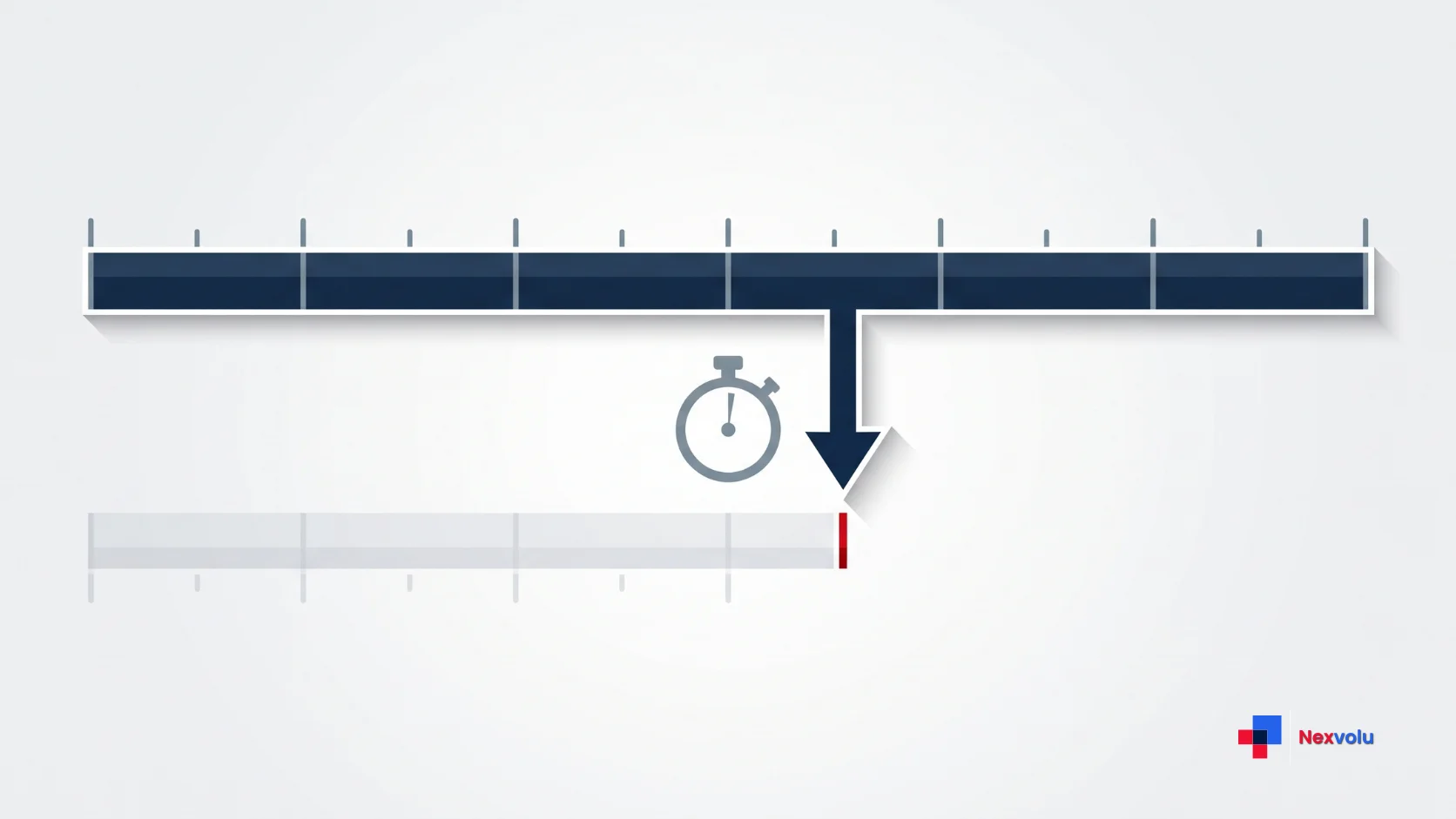
Same habit. Wildly different risk. In the WannaCry era, a two-week delay was usually invisible the exploit didn’t exist yet, so your device had the fix before anything could reach you. As a result, that same two-week delay today can mean roughly two full weeks of standing in the open.
In other words, that’s the entire argument for flipping one setting. Auto-update used to be optional hygiene, like flossing. Now it’s closer to a seatbelt the rare event it protects against is exactly the one that ruins your month.
The one-line rule: If a device offers automatic security updates, turn them on. The mild inconvenience of an occasional reboot is nothing next to two weeks as an open target.
What it means for small businesses in the US and UK
Big companies have security teams for this. The people most exposed are small businesses running a handful of laptops with no IT department and the goalposts just moved for them too.
United States: the three-day patch cycle
In July 2026, Microsoft rewrote its own patch guidance because of AI. It now recommends organizations deploy quality updates in under three days, with installation deadlines of zero to one day and grace periods no longer than two. Microsoft 365 Director Jeremy Chapman put it plainly: waiting “a couple of weeks” after a fix ships is “ample time for attackers using AI to find and exploit known security gaps.”
As a result, three days quietly became the new normal even for a business without an IT team. The good news? You don’t need enterprise tooling to get there. You need automatic updates switched on across every device and one person whose job it is to reboot when asked.
United Kingdom: Cyber Essentials and the 14-day rule
If you’re a UK SME especially one chasing government or enterprise contracts the Cyber Essentials scheme already sets the bar. As of its April 2026 update, firms must apply critical and high-risk security patches within 14 days of release, and missing that window now means automatic failure. Previously, firms could pick up a couple of patching slip-ups and still pass. That tolerance is gone.
However, the 14-day rule assumed a slower world. With AI compressing exploits into hours, treat it as a legal ceiling, not a comfortable target and aim well under it.
How to protect yourself from AI security bugs right now
You can’t stop the discovery of AI security bugs, but you can control how long you stay exposed. You don’t need to be technical. Five habits cover almost everyone:
- Turn on automatic updates everywhere. Phone, laptop, browser, and apps. This single switch closes most of your exposure window.
- Reboot when asked. Many patches only finish installing after a restart. “Restart later” for a week means “unpatched” for a week.
- Don’t ignore the “minor” ones. Thanks to bug-chaining, low-severity updates matter more than they used to. Install them too.
- Keep browsers current. Browsers are the most common entry point for real-world attacks and modern ones update themselves quietly if you let them. Pair that with a good password manager and you’ve covered the two biggest consumer basics.
- Retire unsupported devices. If a phone or PC no longer gets security updates, it can’t be patched at all exploit speed is irrelevant when the fix never arrives.
Turn auto-update on today, then share this with the one person you know who’s still clicking “remind me later.” That two-minute favour might save them a very bad week.
Nexvolu’s Verdict
The verdict: The AI bug-finding wave is real and genuinely alarming for software makers but for everyday users it lands as one clear, manageable instruction: stop delaying updates.
Best for: anyone who postpones updates, and small businesses without dedicated IT.
Skip it if: you already run automatic updates on every device and reboot promptly you’re basically covered.
Pros: AI is helping defenders find decades-old bugs before criminals do · patches are shipping faster than ever · the personal fix costs nothing and takes one tap.
Cons: attackers get the same speed boost · the traditional “ignore the minor stuff” triage no longer holds · unsupported devices are now genuinely risky.
Standout: the 31-minute patch-to-exploit result from Claude Mythos Preview a single number that quietly rewrites the case for auto-update from “nice to have” to “non-negotiable.”
Nexvolu Editorial Score: 8/10 – a legitimately important shift, docked two points only because the doomsday framing outruns the current real-world consumer risk, which one setting largely neutralizes.
Frequently Asked Questions
How fast can AI create an exploit from a security patch?
According to Anthropic, its Claude Mythos Preview model produced a working Windows exploit in 31 minutes and a full Firefox exploit in under an hour during 2026 testing. What once took human specialists weeks of reverse-engineering, AI now compresses into minutes to a few hours. The model works by “patch diffing” comparing patched code to the old version to pinpoint the exact flaw a fix addresses. In Anthropic’s study it built eight Firefox exploits from 18 patches and eight Windows privilege-escalation chains from 21 patches, some before the official fix was even widely released. The practical lesson isn’t that every hacker has this today labs still restrict access to the strongest models. It’s that the weeks-long safety buffer you used to rely on is gone.
Is Claude Mythos Preview available to hackers?
Not directly. Anthropic has kept Claude Mythos Preview tightly restricted, releasing it only to a small group of vetted partners through its defensive Project Glasswing initiative, and it withheld the full model from public release after judging its capabilities too risky. That said, security experts widely treat it as a preview of what’s coming, not a one-off. Anthropic itself showed that its public models with safeguards switched off can build some exploits too, just fewer of them, and other labs are pursuing similar power. The Five Eyes intelligence alliance warned in mid-2026 that such tools may reach adversaries within months. So the honest answer is: not today for most attackers, but plan as if the capability is arriving.
Should I turn on automatic updates?
For almost everyone, yes. Automatic updates close the “patch gap” the risky stretch between a fix shipping and you installing it. With AI now able to build exploits within hours of a patch, that gap is the single most valuable thing you can shrink. The old objection was that updates sometimes broke things. It still happens occasionally, but for phones, browsers, and consumer laptops the trade-off now overwhelmingly favours updating fast, and consumer software tends to patch smoothly in the background. If you manage business-critical machines where a bad update could halt operations, a short test window is reasonable but “short” now means a day or two, not two weeks. For a personal device, there’s rarely a good reason not to let security updates install themselves.
What does “update lag is the new attack surface” mean?
It means the delay between a patch’s release and your installation is now one of the easiest things for attackers to exploit. Because AI can weaponize a patch within hours, every day you postpone updating is a day you’re knowingly exposed. Traditionally, an “attack surface” referred to software and settings the apps, ports, and permissions a hacker could target. This reframes time itself as part of that surface. In the past, delaying updates was low-risk because no exploit existed yet; the fix usually beat the attack. AI inverted that. Google’s Mandiant now estimates the average time-to-exploit at negative seven days, meaning exploitation often starts before a patch even ships. Shrinking your personal update lag is one of the highest-impact moves a non-technical user can make.
Can AI really chain low-severity security bugs into a serious attack?
Yes. According to ProPublica’s 2026 reporting, models like Claude Mythos Preview can combine several low- or moderate-severity flaws into a single high-severity attack path. Individually, each bug looks harmless; chained together, they can lead to full system compromise. This is why the old triage habit patch the critical bugs, defer the minor ones is under pressure. A former NSA chief AI officer told ProPublica that chaining “four low-level flaws” can “equal a high severity,” and that current triage may be “underpricing risks.” For organizations, it means the low-severity backlog is no longer safe to ignore indefinitely. For you, the lesson is simpler: install the small updates too, not just the ones flagged urgent. The update your device calls “minor” could be one link an attacker needs.
How often should I update my devices in 2026?
As soon as security updates are available ideally automatically. Microsoft’s 2026 guidance recommends deploying critical updates in under three days, and the UK’s Cyber Essentials scheme requires high-risk patches within 14 days. For personal devices, “immediately” is the safest and easiest policy. The simplest system is to remove the decision entirely: enable automatic updates and restart when prompted rather than dismissing the reminder. If you prefer to check manually, make it a weekly habit at minimum, and treat anything labelled “security” or “critical” as same-day. Businesses juggling compatibility can stage updates, but the testing window that used to run for weeks should now be a day or two at most. The guiding principle: a patch’s value decays by the hour, so the sooner you install it, the more it protects you.
Are Macs, iPhones, and Androids affected too, or just Windows?
All of them. While the headline research focused on Windows and Firefox, Anthropic said Claude Mythos Preview found vulnerabilities in every major operating system and browser. No mainstream platform is immune the underlying issue is software complexity, which every platform shares. Windows dominates coverage because Microsoft’s scale and legacy code make it a huge, visible target and because its patch counts are public. But Apple, Google, and Linux-based systems all ship regular security updates for exactly the same reason. The good news: phones and modern browsers are often the best-behaved updaters iOS, Android, Chrome, and Firefox can all patch quietly in the background once you allow it. Whatever you use, the defence is identical: keep automatic updates on, install promptly, and retire devices that no longer receive security support.
The bottom line
Strip away the apocalyptic headlines and one fact remains: the safety buffer between a patch and an attack has collapsed from weeks to hours, and AI is the reason. Software makers face a genuinely hard few years as they rethink severity triage and release speed.
You, though, get off easy. The entire consumer response to this story fits on a sticky note: turn on automatic updates, restart when asked, and stop treating “minor” patches as optional. Do that, and the 31-minute exploit that terrifies enterprise security teams mostly sails right past you.

If this changed how you think about that “remind me later” button, share it with someone who needs the nudge and join Nexvolu’s free newsletter for next week’s explainer.
The tools that find these AI security bugs aren’t slowing down. The only question left is whether your update habits will speed up. So, when did you last check your update settings? Tell us in the comments.
References
- Anthropic – Measuring LLMs’ impact on N-day exploit development (Frontier Red Team, June 2026): anthropic.com/research/n-days
- ProPublica – Anthropic’s New AI Model Can Identify More Software Bugs Than Ever. Microsoft Is Struggling to Fix Them Fast Enough. (Renee Dudley, 29 July 2026): propublica.org
- Microsoft Tech Community – Deploy Windows updates to counter AI-discovered threats (8 July 2026): techcommunity.microsoft.com
- Google Cloud / Mandiant – M-Trends 2026 (time-to-exploit data): cloud.google.com
- NCSC – Cyber Essentials: Overview (April 2026 requirements): ncsc.gov.uk
- BBC News – Claude Mythos Preview explainer (27-year-old bug detail): bbc.com
- TechCrunch – Microsoft patches record 570 security flaws, credits AI discovery (Zack Whittaker, 15 July 2026): techcrunch.com
- Dark Reading – June 2026 Patch Tuesday coverage (206 CVEs, record at the time): darkreading.com
- Carnegie Mellon CyLab – study on software update behaviour (54% update rate; 65% delayed): cylab.cmu.edu
- LinuxInsider – AI Makes Low-Severity Vulnerabilities More Dangerous (TuxCare, 16 July 2026): linuxinsider.com
- IASME – Changes to Cyber Essentials, April 2026 (14-day auto-fail rule): iasme.co.uk


