
Sony PlayStation Disc Future: What Ending Discs Really Means
The Sony PlayStation disc future now has a date on it: January 2028. In 2013, Sony posted a 22-second video of one executive handing a PlayStation disc to another. That video mocked Microsoft, which planned to restrict used games at the time, and it worked the crowd roared, the internet cheered, and Sony spent a console generation as the company that let you own your games.
Thirteen years later Sony is the one taking the disc away.
Sony announced the change on 1 July 2026 and search interest keeps climbing. Google Trends data captured on 1 August 2026 shows “sony playstation disc future” as an active breakout term in the United States, past 10,000 searches and up roughly 400% in twelve hours, dragging “sony playstation 6” (+130%) and “playstation 5 price” (+100%) up with it. People are not just reading the news. They are trying to work out what it costs them.
Almost nobody answers that question, so we ran the numbers on the Sony PlayStation disc future ourselves.
Sony PlayStation Disc Future: The 40-Second Answer
Sony stops producing discs for new PlayStation games in January 2028. Games released before that date keep shipping on disc, keep working, and stay resellable forever. Nothing is deleted from your shelf. What ends is the ability to buy, lend, trade, or resell any PlayStation game released after the cutoff.
Sony PlayStation Disc Future: What Sony Actually Announced (And What It Didn’t)
The original post on the PlayStation Blog runs to a few sentences, and most of the panic online comes from people who read the headline instead of those sentences. Sony said that physical game disc production for all new games releasing on PlayStation consoles will be discontinued starting January 2028, that new games will be sold on PlayStation Store and at retailers in digital formats only, and that the transition has no impact on games that already released, or will release, before January 2028 in disc format.
That last clause is doing enormous work, and it deserves reading twice.
Sony PlayStation Disc Future: What Changes and What Doesn’t
| Question | Before Jan 2028 | After Jan 2028 |
|---|---|---|
| Can you buy a new PS game on disc? | Yes | No – digital only |
| Do your existing discs still work? | Yes | Yes, indefinitely |
| Can you resell or lend a pre-2028 disc? | Yes | Yes |
| Can you resell or lend a post-2028 game? | n/a | No |
| Do PS5 disc drives still function? | Yes | Yes, including 4K Blu-ray |
| Are games sold in physical shops? | Yes, on disc | Yes, as download codes and cards |
| Does Sony delete anything you own? | No | No |
So the correct framing is not “Sony is killing your library.” It is narrower and, in its own way, more permanent: the last PlayStation game you will ever be able to sell to a stranger rolls off the production line in 2027.
The Sony PlayStation Disc Future Timeline in One Table
| Date | What happened or happens |
|---|---|
| 1 July 2026 | Sony announces disc production for new PS games ends January 2028 |
| 21–22 July 2026 | CNBC reports the decision threatens a roughly $7bn global resale market |
| 29 July 2026 | Clair Obscur: Expedition 33 developers call it “a sad decision” |
| 30 July 2026 | MPR News reports on the knock-on effects for retailers and prices |
| 31 July 2026 | CFO Lin Tao says Sony will “cautiously” proceed; digital is 78% of unit sales |
| Through 2027 | Final window for new PlayStation games to be pressed to disc |
| January 2028 | New PlayStation releases are digital only, worldwide |
| Beyond 2028 | Existing discs keep working; the second-hand market freezes at the pre-2028 catalogue |
Why the Sony PlayStation Disc Future Arrived Now: The Numbers
Sony’s public reasoning is that consumer preference moved. The data behind that claim is more brutal than the phrasing suggests.
On the company’s 31 July earnings call, CFO Lin Tao said the biggest reason was that “digitalization of content overall has been progressing,” and confirmed that digital downloads accounted for 78% of Sony’s full-game unit purchases in the fiscal year ending 31 March. Circana analyst Mat Piscatella’s figures, reported by Ars Technica, are starker still: in the first half of 2008, 100 PlayStation games sold more than 100,000 physical units. In the first half of 2026, seven did. Across the whole US market, physical game sales fell from 297 million units in the twelve months from June 2008 to 37 million in the past year.
The publisher side agrees. Capcom’s Q1 report for the 2026 fiscal year put digital at 93.3% of its sales, leaving 6.7% for physical.
The Nexvolu Disc Collapse Index
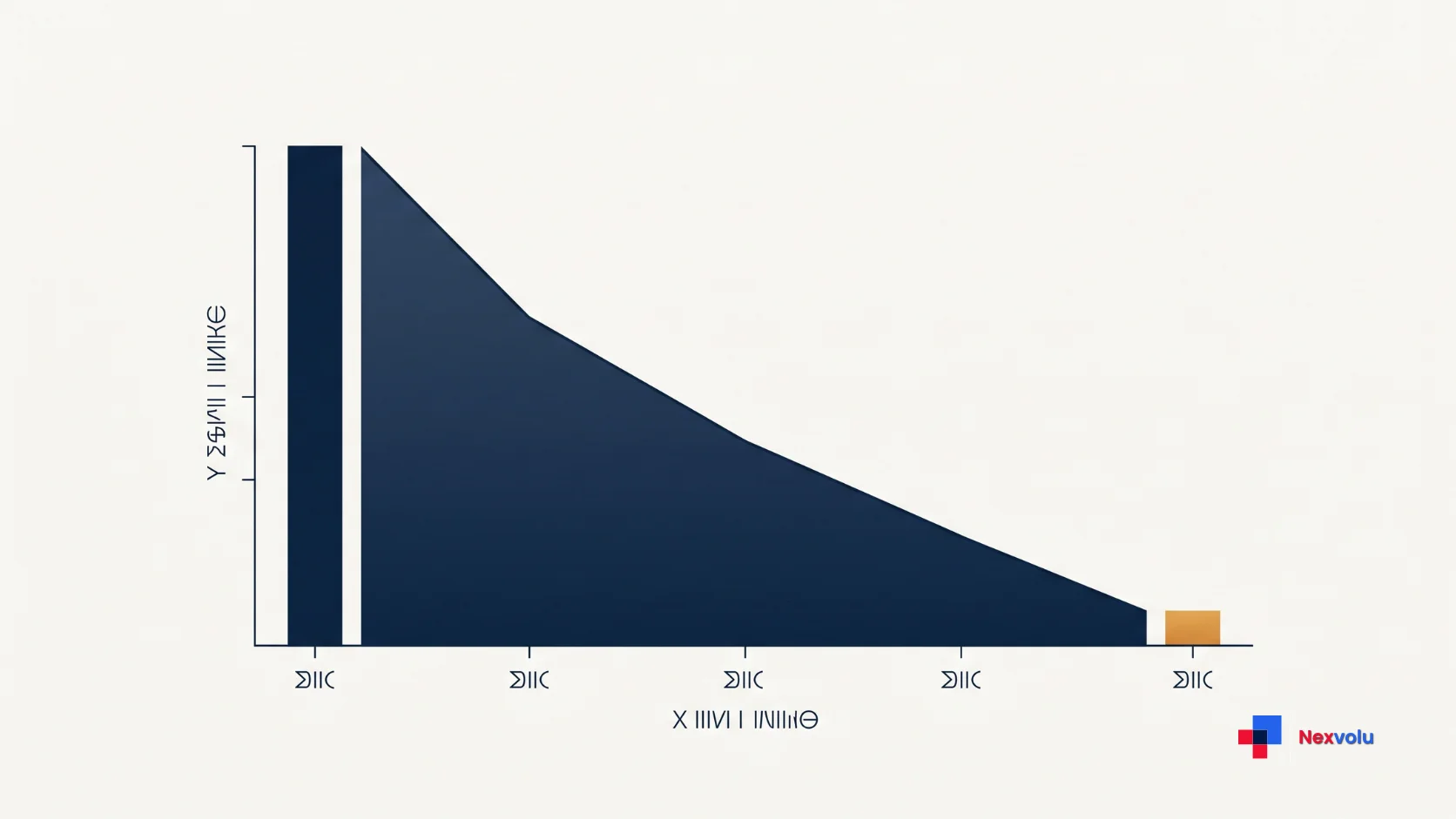
We took those two Circana endpoints and calculated the compound annual decline, because “physical is dying” is a vibe and a decay rate is a fact.
| Measure | Value | Source |
|---|---|---|
| US physical game units, 12 months from June 2008 | 297 million | Circana via Ars Technica |
| US physical game units, latest 12 months | 37 million | Circana via Ars Technica |
| Total decline over 17 years | −87.5% | Nexvolu calculation |
| Compound annual decline rate | −11.5% per year | Nexvolu calculation |
| Projected US physical units at the Jan 2028 cutoff | ≈31 million | Nexvolu projection at the same rate |
| Projected US physical units by 2037 if unchanged | under 10 million | Nexvolu projection at the same rate |
| PS titles selling 100k+ physical units, H1 2008 vs H1 2026 | 100 → 7 (−93%) | Circana via Ars Technica |
The uncomfortable conclusion for people who love discs: the Sony PlayStation disc future was arriving anyway. Sony did not kill the format. Sony scheduled the funeral. At a steady −11.5% a year, the US physical market reaches single-digit millions of units in the mid-2030s with or without this decision. What Sony did was convert a slow, market-led decline that collectors could have kept alive at the margins into a hard stop with a date on it.
There is a counterpoint worth stating plainly, because it is the strongest argument the other side has. Twenty-two percent of Sony’s full-game units were still physical last fiscal year. More than one in five purchases. A business does not usually retire a fifth of its distribution because it is unpopular. It retires it because the remaining fifth is expensive to serve and more profitable to convert.
The Sony PlayStation Disc Future Backlash Sony Is Cautiously Ignoring
On the earnings call, Lin Tao chose an unusual word and repeated it. Sony had “cautiously considered this,” she said, and would “cautiously move this forward.” Asked about the reaction, she acknowledged that “people have strong views” and added: “Games are loved by many people. It’s a form of entertainment that’s loved by people. It’s connected to people’s fond memories in many cases. We understand those emotions.”
Understanding the emotions is not the same as changing the plan. A corporate communications executive on the same call said Sony had seen no financial impact from the decision and did not expect one, since content sales are largely digitised already.
The developer reaction has been sharper, and more interesting, because developers actually lose money on physical releases and defended them anyway. Speaking to AUTOMATON WEST, Sandfall Interactive CEO Guillaume Broche called it “a sad decision” for the artistry of games, while CTO Tom Guillermin explained the economics of shipping Clair Obscur: Expedition 33 on disc anyway: “A physical release adds more constraints because you have to account for the production time of the physical items, and you also earn less money per copy.”
They did it regardless. Broche described going to a shop after launch to buy his own game, and a colleague sending a photo of it on a shelf in Akihabara. “It starts feeling real when you see it in stores.”
That is the part no spreadsheet captures, and it is the reason this story has legs that a normal distribution change would not.
What You Actually Lose in the Sony PlayStation Disc Future
Strip out the nostalgia and one concrete thing disappears in January 2028: residual value. A disc is an asset. A licence is a subscription you paid for once.
CNBC reported that the decision threatens a second-hand gaming market estimated at around $7 billion, and analysts quoted in that coverage made the same point gamers did consumers lose the ability to trade, lend, resell, or genuinely own a game. GameStop confirmed to MarketWatch that one customer in Columbus, Ohio walked in days after the announcement and traded a collection for $1,000 in credit. People are already liquidating.
The Nexvolu Forfeited Resale Calculator
Here is what that abstraction costs one ordinary buyer. We state every assumption, so you can swap in your own.
Assumptions: eight new releases a year at $69.99 · you sell or trade five of them within twelve months · private-sale recovery of roughly 40% of RRP on a six-to-twelve-month-old title · retail trade-in credit of roughly 22%.
| Scenario | Annual spend | Annual recovery | Net cost | Effective price per game |
|---|---|---|---|---|
| Discs, sold privately | $560 | $140 | $420 | $52.50 |
| Discs, traded at retail | $560 | $77 | $483 | $60.38 |
| Digital, day one | $560 | $0 | $560 | $70.00 |
| Digital, patient buyer waiting for a 50% store sale | $280 | $0 | $280 | $35.00 |
Run that across a seven-year console generation and the day-one disc flipper is roughly $980 better off than the day-one digital buyer. That is the real number behind the outrage, and it is not small.
Read the fourth row before you get angry, though. The patient digital buyer beats every physical scenario in the table. Digital storefronts discount harder and more often than shops discount discs, and a buyer who waits three months for a sale has been winning this argument for years. January 2028 genuinely hurts three groups: day-one buyers who flip, families who share a library across households, and anyone in a market where used games keep gaming affordable.
Recovery percentages above are illustrative market estimates, not measured data – swap in the prices you actually get.
Will the Sony PlayStation Disc Future Make Digital Games More Expensive?
This is the question MPR News built its coverage around, and the honest answer is that nobody knows yet, but the precedent is not encouraging.
The argument for lower prices is simple. Discs cost money to press, package, ship, warehouse and return, and retailers take a cut. Remove all of it and there is room to pass savings on.
The argument against is that publishers have never once passed those savings on, and the industry has just spent two years demonstrating why. Nintendo confirmed that from May 2026, new Nintendo-published digital Switch 2 titles carry an MSRP different from the physical version and when IGN asked analysts including Circana’s Piscatella which way that cut, opinion split, with the more likely reading being a price increase on the physical version rather than a discount on the digital one.
There is also a mechanism most coverage misses. Used copies are the only real price ceiling in console gaming. A $70 game with a $35 used copy on the shelf next to it is competing with itself. Remove the used copy and the publisher’s discount curve becomes entirely voluntary sales still happen, but they happen when the publisher wants them, not when the second-hand market forces them.
Our read: list prices will not jump on 1 January 2028. Discount depth and discount timing will quietly tighten over the following two or three years, and that is where the money actually moves.
The PS6 Question the Sony PlayStation Disc Future Raises
The search data gives this away. Alongside the disc story, US rising queries include “sony playstation 6” up 130% and “when will playstation 6 come out” up 80%. Readers correctly sense that a January 2028 disc cutoff is a statement about the next console, not this one.
Here is what is actually confirmed versus what is inference.
| Claim | Status |
|---|---|
| New PS games are digital-only from January 2028 | Confirmed by Sony |
| Pre-2028 discs remain playable on PS5 | Confirmed on PlayStation’s own site |
| PS5 and PS5 Pro disc drives keep playing 4K Blu-ray and DVD | Confirmed – the add-on drive is still sold |
| Sony is repurposing its Austrian disc plant for optical microlenses | Reported, not denied |
| The PS6 ships without a disc drive | Not announced – widely assumed |
| The PS6 offers an optional add-on drive, PS5-Pro style | Speculation, and the most plausible outcome |
The add-on model already exists and already works: PS5 Digital Edition and PS5 Pro owners can buy a detachable drive for around $80 that plays PS5 discs, supported PS4 titles, 4K Ultra HD Blu-ray and DVDs. Retiring game-disc production while continuing to sell a drive that plays your existing library and your movie collection is not a contradiction. It is the cheapest possible way to honour the back catalogue without pressing another disc.
On PC, Sony’s executives were blunt about where differentiation now comes from. Asked how PlayStation stands apart from PC gaming, which has been discless for years, Tao pointed to curated content, a stable game environment and affordability, adding: “We don’t feel that the disc itself is a strong factor for differentiation.”
Sony PlayStation Disc Future: Preservation, Collectors and the Part Nobody Costs Out
This is the section the news coverage skips, and it matters more in ten years than the resale math does today.
A disc is a self-contained artefact that survives its publisher. Digital-only distribution puts the continued existence of every post-2028 PlayStation game inside one company’s storefront policy. That is not a hypothetical concern – PlayStation has already removed purchased content from user libraries when licensing agreements lapsed, and Sony announced storefront shutdowns for older platforms alongside the disc news.
Three consequences follow, and they are all reasonable to state now.
- The pre-2028 catalogue becomes the entire physical archive of PlayStation, forever. Every disc that leaves a factory before that date is the last of its kind. Scarcity plus a fixed ceiling is exactly the condition that makes collectible markets appreciate.
- Post-2028 exclusives inherit the fragility of their storefront. A game with no disc, no PC port and a delisted store page has no legal path to existence.
- Local shops lose their forward supply. MPR’s reporting made this concrete with Rock 30 Games in Fargo, North Dakota, which sells games from every PlayStation generation and simply will not be able to carry any PlayStation title released after the cutoff.
A modern game is also not really “on” its disc any more – day-one patches routinely dwarf the shipped build – so the preservation win from physical media is already partial. That is a fair objection. A partial archive still beats no archive.
The Nexvolu Disc Dependency Score
“It depends” is a useless answer, so score yourself. Add the points for every statement that is true of you.
| Statement | Points |
|---|---|
| I trade in or resell most games after I finish them | +3 |
| I buy most new releases on disc rather than digitally | +3 |
| I lend or share games with family, housemates or friends | +2 |
| My internet is capped, slow, or unreliable | +2 |
| I collect games and care about boxed and special editions | +2 |
| I buy used games because new prices are out of reach | +1 |
| I own a PS5 disc model or the detachable drive | +1 |
| I keep games for a decade or longer | +1 |
| I sell my whole library when a console generation ends | +1 |
How to read your score
- 0-3 Nothing changes for you. You already buy digitally, keep what you buy, and wait for sales. January 2028 is a headline, not an event.
- 4-7 – Mildly worse off. You will lose some flexibility and roughly $50 to $150 a year in unrecovered value. Waiting for store sales offsets most of it.
- 8-11 – Significantly worse off. Your effective cost per game rises by $15 to $20. Buy the discs you want between now and December 2027, and plan on patience rather than resale as your discount strategy.
- 12+ – This is a platform decision, not a format decision. Reselling, lending and collecting are core to how you play. Look honestly at whether your next console is a PlayStation, and price in that a Nintendo or PC library still supports the things you value.

What To Do Before January 2028: Your Sony PlayStation Disc Future Checklist
You have roughly eighteen months of manufacturing left. Six things are worth doing, in this order.
- Stop panic-buying. Sony is not taking anything away, and factories keep pressing discs throughout 2027. Prices on pre-2028 stock are more likely to soften at the cutoff than to spike, because retailers will be clearing shelves.
- Buy the games you genuinely want to keep on disc, especially single-player titles you might replay in ten years and anything from a small studio whose storefront presence is not guaranteed.
- Do not sell your disc drive or your disc-model console. It plays your existing library plus 4K Blu-ray, and its scarcity only goes one direction.
- Audit your digital library now. Check your purchase history against what actually appears on your console, and note anything missing before you need it.
- Change how you buy digitally. Without a used-copy price ceiling, patience becomes your only leverage. Wishlist, wait, and set price alerts instead of buying on day one.
- Sell strategically, not emotionally. If you were always going to flip your collection, the post-announcement trade-in surge is a seller’s market. If you were not, a panic sale in 2026 is the one genuinely irreversible mistake available to you here.
Nexvolu’s Verdict on the Sony PlayStation Disc Future
Nexvolu Editorial Score: 4/10 – commercially rational, strategically clumsy, and worse for consumers than Sony is admitting.
The business case is unarguable. When 78% of your units are digital, one in five customers costs disproportionately more to serve, and the trend line has fallen 11.5% a year for seventeen straight years, ending disc production is the decision any CFO makes. Sony is right that the format was already going.
The execution earns the low score. Announcing a hard cutoff eighteen months out, with no replacement for the resale, lending and preservation functions discs performed, in the middle of a genuine affordability crunch in gaming, hands every one of those benefits to the platform holder and none of them back to the player. A licence-transfer system, a first-party trade-in scheme, or a guaranteed archival commitment would have cost Sony very little and defused most of this.
Who this is fine for: digital-first players, sale-waiters, anyone whose PS5 is already a Digital Edition.
Who this genuinely hurts: collectors, sharers, resellers, families on tight budgets, players with poor connectivity, and anyone who cares whether a 2029 PlayStation exclusive still exists in 2049.
Standout detail: the same company that mocked Xbox in 2013 for restricting used games has now removed used games entirely, and its own CFO says it does not expect any negative impact on the business. She may be right. That is the part worth sitting with.
Sony PlayStation Disc Future: Frequently Asked Questions
Is Sony really stopping PlayStation discs?
Yes. Sony confirmed on 1 July 2026 that physical disc production for all new games releasing on PlayStation consoles ends in January 2028. The CFO reiterated on 31 July that the company will “cautiously” proceed despite public backlash. It is a confirmed plan, not a rumour or a leak.
Most coverage misreports the scope of the Sony PlayStation disc future. The policy covers manufacturing of new game discs, not your existing library and not the hardware. Discs that already exist keep working, and PS5 disc drives keep spinning them. Sony has also given no indication of reversing course the language on the earnings call was about managing the emotional reaction, not revisiting the decision.
When exactly do PlayStation discs stop being made?
January 2028. Any PlayStation game released before that month can still ship on disc, so titles arriving through the whole of 2027 should still get physical editions. Games released from January 2028 onwards will be sold on PlayStation Store and at retailers in digital formats only.
In practice the last physical PlayStation releases will be games that hit shelves in late 2027. Manufacturing lead times mean publishers place disc orders months in advance, so the genuinely final pressings will happen in the second half of 2027. If a specific 2027 title matters to you, pre-ordering the physical edition is the safest way to guarantee a copy.
Will my PS5 discs still work after 2028?
Yes, indefinitely. Sony explicitly stated the change has no impact on games already released or releasing before January 2028. Discs you own will install and play on PS5 consoles exactly as they do today, and PlayStation’s own product pages carry a notice confirming it.
The practical caveat has nothing to do with this announcement: most modern games need a download to be complete, because day-one patches and updates live on Sony’s servers rather than the disc. If a game’s servers eventually shut down, you keep whatever version you have installed. Keeping a working disc drive is the meaningful long-term step here.
Can I still buy PlayStation games on disc after January 2028?
Only pre-2028 titles, from existing retail stock and the second-hand market. No new PlayStation release after that date will ever exist on disc. Shops will keep selling PlayStation games physically in the form of download codes and gift cards, which is not the same thing.
Expect a two-stage market. Immediately after the cutoff, retailers clear remaining stock and prices fall. Over the following few years, desirable pre-2028 titles – especially limited runs and small-studio releases become a closed, finite supply, and the usual collector dynamics apply. Bargain-hunting is a 2028 activity; the appreciation comes later.
Does the PS6 have a disc drive?
Sony has not announced the PS6 or its hardware, so nothing is confirmed. Ending disc production in January 2028 makes a built-in drive highly unlikely. The most plausible outcome, based on how Sony already sells PS5 Pro hardware, is an optional detachable drive for playing your existing library.
That model is not speculation about the technology, only about the product decision – the detachable drive exists today, costs around $80, and plays PS5 discs, supported PS4 titles, 4K Ultra HD Blu-ray and DVDs. Sony has strong reasons to keep offering one: it preserves goodwill with the back catalogue, keeps the console viable as a home cinema device, and costs the company nothing in new disc manufacturing.
Will digital PlayStation games get more expensive?
Probably not in list price, but likely in effective price. Removing discs removes used copies, and used copies are the only market force that reliably pressures publishers to discount. Sale depth and sale timing become entirely voluntary once no second-hand alternative exists on the shelf.
The recent precedent is Nintendo, which from May 2026 set different MSRPs for digital and physical Switch 2 titles and analysts, including Circana’s Mat Piscatella, were split on whether that represents a digital discount or a physical price rise. Watch discount curves rather than launch prices. If $70 games start taking twelve months to reach half price instead of six, that is the increase.
Why is Sony ending physical disc production?
Because the format collapsed commercially. Digital downloads were 78% of Sony’s full-game unit purchases in the last fiscal year, and US physical game sales fell from 297 million units in 2008–09 to 37 million in the past year. Sony’s CFO cited the general “digitalization of content” as the primary reason.
Manufacturing economics finish the argument. Pressing, packaging, shipping, warehousing and accepting returns on discs carries fixed costs that do not shrink as volumes fall, so the last 20% of physical sales is the most expensive to serve. Sony has reportedly begun repurposing its Austrian disc plant to produce optical microlenses instead a fairly clear signal about how reversible this decision is.
What does the Sony PlayStation disc future mean for the used game market?
It freezes rather than dies. CNBC reported the decision threatens a second-hand market worth roughly $7 billion globally. Pre-2028 discs remain tradeable forever, so the market continues but with a permanently fixed catalogue that can never take in a new release.
The effects arrive gradually. Trade-in businesses lose their renewable supply first, which pressures shops that depend on high-turnover recent releases. Specialist and retro sellers are better placed, since their stock was always finite. For players, the loss is not the ability to buy used games; it is the ability to buy this year’s game used, which is where the affordability benefit actually lived.
Can I still lend or share PlayStation games after 2028?
Not in the way discs allowed. A post-2028 game is a licence tied to your account, so handing it to a friend means handing over your account. Sony’s console sharing feature lets a second console play your digital library, which covers a household but not a friendship.
This is the exact capability Sony mocked Microsoft for restricting in 2013. Game sharing between accounts on separate consoles still works within the limits of Sony’s own settings, and the change barely touches families in one home. What disappears is the casual, frictionless act of passing a game to someone outside your household and getting it back a month later.
Will GameStop and other shops still buy PlayStation games?
Yes, for pre-2028 discs, and demand may well rise as supply stops renewing. What ends is the flow of new trade-in stock. GameStop confirmed that customers began liquidating collections within days of the announcement, including one trade worth $1,000 in credit.
Retailers will adapt rather than exit download codes, gift cards, accessories, collectibles and retro stock all remain. Trade-in values for recent PlayStation titles are the thing to watch: with no post-2028 supply, values for late-generation PS5 games could hold up better than the usual depreciation curve, which is unusual and worth timing around if you plan to sell.
Do I actually own digital PlayStation games?
No. A digital purchase is a licence to access the game under the storefront’s terms, not ownership of a copy. That distinction has always existed, but discs let most players ignore it. From January 2028, every new PlayStation game is a licence with no physical fallback.
The distinction stops being academic when licensing agreements lapse. PlayStation has previously removed purchased content from user libraries when rights deals expired, and Sony has scheduled shutdowns for older console storefronts. Ownership in the everyday sense permanent, transferable, independent of a company’s continued existence is precisely what the disc provided and the licence does not.
Can Sony take away a game I bought digitally?
In principle yes, and it has happened with licensed content. Purchases are subject to storefront terms, and when a publisher’s licensing agreement ends, the platform can remove the content from libraries. Most games survive untouched in practice, but no guarantee outlives the publisher.
The realistic risk is not Sony deleting your Spider-Man save file. It is licensed material music, film tie-ins, sports rosters, third-party IP quietly disappearing, and games becoming unbuyable after delisting even though existing owners keep access. Keeping games installed rather than relying on redownload, and keeping pre-2028 discs for anything you care about, are the only two real mitigations.
Should I buy a PS5 disc console or a Digital Edition now?
Buy the disc model or the add-on drive if you have any interest in pre-2028 physical games, used games, or 4K Blu-ray. It costs around $80 as an accessory and its usefulness only grows once no new drives are being designed into hardware.
If you already own a Digital Edition and have never bought a disc, nothing here should change your mind you are the customer this decision was designed around. For everyone else, the calculus is simple: the add-on is the cheapest possible insurance against a closed catalogue, and second-hand prices for disc-capable hardware are far likelier to rise than fall over the next five years.
Should I stock up on physical PS5 games before the Sony PlayStation disc future begins?
Not urgently. Sony keeps manufacturing discs throughout 2027, and prices are more likely to fall at the cutoff as retailers clear stock than to spike. Buy deliberately: single-player titles you will replay, small-studio releases, and anything whose long-term storefront presence you doubt.
Panic-buying a shelf of games you will not play is the worst version of this. A better approach is a short list of genuinely important titles plus a calendar note for the 2027 clearance window, when the last physical stock hits discount. Collectors chasing appreciation should focus on limited runs and lower-print-run releases, since those are where finite supply actually bites.
Will PS5 disc prices go up after 2028?
Two different things happen at once. Ordinary titles get cheaper first, as retailers clear stock. Scarce and desirable pre-2028 discs appreciate later, once the supply is permanently fixed and the collector market recognises 2027 as the final year.
The pattern is familiar from every discontinued format. Bulk stock floods the market, prices bottom out within a year or two, then the interesting titles begin their climb as owners lose, damage or lock copies into collections. Late-generation PS5 exclusives with modest print runs are the most likely candidates. Common bestsellers pressed in the millions will stay cheap for a very long time.
What does the Sony PlayStation disc future mean for game preservation?
It makes preservation dependent on storefront policy rather than physical artefacts. Every PlayStation game released after January 2028 exists only as a server-side licence. If Sony delists a title that has no PC release, no lawful route to acquiring it remains once the store entry disappears.
The honest counterargument is that discs were already a partial archive, since day-one patches mean the shipped build is often incomplete. That is true and it weakens the case; it does not remove it. Archivists can still preserve, catalogue and study a partial physical copy decades later. A revoked licence leaves nothing behind at all, which is why archivists treat this as a structural change rather than a commercial one.
Are Xbox and Nintendo copying the Sony PlayStation disc future?
Neither has announced an equivalent end to disc production as of August 2026. Microsoft already sells digital-only hardware in the Xbox Series S, and Nintendo continues to ship physical Switch 2 titles, though it now sets different MSRPs for digital and physical versions of its own games.
The strategic read is that Sony went first rather than went alone. Every platform holder benefits from digital-only distribution, and none of them enjoys being the one to announce it. If PlayStation absorbs this backlash without measurable financial damage which is exactly what Sony’s CFO said she expects the industry has its proof of concept, and the follow-on announcements become much easier.
Does the Sony PlayStation disc future affect Blu-ray movies on PS5?
No. The announcement covers manufacturing of new PlayStation game discs, not disc playback. PS5 disc models and the detachable drive continue to play 4K Ultra HD Blu-ray, standard Blu-ray and DVD, and Sony is still selling that accessory today.
The long-term question is hardware, not policy. If a future PlayStation ships without any disc option, the console stops being a default 4K Blu-ray player for millions of living rooms which matters, because the PS5 remains one of the cheapest 4K Blu-ray players on the market. That is a good reason to hold onto disc-capable hardware even if you never buy another game disc.
Do I need better internet for digital-only PlayStation gaming?
You need reliable internet more than fast internet. Modern PlayStation releases routinely run 50 GB to 150 GB, which is a slow but manageable overnight download on a mid-tier connection and a serious problem on a metered or capped plan.
Storage becomes the second constraint. Without discs, every game you want available lives on your SSD, so expansion storage stops being optional for anyone with a large library. Rural players, people on mobile broadband, and anyone in a market with strict data caps are the group most affected by this transition, and they are almost entirely absent from the coverage of it.
Will PlayStation games still be sold in physical shops?
Yes, but as download codes and cards rather than discs. Sony’s announcement specifically says new games will be available on PlayStation Store “and at retailers” in digital formats. Shelf presence survives; the disc inside the box does not.
For retailers, the difference is margin and behaviour. A code card carries thinner margins than a boxed game and generates no trade-in flow, which is why shops that rely on used stock feel this hardest. MPR News illustrated it with Rock 30 Games in Fargo, North Dakota, a store carrying titles from every PlayStation generation that simply will not be able to stock any PlayStation game released after the cutoff.
The Bottom Line on the Sony PlayStation Disc Future
The Sony PlayStation disc future did not begin with Sony. The market had been killing physical games at 11.5% a year since 2008, and Sony read the chart and set a date. Anyone claiming this came out of nowhere has not looked at the numbers.
What Sony did do was take a slow decline that still left people with choices and turn it into a clean break that leaves them with none. Discs were never only a delivery format. They were a resale market, a lending system, a price ceiling, a household-sharing mechanism and an accidental archive, and Sony is retiring every one of those functions along with the plastic. Sony has replaced exactly none of them.
Run the Disc Dependency Score honestly. If you scored under 4, buy your games on sale and get on with your life. If you scored over 8, you have until December 2027 to buy the things you want to keep, and a genuine decision to make about your next console.
What’s your score and does it change which console you buy next? Tell us in the comments.
References
- PlayStation.Blog – Physical disc production ending in January 2028 for new games releasing on PlayStation consoles
- Ars Technica – Sony acknowledges backlash, “cautiously” moves ahead with end of PlayStation discs
- CNBC – Sony’s PlayStation disc decision threatens a $7 billion resale market
- MPR News – PlayStation will stop making game discs. Here’s what it means for prices
- AUTOMATON WEST – “It’s a sad decision.” Clair Obscur: Expedition 33 developers on the end of physical disc production
- Nintendo – About Nintendo Switch 2 Game Pricing
- PlayStation Direct – Disc Drive for PS5 Digital Edition Consoles


