China’s Kimi K3 Just Spooked Wall Street – Is America’s AI Lead Over?
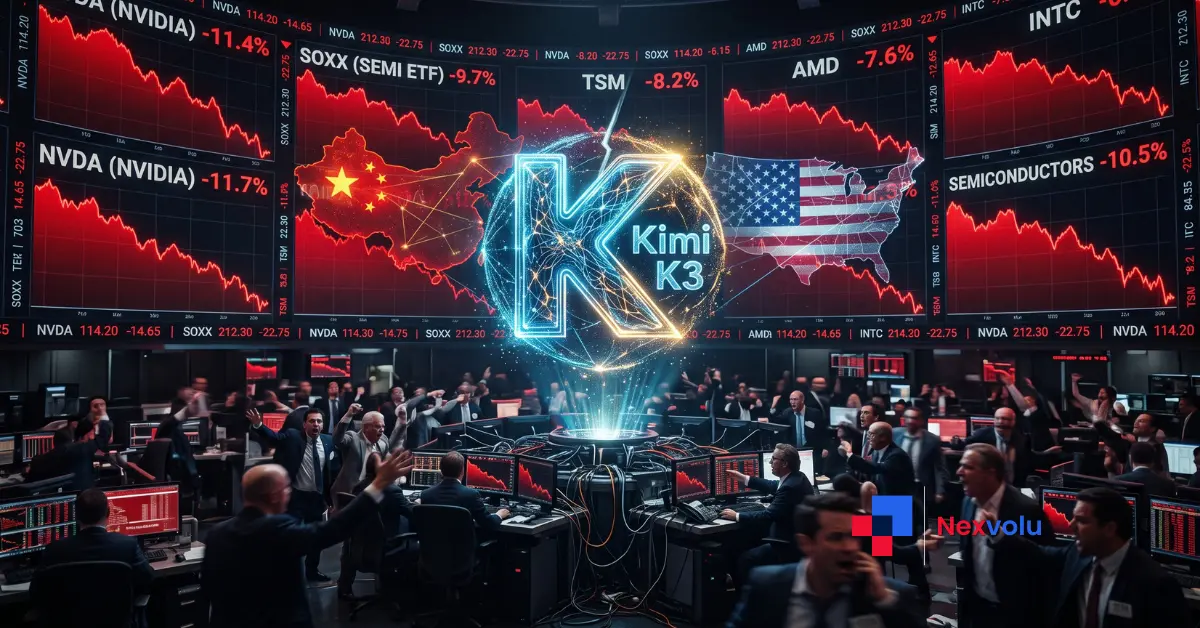
Your retirement account probably just had a rough week and a Chinese AI model most people had never heard of is the reason. On July 16, 2026, a Beijing startup called Moonshot AI unveiled Kimi K3, and within three trading days global chip stocks logged their worst week in more than a year. Nvidia, AMD and Broadcom each slid roughly 5%. The fear behind the headlines is blunt: is America’s AI lead finally over? Maybe not and that gap between the panic and the facts is exactly what this article unpacks. Here’s what Kimi K3 really is, why Wall Street flinched, and whether the sell-off should worry ordinary US and UK investors holding chip stocks in a 401(k) or Pension.
What Is Kimi K3?
Kimi K3 is a 2.8-trillion-parameter, open-weight AI model released by Chinese startup Moonshot AI on July 16, 2026, with full model weights due by July 27. It handles coding, reasoning and images across a 1-million-token context window, and its near-frontier performance reportedly built with less compute than US rivals – is what rattled global chip markets.
Moonshot showed the model off at the World Artificial Intelligence Conference in Shanghai, calling it the world’s first “open 3-trillion-class” model. Early third-party tests place it just behind US leaders such as OpenAI’s GPT-5.6 Sol, yet ahead of most open competitors.
That openness matters more than the raw size. Open weights mean anyone can download, run and modify Kimi K3 for free once they drop on July 27 and cheap, capable AI is exactly what makes sky-high chip demand look less certain.
Why Kimi K3 Sent Chip Stocks Tumbling
The logic behind the sell-off is simple. If a Chinese lab can reach near-frontier results with fewer high-end chips, then maybe the world won’t need as many Nvidia GPUs as the market assumed. When AI gets cheaper to build, the priciest hardware suddenly looks less essential.
Investors reacted fast. Here’s what moved in the days after launch:
| Stock / index | Move after the K3 launch |
|---|---|
| Nvidia (NVDA) | Down ~5% |
| AMD (AMD) | Down ~5% |
| Broadcom (AVGO) | Down ~5% |
| TSMC (TSM) | Down ~2.3% |
| Nasdaq Composite | Down 1.4% (Friday) |
According to Reuters, Moonshot billed K3 as the world’s largest open-weight system, and Morningstar reported the launch “added further fuel” to a chip sell-off already three days deep. It became the sector’s worst week in about 15 months.
If this feels familiar, it should. When China’s DeepSeek shocked markets in January 2025, Nvidia lost roughly $589 billion in a single day the biggest one-day market-value wipeout in history, per CNBC. Kimi K3 hit the same nerve.
What Kimi K3 Actually Does (In Plain English)
Strip away the jargon and Kimi K3 is a very large, very capable general-purpose AI you can host yourself. Three things make it stand out:
- Scale with efficiency. A “mixture-of-experts” design means only part of its 2.8 trillion parameters fires for any task, which keeps a giant model usable.
- A long memory. Its 1-million-token context window can hold entire codebases or long documents at once.
- It sees, not just reads. Native vision lets it work with images alongside text.
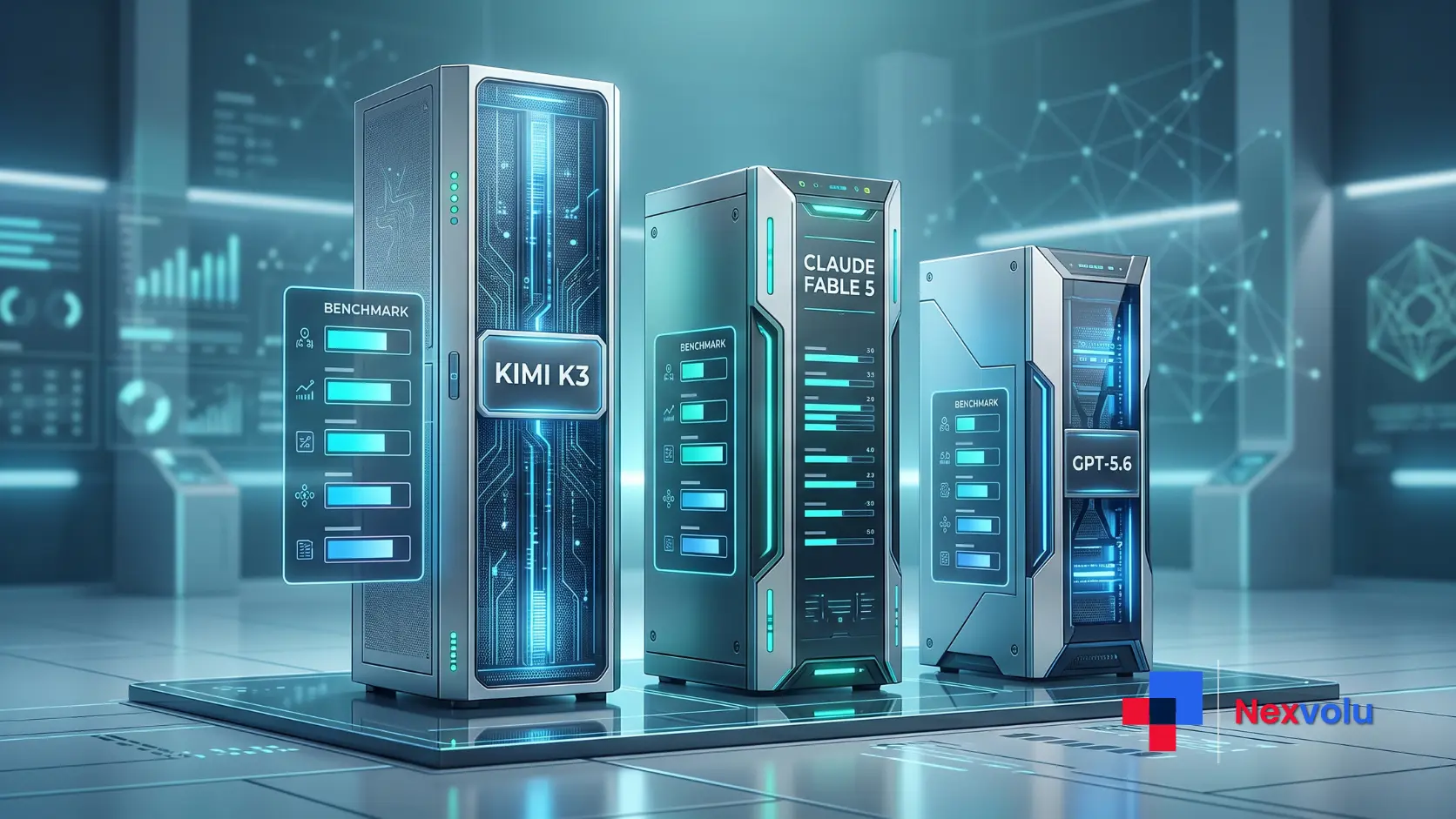
So how good is it, really? Independent evaluator Artificial Analysis ranked Kimi K3 third on its Intelligence Index level with Claude Opus 4.8 and GPT-5.5, though still behind the current leaders.
| AI model | Where it lands today |
|---|---|
| Claude Fable 5 (Anthropic) | Top tier |
| GPT-5.6 Sol (OpenAI) | Top tier |
| Kimi K3 (Moonshot) | Just below – #3, and open-weight |
| GPT-5.5 / Claude Opus 4.8 | Comparable to K3 |
The story isn’t that K3 beat America’s best. It didn’t. The story is that an open, downloadable model got this close and Tom’s Hardware notes it even edged Claude Fable 5 in one front-end coding benchmark.
Is the Panic Over Kimi K3 Justified?
Here’s the part most coverage skipped: plenty of respected voices think the sell-off went too far.
Tech analyst Patrick Moorhead called the reaction an “overreaction shockingly similar” to the DeepSeek scare one that pressures AI labs’ pricing more than it threatens chipmakers. Macro analyst Andreas Steno Larsen said investors “hit the sell button on semis” without thinking it through, per Seeking Alpha.
There’s a counterintuitive twist, too. Cheaper, open AI can actually increase total chip demand a pattern economists call the Jevons paradox. When something useful gets cheaper, people use far more of it. More developers running more AI still needs a lot of silicon.
Not everyone is relaxed. CNBC’s Jim Cramer expects a repeat of the DeepSeek slide and says the real issue is trust in the AI trade. So the honest take? The fear is understandable, but the “America’s lead is over” framing runs well ahead of the evidence.
What Kimi K3 Means for Your 401(k) and UK Pension Right Now

If you hold a US index fund or a UK pension, you almost certainly own chip stocks whether you chose them or not. Nvidia and its peers sit near the top of the S&P 500, and semiconductor ETFs are common in American 401(k)s and in UK workplace pensions and SIPPs.
That’s why a Shanghai product launch can nudge your balance in Ohio or Manchester. When a few AI names carry so much of an index, their bad days become everyone’s bad days.
A few calm, non-prescriptive things worth understanding:
- Concentration cuts both ways. A market led by a handful of AI giants climbs fast and falls fast. Knowing how much of your fund sits in those names tells you how exposed you are.
- One week is not a trend. Chip stocks have swung hard before – including after DeepSeek – then recovered. Short-term moves rarely settle long-term questions.
- Diversification is the boring defense. Spreading across sectors and regions is the standard way investors reduce single-story risk.
Disclaimer: This article is for general informational and educational purposes only and is not financial, investment, tax, or legal advice. Markets carry risk. Consult a licensed financial professional before making financial decisions.
Share this with someone whose retirement savings ride on the AI trade – most people have no idea how much of their pension leans on a few chip stocks.
Nexvolu’s Verdict
The verdict: Kimi K3 is a genuine milestone for open AI and a real competitive warning shot but the “America’s AI lead is over” panic runs well ahead of what the benchmarks actually show.
Best for: readers who want the facts and the counter-view before reacting.
Skip the hype if: you’re tempted to trade your pension on a single week of headlines.
Pros: Frontier-adjacent performance · fully open-weight and cheap to build on · long-context and multimodal.
Cons: Still trails the top US models · its China-hosted origin raises trust and security questions for some · real-world reliability is unproven until the July 27 weights land.
Standout: The most under-covered angle is the Jevons paradox cheaper AI could actually raise long-run chip demand, quietly undercutting the sell-off thesis.
Nexvolu Editorial Score: 8/10 – a landmark open model whose market panic looks overblown, marked down only because the released weights and independent testing are still days away.
Frequently Asked Questions
What is Kimi K3 in simple terms?
Kimi K3 is a large, open-weight AI model from Chinese startup Moonshot AI, launched on July 16, 2026. With 2.8 trillion parameters, it handles coding, reasoning and images, and anyone will be able to download it once the weights release on July 27. Its low cost and near-frontier performance are what unsettled chip markets. In practice, that means a developer could self-host a top-tier-adjacent model instead of paying a US provider per request – Moonshot’s API lists it at $3 per million input tokens and $15 per million output. That mix of open access and strong benchmarks is why investors treated a research release like a market event.
Is Kimi K3 better than ChatGPT or Claude?
Not overall. Independent evaluator Artificial Analysis ranked Kimi K3 third on its Intelligence Index – level with GPT-5.5 and Claude Opus 4.8, but behind the leaders, GPT-5.6 Sol and Claude Fable 5. It does win in spots: it reportedly beat Claude Fable 5 on one front-end coding benchmark and posts strong agentic scores. The bigger deal is category, not rank – it’s the most capable model you can legally download and self-host, which matters more to developers and businesses than a few leaderboard points.
Why did Kimi K3 cause a chip stock selloff?
Investors fear that if a Chinese lab reaches near-frontier AI with less high-end hardware, demand for expensive chips like Nvidia’s could be lower than assumed. That worry knocked Nvidia, AMD and Broadcom down about 5% and drove the sector’s worst week in roughly 15 months. It echoed January 2025, when DeepSeek’s launch erased about $589 billion of Nvidia’s value in a day. Several analysts, though, call the K3 reaction overblown, arguing cheaper AI tends to increase overall chip use over time rather than reduce it.
Should I sell my Nvidia stock or chip ETF because of Kimi K3?
This isn’t financial advice, and one product launch rarely justifies a rushed move. Analysts are openly split – some call the sell-off an overreaction, while others expect more volatility ahead. What you can do is understand your exposure: check how much of your 401(k) or pension sits in a few AI names, then revisit your own risk tolerance and time horizon. Chip stocks have recovered from similar scares before. For decisions about your specific situation, speak to a licensed financial professional.
When can you download Kimi K3?
Moonshot AI says the full Kimi K3 model weights will be released by July 27, 2026. The model is already usable through Moonshot’s website and API, but the open-weight download – the part that lets anyone host and modify it freely arrives with that release. Until the weights are public and independently tested, benchmark claims rest partly on Moonshot’s own disclosures and early third-party evaluations, so treat pre-release performance numbers as promising rather than final.
Does Kimi K3 mean China has passed the US in AI?
No. Kimi K3 narrows the gap but doesn’t close it the top US models still lead on overall performance. What changed is the open-weight race: China now offers the world’s largest downloadable model, spreading capable AI globally and pressuring US labs on price. It’s a serious competitive signal, not a changing of the guard. Right now, the “America’s lead is over” headline is more emotional than factual.
The Bottom Line
Kimi K3 is a real leap for open AI and a reminder of how much your savings now ride on a handful of chip stocks. But the panic outran the facts. The model impresses without dethroning America’s best, and several analysts think the sell-off went too far.
So take a breath before you act. Know your exposure, remember that one volatile week rarely settles a long-term story, and lean on diversification instead of headlines.
What’s your take – is the Kimi K3 chip panic a warning sign, or a buying opportunity in disguise? Tell us in the comments.
References
- Reuters – China’s Moonshot unveils world’s largest open AI model
- CNBC – China’s Moonshot AI unveils Kimi K3
- BBC – Moonshot AI claims Kimi K3 can rival OpenAI and Anthropic
- AP News – Chinese startup Moonshot unveils powerful Kimi K3
- Morningstar / MarketWatch – Meet Kimi K3, the newest Chinese AI model haunting Silicon Valley
- Artificial Analysis – Kimi K3 intelligence & performance
- Tom’s Hardware – Kimi K3 beats Claude Fable 5 in Frontend Code Arena
- Seeking Alpha – Is Moonshot’s Kimi-K3-led semis selloff warranted?
1 thought on “Kimi K3 Chip Selloff: Is America’s AI Lead Over?”