






What Colors Suit My Skin Tone? The Clothing-First Guide
What colors suit my skin tone? You’ve already asked it if you own a shirt that earns “rough night?” comments every single time you wear it. After all, the fabric was fine, and so was the fit. Yet the color was quietly working against you.
But here’s the problem: search “what colors suit my skin tone” and you’ll mostly find foundation-matching quizzes, makeup tutorials, and studios charging up to $545 to drape fabric near your face. Almost nobody answers the actual question, which is about clothes. The ones you buy, return, and regret.
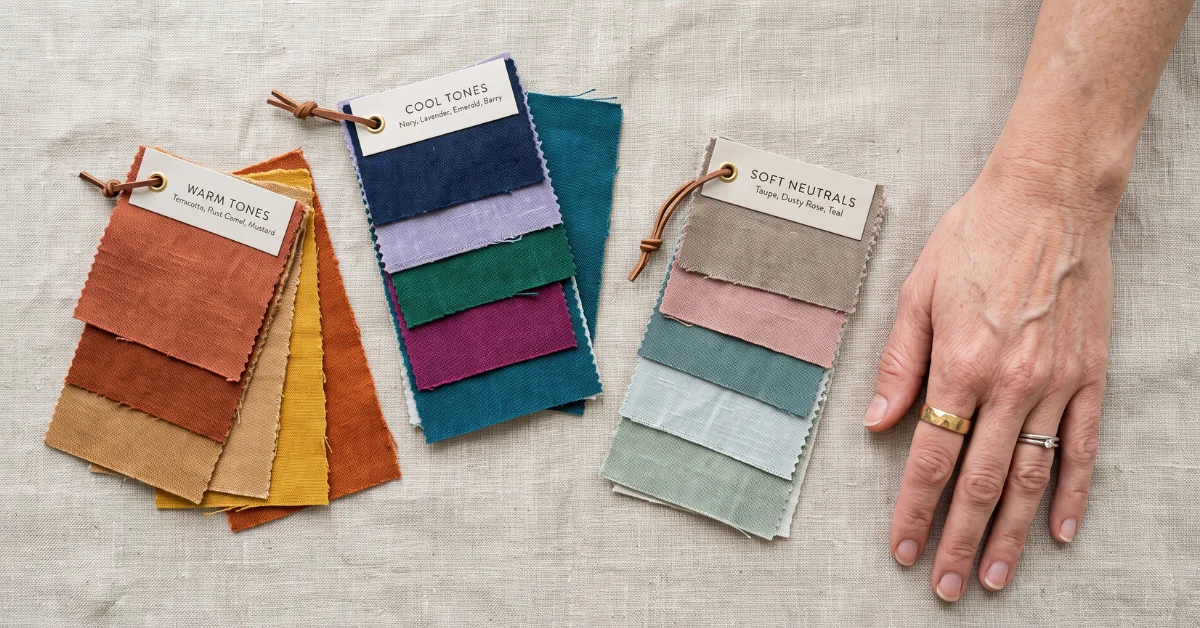
So this guide fixes that. You’ll find your undertone in about five minutes with three free tests (vein, jewelry, and white paper), then get ready-made clothing palettes with specific, named colors: terracotta and camel for warm, navy and lavender for cool, dusty rose and teal for neutral.
No quiz, no appointment, and no makeup counter.
And once you know your palette, everything downstream gets easier, from smarter shopping to the capsule wardrobe trick that ends closet chaos for good. Fewer bad buys, faster mornings.
One promise before we start, though: undertone theory is a guideline, not a law. Use it to look more awake, not to make getting dressed stressful.
Quick Answer: What Colors Suit My Skin Tone?
Quick Answer: In short, the colors that suit your skin tone depend on your undertone, not how light or deep your skin is. For example, warm undertones (greenish wrist veins, flattered by gold) glow in terracotta, camel, olive, mustard, and cream. Likewise, cool undertones (blue or purple veins, flattered by silver) shine in navy, lavender, emerald, berry red, and true white. Neutral undertones can borrow softened shades from both palettes.
TL;DR
- Your undertone (warm, cool, or neutral) decides your best clothing colors.
- Green wrist veins and gold jewelry point warm; blue veins and silver point cool.
- Warm undertones: terracotta, camel, olive, mustard, cream, tomato red.
- Cool undertones: navy, lavender, emerald, berry red, charcoal, true white.
- Two of three home tests agreeing confirms your undertone, free.
Table of Contents
- What Is a Skin Undertone (and Why Does It Decide Your Colors)?
- How Do I Test What Colors Suit My Skin Tone at Home?
- What Colors Suit a Warm Skin Tone?
- What Colors Suit a Cool Skin Tone?
- What Colors Suit a Neutral or Olive Skin Tone?
- What Colors Suit My Skin Tone? The At-a-Glance Comparison
- Is Paid Color Analysis Worth It?
- How Do You Build a Wardrobe of Colors That Suit Your Skin Tone?
- Nexvolu’s Verdict
- Frequently Asked Questions
What Is a Skin Undertone (and Why Does It Decide Your Colors)?
A skin undertone is the fixed hue sitting beneath your skin’s surface. Specifically, it comes in three types: warm (golden, peachy, yellow), cool (pink, red, bluish), and neutral (a balanced mix). Unlike your surface skin tone, your undertone never changes, not with sun, not with season, not with age.
That distinction matters more than anything else in this guide. Skin tone is depth: fair, light, medium, tan, deep. Undertone, in contrast, is temperature. For example, a fair person can be warm-toned while a deep-skinned person can be cool-toned. Depth tells you how much contrast you can handle, whereas temperature tells you which colors harmonize.
Why does temperature matter for clothing? Because the colors near your face either echo your natural cast or fight it. For instance, put a mustard scarf against cool, pink-based skin and the clash exaggerates redness. Swap it for berry, though, and your skin instantly reads more even.
Of course, none of this is new. Carole Jackson’s 1980s bestseller Color Me Beautiful turned undertone theory into a global phenomenon, and today’s TikTok color analysis obsession is the same science wearing a Gen Z outfit. It has survived four decades of trend cycles because perception, unlike fashion, never gets a new collection.
How Do I Test What Colors Suit My Skin Tone at Home?
You can find your undertone in about five minutes with three free tests. Run all three, because any single test can mislead. The majority result wins.
The Vein Test
First, flip your wrist over in natural daylight and look at your veins.
- Green or olive veins: warm undertone.
- Blue or purple veins: cool undertone.
- A mix of both, or genuinely hard to tell: likely neutral.
One caveat: warm indoor bulbs push everything green, so check near a window, not in the bathroom.
The Jewelry Test (Gold vs Silver)
Next, hold plain gold jewelry against your bare skin, then plain silver. No gemstones, natural light.
Generally, gold blending in and making your skin glow means warm. In contrast, silver looking crisper and brightening you means cool. Both looking equally good means neutral.
The White Paper Test
Finally, hold a sheet of pure white paper next to your clean, makeup-free face in daylight. Specifically, skin that looks yellow or golden beside the paper is warm. Meanwhile, skin that looks pink or rosy is cool. If it reads gray-ish or you honestly can’t decide, that’s a neutral signal.
The Two-of-Three Rule (Our Scoring Method)
Here’s the part most guides skip: the tests disagree constantly. So score them like a referee instead of panicking.
| Your results | Your undertone |
|---|---|
| All three tests agree | That’s your answer, done |
| Two agree, one differs | Go with the majority; you likely “lean” (neutral-warm, neutral-cool) |
| All three conflict | You’re almost certainly neutral |
A fresh tan, sunburn, or rosacea can throw off any single test, which is why one test alone misleads.
Bookmark this page before your next shopping trip. Once you know your result, “what colors suit my skin tone” turns into a 60-second fitting-room check instead of a guessing game.
What Colors Suit a Warm Skin Tone?
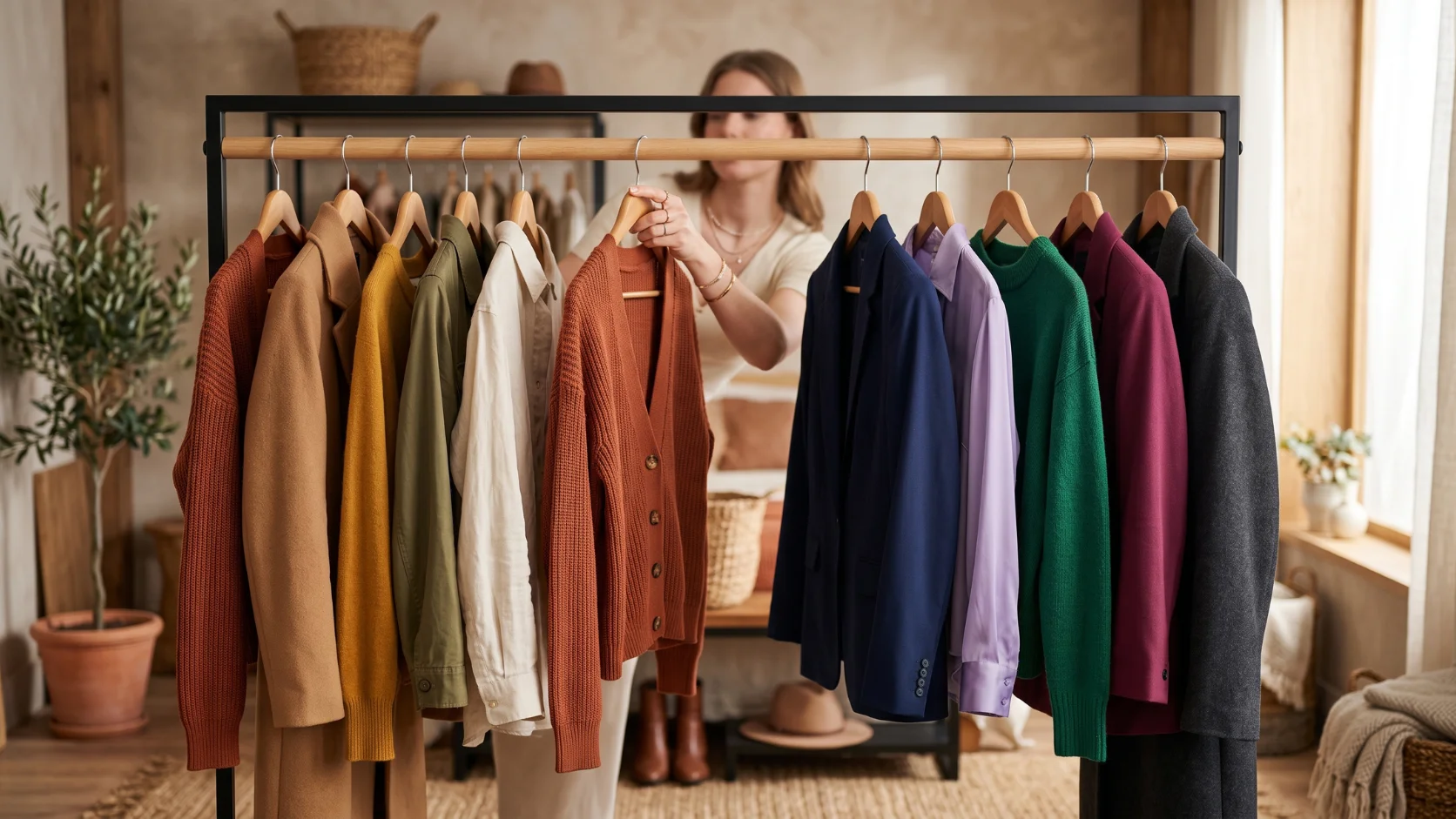
So, what colors suit a warm skin tone? If you scored warm, your skin carries a golden or peachy cast, and colors with yellow in their base will echo it beautifully. For example, think of autumn leaves and spices: terracotta, rust, camel, chocolate brown, olive green, mustard, warm coral, tomato red, peach, and cream.
| Role in your closet | Warm-undertone picks |
|---|---|
| Everyday neutrals | Camel, cream, chocolate, warm taupe |
| Statement pieces | Terracotta, mustard, warm coral |
| Your best red | Tomato, brick |
| Metals and accents | Gold, bronze, tortoiseshell |
Indeed, Stitch Fix’s styling guide backs the neutral rule: “Earth colors like sand, sepia, caramel and deep tonal reds will all enhance the peach or golden casts in your skin.”
On the other hand, handle with care: stark white (swap in cream), icy pastels, and cool blue-grays, which can make warm skin look sallow near the face.
Warm palettes also read instantly nostalgic on screen. Think of the browns, golds, and olive tones costume designers built around The Sopranos cast, a world we revisited in Vincent Pastore’s real legacy.
What Colors Suit a Cool Skin Tone?
If you scored cool, your skin carries a pink or bluish cast, and colors with a blue base will make it look polished and even. Your palette runs from jewel tones to frost: navy, sapphire, emerald, lavender, cool pink, berry red, burgundy, charcoal, dove gray, icy blue, and true white.
| Role in your closet | Cool-undertone picks |
|---|---|
| Everyday neutrals | Charcoal, navy, dove gray, true white |
| Statement pieces | Emerald, sapphire, lavender |
| Your best red | Berry, cherry |
| Metals and accents | Silver, platinum, white gold |
Similarly, handle with care: orange, mustard, camel, and yellow-based golds. They fight your pink base and tend to amplify any redness in your face.
In fact, cool palettes dominate prestige TV for a reason: silver, charcoal, and inky blue read regal and severe. The Targaryen wardrobe is basically a cool-undertone mood board, as our House of the Dragon season 3 episode 2 catch-up shows scene after scene.
What Colors Suit a Neutral or Olive Skin Tone?
Scored a tie? Then welcome to the most flexible category. Revlon describes neutral undertones as “a mixture of warm skin tone and cool skin tone or the absence of a distinct undertone,” which means you can borrow from both palettes.
The trade-off: extremes flatter you least. Neon brights and ultra-icy pastels can overwhelm neutral skin, while softened, dusty shades sing. Instead, reach for dusty rose, teal, jade, periwinkle, soft white, taupe, and mid-gray. Your best red is a muted crimson, right between tomato and berry.
Meanwhile, olive skin deserves its own note. It carries a greenish cast that behaves like a fourth category: you tan easily, both gold and silver usually work, and your winners are earthy greens, warm reds, and deep jewel tones like sapphire and emerald. Very pale pastels and flat beige can wash olive skin out.
And if you love a color that “breaks” your category? Wear it. As Olivia Lee writes for Northeastern University’s Asian American Center, “just because you are cool toned or warm toned does not mean you cannot wear colors in the opposite tone.”
What Colors Suit My Skin Tone? The At-a-Glance Comparison
Still wondering what colors suit your skin tone in the store? Screenshot this table before you shop.
| Signal | Warm | Cool | Neutral |
|---|---|---|---|
| Wrist veins | Green or olive | Blue or purple | Mixed, unclear |
| Better metal | Gold | Silver | Both |
| Best white | Cream, off-white | True, bright white | Soft white |
| Best red | Tomato, brick | Berry, cherry | Muted crimson |
| Go-to neutrals | Camel, chocolate | Charcoal, navy | Taupe, mid-gray |
| Handle with care | Icy pastels, stark white | Orange, mustard, camel | Neon brights |
Is Paid Color Analysis Worth It?
Short answer: it’s a luxury, not a requirement. Professional seasonal color analysis takes your undertone and layers on depth and clarity to sort you into one of 4 seasons and 12 subtypes, usually through in-person fabric draping.
How Much Does Color Analysis Cost?
It isn’t cheap. According to TIME’s 2023 reporting on Seoul’s personal color boom, rates at most Korean studios hover from $80 to $160, and a three-hour session can cost $545. The New York Times reported in 2024 that finding your “season” can cost up to $500 in the US. The price buys precision, not secrets: it’s the same undertone logic you just ran at home for free.
The core idea also holds up under peer review.
What the Study Found: In a 2021 peer-reviewed study by Perrett and Sprengelmeyer, independent observers repeatedly chose the same clothing colors for the same complexions: cooler blue hues for fair (lower-melanin) skin and warmer orange-red hues for tanned (higher-melanin) skin.
Key Statistics: Across two experiments with 96 and 75 observers, color preferences clustered strongly around red and blue hues (Clothing Aesthetics: Consistent Colour Choices to Match Fair and Tanned Skin Tones, 2021). Studio pricing: $80 to $160 typical in Seoul, up to $545 for premium sessions (TIME, 2023) and up to $500 in the US (The New York Times, 2024).
Why It Matters: Strangers broadly agree on which clothing colors harmonize with a given complexion. Color matching is a measurable perception effect, not a stylist’s sales pitch, and the free home method captures most of its value.
Should You Trust AI Color Analysis Apps?
The newest wrinkle is AI color analysis apps that scan a selfie and assign you a season in seconds. Treat them as a second opinion, not a verdict: phone cameras and filters distort undertones badly. AI is rewriting every corner of entertainment right now, from selfie stylists to the synthetic performer debate we covered in Tilly Norwood and SAG-AFTRA’s AI actor rules.
One more caveat before you type a celebrity’s name into a season quiz: screen color grading shifts undertones dramatically. Netflix thrillers run steel-blue almost wall to wall (see the film behind our I Will Find You ending explained breakdown), which is partly why fans have argued over stars’ seasons for years, a debate guaranteed to flare up again around Taylor Swift’s MSG wedding.
How Do You Build a Wardrobe of Colors That Suit Your Skin Tone?
Of course, knowing your colors is step one. Wearing them systematically is where the payoff lives.
Try our 60-30-10 wardrobe math. For a 30-piece seasonal closet:
- 60% (18 pieces): your undertone’s neutrals. Camel and cream for warm, charcoal and navy for cool, taupe and soft white for neutral. These mix with everything.
- 30% (9 pieces): mid-intensity color. Olive, rust, and warm coral for warm; emerald, berry, and dove gray for cool; teal and dusty rose for neutral.
- 10% (3 pieces): statement color. Terracotta or mustard for warm, sapphire or lavender for cool, jade for neutral.
Then calibrate saturation to your natural contrast. High contrast between hair and skin (say, dark hair with light skin) handles crisp, saturated shades. Low contrast looks better in softer, muted versions of the same colors.
Finally, use the below-the-waist loophole. Undertone rules matter most in the “face zone”: tops, scarves, collars, and coats. Trousers, shoes, and bags can break every rule in this article without costing you anything.
Share this guide with the friend who keeps buying the same three “meh” colors. You’ll save them a closet full of returns.
Nexvolu’s Verdict
The verdict: Undertone-based dressing is the rare style rule that’s free, science-adjacent, and permanent: learn it once and it never expires.
Best for: anyone tired of wardrobe misfires, capsule builders, and shoppers who want fewer, better pieces.
Skip it if: you treat fashion as pure self-expression and already love your “wrong” colors (keep wearing them).
Pros: costs nothing to apply with the three home tests · stable for life while trends churn · works across clothing, jewelry, and hair choices
Cons: home tests can conflict and confuse · easy to slide into rule-obsession · the 12-season industry is pricey and analysts often disagreeStandout: independent observers in peer-reviewed testing agree on which colors suit a complexion. This isn’t stylist folklore; it’s measurable perception.
Nexvolu Editorial Score: 8/10. Maximum value for zero dollars, docked two points because neutral and olive cases still take real trial and error. (An editorial opinion based on the research above, not lab testing.)
Frequently Asked Questions
How do I know if I have warm or cool undertones?
First, check your wrist veins in daylight: green suggests warm, blue or purple suggests cool. Next, confirm with metal, since gold flatters warm skin and silver flatters cool. Then hold white paper by your face; a golden cast means warm, a pink cast means cool. Two matching results confirm your undertone. In practice, conflicting results usually mean you’re neutral rather than “untestable.” Skip testing right after a sunburn or spray tan, and always use natural light.
Can I wear black if I have a warm undertone?
Yes, with tactics. Black is technically a cool color, so worn right at the face it can harden warm features and cast shadows. Three fixes: keep black below the waist, swap it for espresso or chocolate brown, or buffer it with gold jewelry or a warm-toned layer between black and your skin. Where black is non-negotiable, the buffer trick alone solves most of the problem. Nobody needs to give up their black jeans.
What colors look good on every skin tone?
Surprisingly, teal, soft white, eggplant, and medium blue-greens flatter nearly everyone because they sit close to the warm-cool boundary, balancing both pigment directions. Red also works universally; you just pick your version. Warm undertones reach for tomato or brick, cool undertones for berry or cherry, neutrals for muted crimson. When you’re gift shopping or buying blind, teal is the closest thing color theory has to a cheat code.
Should I wear gold or silver jewelry?
Gold flatters warm undertones, silver flatters cool ones, and neutral or olive undertones can genuinely wear both. In addition, rose gold is the bridge metal that behaves well on almost everyone. Test it by holding each plain metal against your inner forearm in daylight; the one that makes skin look brighter wins. Mixed metals are fine too; just keep your best metal closest to your face.
Do undertones change with age or tanning?
No. In fact, tanning changes your depth, not your temperature, and undertone stays fixed across your whole life. What does change is contrast: hair going gray or silver lowers the contrast between hair and skin, so the same palette often works better in slightly softer, more muted versions. After a dramatic hair change, re-run the white paper test: your undertone hasn’t moved, but your best saturation level probably has.
What colors suit an olive skin tone?
Olive skin carries a subtle green cast that behaves like its own category, sitting between warm and neutral. Earthy greens, warm reds, terracotta, and deep jewel tones like sapphire and emerald look outstanding, while very pale pastels and flat beige tend to wash olive skin out. Additionally, most olive-toned people can wear both gold and silver convincingly, which confuses the jewelry test. If your vein test says warm but icy colors still work on you, olive is the likely explanation.
Is seasonal color analysis accurate?
The core idea is solid: peer-reviewed research shows observers consistently agree on which clothing colors match a given complexion. The 12-season implementation is where subjectivity creeps in, since two analysts can type the same person differently, and studio verdicts vary. Instead, treat your season as a well-researched starting palette rather than a legal document. If a professional analysis fits your budget and you enjoy the experience, great; the three free home tests will still get you most of the way there.
Key Takeaways
- Find your undertone once; it never changes, so the payoff lasts a lifetime.
- Use the two-of-three rule across the vein, jewelry, and white paper tests.
- Shop by name: terracotta, camel, and mustard for warm; navy, lavender, and berry for cool; teal and dusty rose for neutral.
- Reserve palette rules for the face zone; anything goes below the waist.
- Paid color analysis is optional; the free method captures most of the benefit.
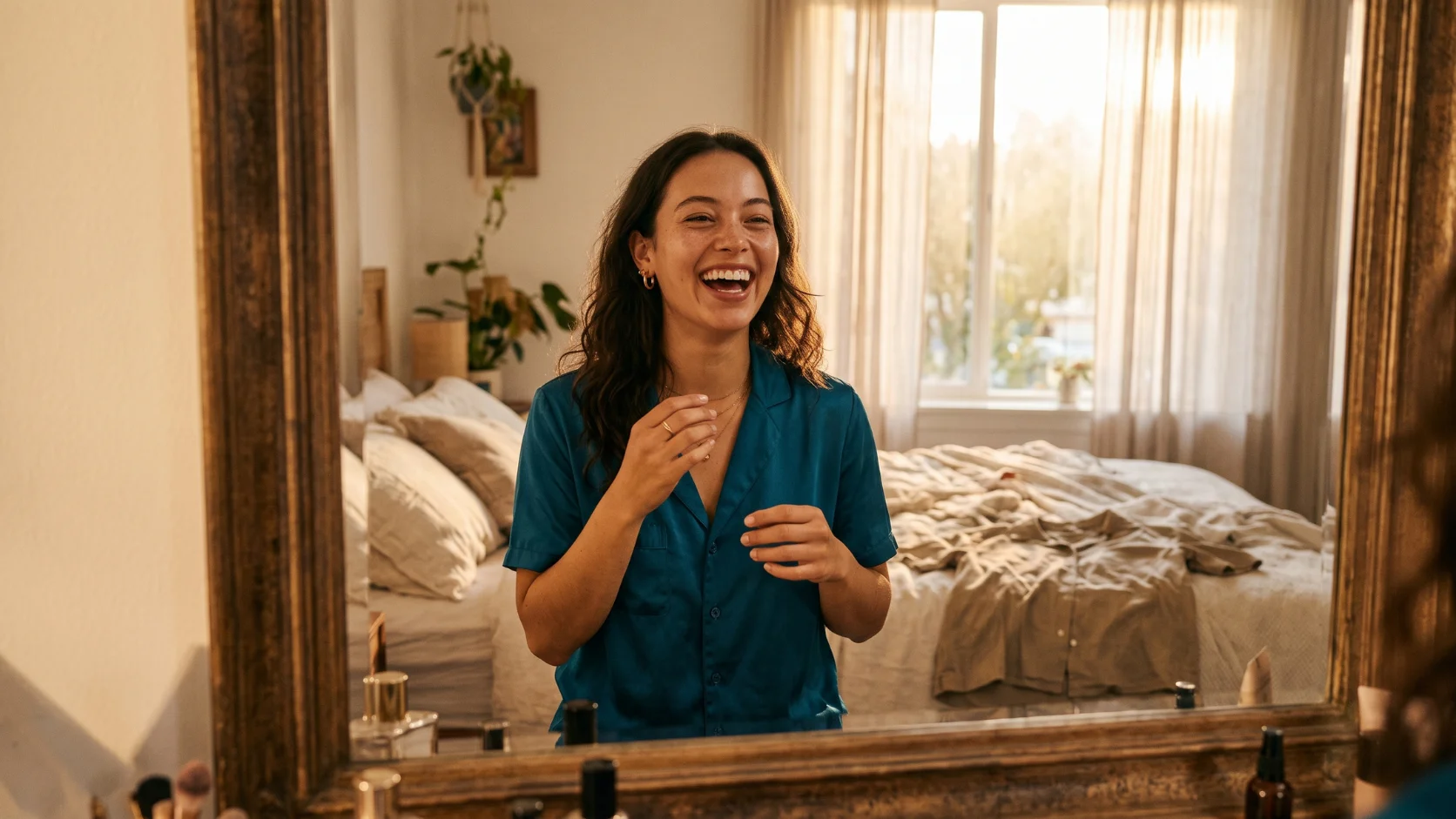
So, what colors suit your skin tone? The ones that match your undertone’s temperature: golden-based shades for warm, blue-based shades for cool, and softened in-between shades for neutral. Run the three tests this week, screenshot the comparison table, and audit the ten pieces you wear most. If your closet is full of colors from the wrong column, you’ve just found the cheapest glow-up available: no serum, no tailor, just better light on your face.
Above all, start small. Replace one “face zone” piece in your best neutral, then build toward a palette where everything mixes. Your future self will thank you.
So, which team are you: warm, cool, or hopelessly neutral? Drop your test results in the comments, especially if your veins refused to pick a side.
REFERENCES
- TIME: ‘Personal Color Analysis’ Craze Fuels Tourism Boom for Seoul (2023)
- The New York Times: Are You a ‘Spring’ or a ‘Winter’? It Could Cost You $500 to Find Out (2024)
- Perrett & Sprengelmeyer: Clothing Aesthetics: Consistent Colour Choices to Match Fair and Tanned Skin Tones (2021, PubMed)
- Revlon: How to Identify Your Skin Undertones
- Stitch Fix: A Guide to Dressing for Your Skin Tone
- Northeastern University Asian American Center: Finding my Skin Undertone (Olivia Lee)
- HunterLab: Seasonal Colour Analysis (Carole Jackson background)
- withSimplicity: Warm, Cool, or Neutral? Find Your Skin Undertone in 60 Seconds