




Thrift Shopping Tips for Beginners: The Quality-First Guide
Every list of thrift shopping tips for beginners promises instant treasure, yet first trips usually end one of two ways. You either walk out buzzing, holding a $6 jacket that fits like it was tailored for you, or you leave empty-handed and quietly convinced the whole thing is overrated. The difference is rarely luck. It’s method.
The advice that actually works comes down to three skills: knowing where and when to shop, checking quality in under a minute, and knowing what a piece is really worth. Once you learn those, the racks turn from chaos into a treasure map. They’re also the fastest budget route to a capsule wardrobe that ends closet chaos.
This guide covers what most others skip: US thrift stores and UK charity shops together, stylist-grade quality checks, and online thrifting on ThredUp, Vinted, and Depop.
Quick Answer: These thrift shopping tips for beginners work best as a system: research stores near donation-rich neighborhoods, shop weekday mornings, set a cash budget, and check every piece for fabric quality, straight seams, and working zippers before buying. Try things on, trust the smell test, and judge each piece on cost per wear, not sticker price.
TL;DR
- Shop weekday mornings; weekends are crowded and picked over.
- Touch fabric first, then check seams, zippers, and armpits.
- US thrift stores and UK charity shops play by different rules.
- Vinted, Depop, and ThredUp bring the treasure hunt to your phone.
- A $7 find beats fast fashion on cost per wear, every time.
Table of Contents (anchor-link each line to its H2 in WordPress)
- How to Start
- Quality Checks: The 60-Second Method
- Thrift Stores vs Charity Shops (US and UK)
- Online Thrift Shopping Apps
- The Real Math
- Beyond Clothes
- Nexvolu’s Verdict
- FAQ
Thrift Shopping Tips for Beginners: How Do You Start?
The fastest way to ruin thrifting is showing up unprepared on a Saturday afternoon. Here’s the setup that works:
- Research stores before you go.
- Shop weekday mornings, right after opening.
- Set a cash budget before entering.
- Dress for quick try-ons.
- Bring a reusable bag.
- Walk every aisle twice.
Location matters more than luck. Stores near donation-rich neighborhoods (affluent zip codes, or university areas at semester’s end) stock better brands, and recent Google reviews tell you which ones stay organized. A multi-store route is also cheaper now that gas prices are falling.
Timing is the tip most beginners skip: stores process weekend donations early in the week, so Tuesday to Thursday mornings mean fresh racks without crowds.
Money rules keep the fun cheap. Decide your ceiling before you walk in; if you don’t have one yet, build a step-by-step personal budget with its own secondhand line.
Students, this is your season. A semester wardrobe can cost less than one new outfit, which is welcome breathing room while student loan rules change underneath you.
One last trick: wear leggings and a fitted tee. Many stores have cut their fitting rooms, and try-ons over slim clothing beat guessing.
Thrift Shopping Tips: How Beginners Spot Quality Secondhand Clothes
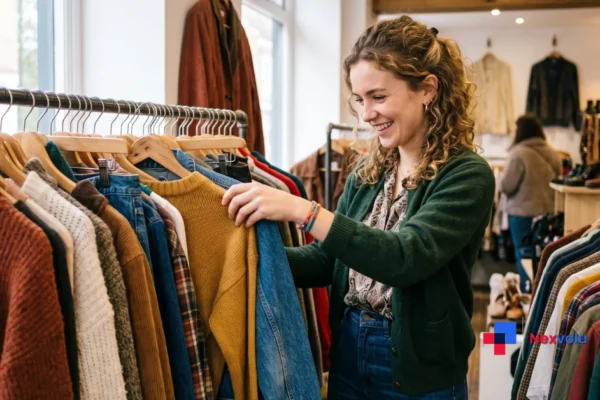
Experienced thrifters let their fingertips make the first cut. Instead of reading forty labels, run a hand along the rack in your size and stop only when fabric feels dense, soft, or heavy. Natural fibers (cotton, wool, silk, linen) survive previous owners far better than thin synthetics.
When something passes the touch test, give it the 60-second check:
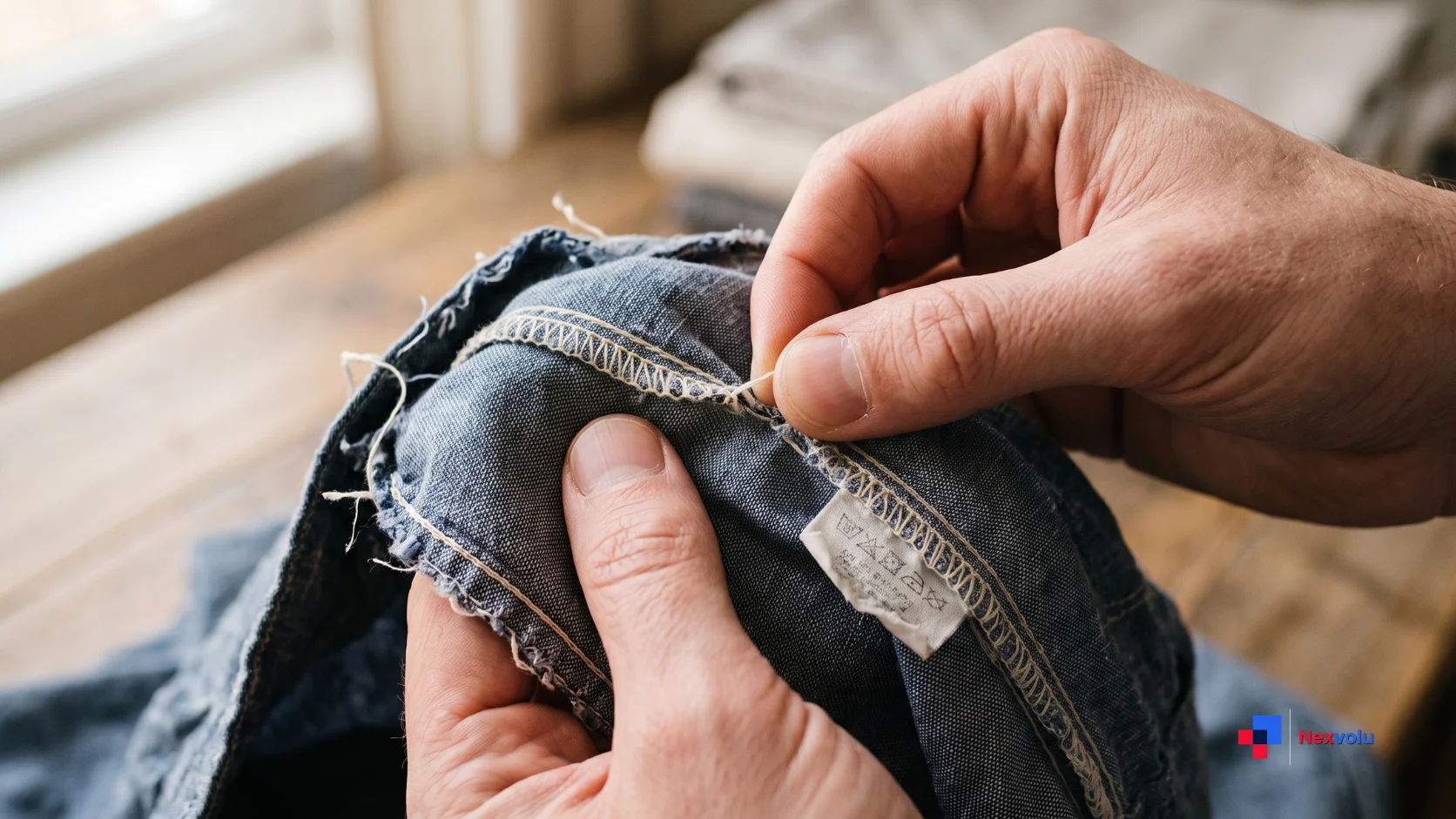
- Seams: straight, tight stitching with no puckering. Pull gently; light shouldn’t show through.
- Hardware: run every zipper, twist the buttons, count the snaps.
- Wear zones: armpits, collars, cuffs, knees, and elbows reveal how hard a garment lived.
- Smell: sniff boldly. Musty is fixable; heavy smoke or perfume often isn’t.
- Label triage: older care tags, union labels, and long-gone “Made in” stamps often signal vintage quality.
Know your alteration limits as well. For example, a hem, a button, or a loose waist is a cheap fix; shoulders that don’t sit right or a twisted side seam aren’t. Walk away.
Then edit before the register. “I ask myself if all the items in my cart feel cohesive and true to my style,” Kaitlyn McAlpine, founder of Brown Paper Thrift, told The Spruce. “Doing a quick cart edit ensures you are purchasing items that you are truly going to love.”
Interior designer Chelsey Brown of City Chic Decor uses a numbers test, telling The Spruce: “If you’re unsure about a $15 item, ask yourself, ‘Will I use this at least fifteen times?’ If yes, go for it. If no or unsure, pass and move on.”
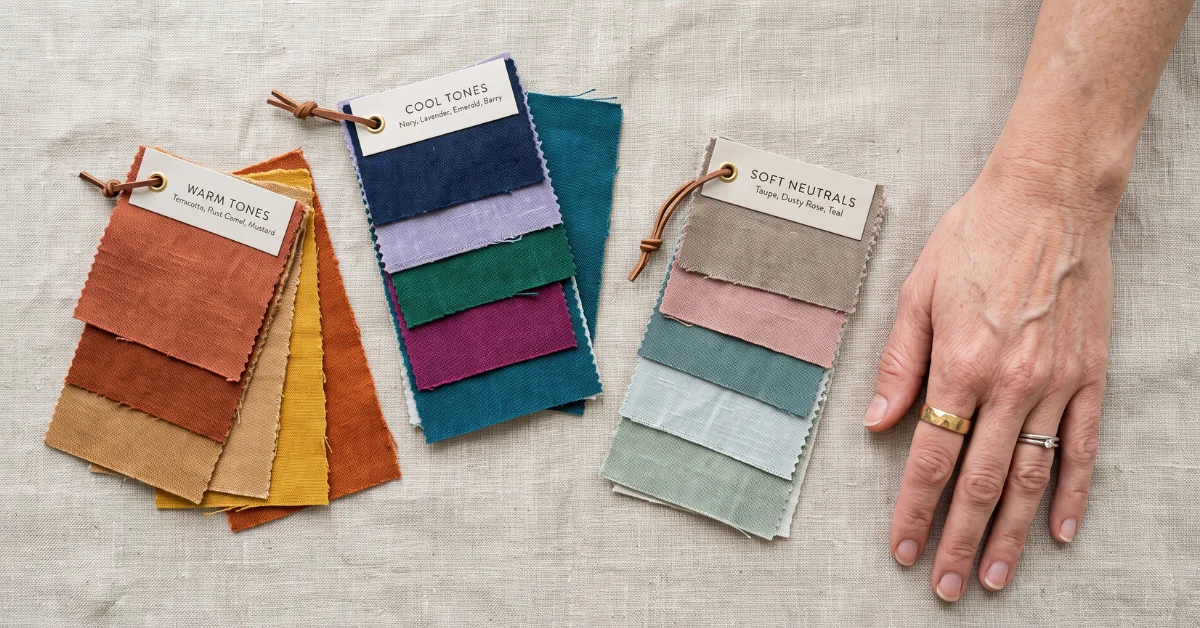
One extra filter: knowing which colors suit your skin tone means you only grab that mustard blazer if you’ll actually wear it.
Thrift Stores vs Charity Shops: US and UK Tips for Beginners
Same treasure hunt, different rulebooks. Most guides write for one country and ignore the other, so these thrift shopping tips for beginners cover both.
| US thrift stores | UK charity shops | |
|---|---|---|
| Typical names | Goodwill, Salvation Army, Savers | Oxfam, British Heart Foundation, Cancer Research UK |
| Scale | Warehouse-sized, deep racks | Small high-street shops, curated stock |
| Discounts | Color-tag sales, student and senior days | Fewer sales; stock rotates weekly instead |
| Pricing | Flat prices by category | Priced per item; branded pieces cost more |
| Best strategy | Dig wide, visit weekly | Crawl several shops in one high-street run |
Two UK notes. First, charity shops in wealthy postcodes (Chelsea, Harrogate, Bath) hide designer donations at jumble-sale prices. Second, volunteer pricing means mispriced gems surface constantly. Every pound matters while household costs stay stubborn even after the electricity VAT cut.
Sizing trips up shoppers in both directions: a UK 12 is roughly a US 8, and vintage labels run smaller still.
Online Thrift Shopping for Beginners: ThredUp vs Vinted vs Depop
Most beginner guides pretend thrifting only happens in physical stores. In reality, much of the market’s growth now happens on your phone, and no list of thrift shopping tips for beginners is complete without the apps.
| Platform | How it works | Best for |
|---|---|---|
| ThredUp | Managed consignment; one giant online catalog | Everyday brands and heavy filtering (US-focused) |
| Vinted | Peer-to-peer; buyers pay a small protection fee | Bargain basics; huge in the UK and Europe |
| Depop | Peer-to-peer with a social, curated feed | Y2K, streetwear, and vintage aesthetics |
Three online habits keep you safe. First, buy from measurements, never size labels: ask for pit-to-pit and length numbers. Second, request photos of flaws before paying. Third, distrust listings that look too perfect; learning to spot AI-generated images helps you dodge stock-photo scams.
And since marketplace accounts hold your card details, lock them behind a strong login. Our honest look at password managers covers it in five minutes.
Is Thrift Shopping Cheaper for Beginners? The Real Math
Let’s run honest cost-per-wear numbers (illustrative, but grounded in typical prices).
For example, a thrifted heavyweight cotton shirt costs about $7 and, having already survived years of washing, can deliver another 60 wears: roughly $0.12 per wear. By contrast, a $12 fast-fashion tee that pills after 15 wears costs $0.80 per wear, over six times more. If you’ve priced out the real cost of a Shein or Temu haul, the comparison gets even less flattering.
The wider data backs the instinct:
What the Study Found: Secondhand clothing is no longer a niche habit; it’s one of the fastest-growing corners of retail on both sides of the Atlantic.
Key Statistics: The US secondhand apparel market grew 13% in 2025, nearly four times faster than the broader retail clothing market (3.6%), and is projected to reach $78.8 billion by 2030, per the ThredUp 2026 Resale Report with GlobalData. OfferUp’s 2025 Recommerce Report found 93% of US consumers bought secondhand within the year; 79% named saving money as the top reason.
Why It Matters: Selection and platform tools improve as the market grows, making right now the easiest moment in decades to start.
“In 2025, a remarkable 93% of Americans bought something secondhand, and more than half sold an item themselves,” said OfferUp CEO Todd Dunlap. “Secondhand is now mainstream.”
Know someone still paying full price for basics? Share this guide with them.
What Should You Buy at Thrift Stores Besides Clothes?
Clothing racks get the attention, but sleeper sections fund the hobby: solid-wood furniture, cast iron, hardcovers, and frames sell for a tenth of retail.
Media shelves also deserve a slow look. DVDs and disc games are quietly becoming collectibles as physical discs disappear from new consoles.
And with new gadgets costing more in 2026, a tested secondhand speaker, film camera, or keyboard is thrifting’s best-kept secret.
Nexvolu’s Verdict
One-line verdict: Thrifting is the rare money habit that doubles as a hobby, and the value gap over new retail has never been wider, provided you learn the quality checks first.
Best for: Budget-conscious shoppers, students, capsule-wardrobe builders, and anyone who loves a hunt.
Skip it if: You need a specific item by Friday, or secondhand genuinely isn’t for you.
Pros:
- Cost per wear crushes fast fashion, often by six times or more.
- Better odds of natural fabrics and discontinued quality than mall stock.
- Purchases divert clothing from landfill and usually fund a charity.
Cons:
- Time-intensive; great finds reward repeat visits, not one-off trips.
- Most stores don’t do returns, so mistakes stay bought.
- Sizing is inconsistent, especially across vintage and cross-border labels.
Standout point: Almost no ranking guide serves US and UK shoppers together, and the touch-first method becomes second nature in about three trips.
Nexvolu Editorial Score: 8.5/10. Scored on value, ease of starting, and reliability of savings; it loses points only for the time it demands. Editorial opinion from researched facts, not hands-on store testing.
Frequently Asked Questions
What is the difference between thrift, vintage, and consignment?
Thrift stores sell donated secondhand items at low prices, usually to fund a charity. Vintage shops curate pieces at least 20 years old and price them for rarity. Consignment stores sell on behalf of the original owners, who take a cut, so quality and prices run higher. In practice: thrift is where you hunt, vintage is where you splurge, and consignment sits between. Start at thrift stores; that’s where beginners build instincts and save the most.
What are the best days to go thrift shopping?
Weekday mornings, especially Tuesday through Thursday, are the best times to thrift. Weekend donations get processed early in the week, so racks are freshest then and stores are far quieter than on Saturdays. Ask staff when new stock hits the floor; most will tell you exactly. Many US chains also run color-tag discount days midweek. If weekends are your only option, arrive at opening.
Do thrift stores wash clothes before selling them?
Most thrift stores don’t wash donated clothing before it reaches the floor; they sort for visible damage and obvious hygiene problems only. Assume everything you buy is unwashed. Machine-wash or dry-clean every find before wearing it, and run delicates through a hot dryer cycle or a sealed freezer bag if you’re worried about hitchhikers. Build a washing session into every haul, especially for kids’ clothes or bedding.
Is online thrifting on Vinted or Depop safe for beginners?
Yes, online thrifting is generally safe for beginners as long as you keep payment inside the platform, which activates buyer protection on both Vinted and Depop. Never move to bank transfer or outside apps. Check reviews, ask for measurements and flaw photos, and reverse-image-search listings that look suspiciously polished. The bigger beginner risk isn’t fraud; it’s buying by size label instead of measurements and getting the fit wrong.
How much money should a beginner budget for a first thrift trip?
Twenty to forty dollars (or pounds) is plenty for a first thrift trip. That covers three to five quality pieces at most US thrift stores, or two to three at pricier UK charity shops. A small budget is a feature, not a limitation: it forces the cart edit and the cost-per-wear test that build good instincts. Bring cash if you tend to overspend.
Key Takeaways: the thrift shopping tips for beginners worth memorizing.
- Shop weekday mornings at stores near donation-rich neighborhoods.
- Let fabric feel make the first cut, then run the 60-second check.
- UK charity shops reward high-street crawls; US stores reward deep digs.
- Online, buy by measurements and keep every payment on-platform.
- Judge every piece on cost per wear, never on sticker price.
Your First Great Find Is One Trip Away
Thrifting rewards a system, not luck, and that’s the whole engine behind these thrift shopping tips for beginners. So pick two nearby stores, go on a weekday morning with a small cash budget, and let fabric feel make the first cut. Run the 60-second check, do the cart edit, and buy nothing that fails the cost-per-wear test. Within three trips, secondhand clothes stop being a gamble and start being your unfair style advantage.
If this guide helped, share it with someone who needs a wardrobe refresh on a budget.
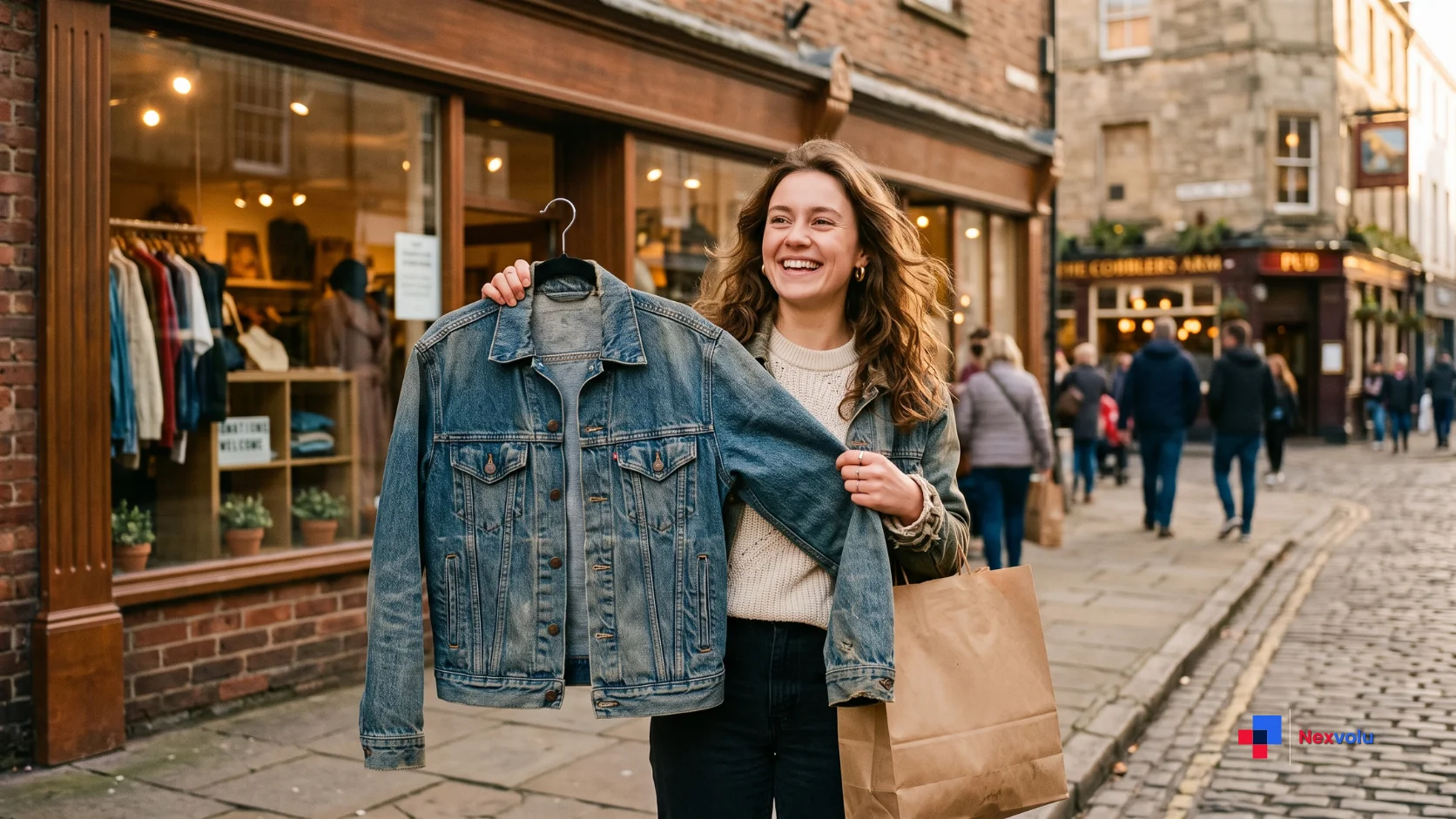
So what are you hunting first: the perfect denim jacket, cashmere for coffee money, or something nobody else will ever own? Tell us in the comments.
REFERENCES
- ThredUp 2026 Resale Report (market data by GlobalData): https://cf-assets-tup.thredup.com/resale_report/2026/ThredUp_Resale_Report_2026.pdf
- OfferUp 2025 Recommerce Report coverage (Just Style, incl. Todd Dunlap quote): https://www.just-style.com/news/second-hand-us-genz-resale
- The Spruce – expert quotes from Kaitlyn McAlpine and Chelsey Brown (verified verbatim): https://www.thespruce.com/thrifting-tips-for-beginners-8673840