

LinkedIn AI Slop Button Explained: New Rules for Marketers
The LinkedIn AI slop button arrived on July 30, 2026, and it marks something platforms almost never do. LinkedIn admitted its own AI feature made the feed worse, deleted it, and handed every member a report option that says what we were all thinking: “Seems like AI slop.”
If you post weekly, the LinkedIn AI slop button isn’t a novelty. Instead, it’s a policy document disguised as a menu item. LinkedIn has now spelled out, in plain language, what it will demote: automated comments, posting at scale, and generic AI-generated content with no real perspective. And it gave over a billion members a way to vote against anything that smells synthetic.
But here’s what most coverage missed. The news stories stop at “LinkedIn added a button.” Yet almost nobody has translated the update into working rules for the people with the most to lose: B2B content teams, founders who post weekly, and the ghostwriting agencies running dozens of executive accounts. So this guide does exactly that. In short, you’ll get the verified numbers behind the crackdown, a plain-English decode of what gets demoted, and a do and don’t playbook you can apply to your very next post.
LinkedIn AI Slop Button: The Quick Answer
Quick Answer: The LinkedIn AI slop button is a reporting option, rolled out on July 30, 2026, that lets members flag posts and comments that look like low-quality, AI-generated content. Those reports then train LinkedIn’s new detection classifiers, which reduce how much slop appears in suggested content. LinkedIn also removed its “enhance your post” AI writing tool and replaced it with a proofreader that keeps your voice.
TL;DR
- LinkedIn added a “Seems like AI slop” report option on July 30, 2026.
- Member flags train classifiers that demote low-quality AI posts in suggested feeds.
- The “enhance your post” AI tool is gone, replaced by a voice-keeping proofreader.
- Pangram research found 41% of longform LinkedIn posts are fully AI-generated.
- AI use is still allowed; generic, unedited AI content loses reach.
Table of Contents
- What Is the LinkedIn AI Slop Button?
- Why Did LinkedIn Kill Its Own AI Writing Tool?
- How Bad Is LinkedIn’s AI Slop Problem? The Numbers
- What Will LinkedIn Actually Demote Now? The 5 Signals
- The New Rules of Posting on LinkedIn: A Do and Don’t Playbook
- Will the AI Slop Button Flag Your Posts?
- Nexvolu’s Verdict
- Frequently Asked Questions
What Is the LinkedIn AI Slop Button?
The “Seems like AI slop” button is a reporting option inside the three-dot menu on LinkedIn posts and comments. Basically, selecting it tells LinkedIn the content looks low-quality or over-reliant on AI, and that signal feeds the platform’s slop-detection models. Still, it doesn’t delete the post, and it doesn’t notify the author.
The rollout landed during the week of July 27, and LinkedIn’s chief product officer Hari Srinivasan confirmed it on July 30. In fact, his framing was unusually blunt for a platform executive. “AI slop is a top priority for all of us. We really care about this. People come to LinkedIn to connect with real people and share their real perspectives, ideas and expertise,” Srinivasan wrote in his announcement post (outbound: open in new tab).
Why ask users at all? Because the target keeps moving. “Slop is hard to define and the definition changes; this lets us tune our models and make better feeds,” Srinivasan explained. In other words, your flags become training data. Each tap then teaches the classifier what professionals consider hollow, fake, or machine-made.
What Counts as AI Slop on LinkedIn
You already know slop when you see it. For example, the recycled listicle with a rocket emoji. The “I’m humbled to announce” essay that says nothing. Likewise, the suspiciously instant “Great insight, thanks for sharing!” comments. If you want to sharpen that instinct, our guide on how to spot AI-generated content breaks down the exact tells, and they map closely to what this button was built to catch.
Why Did LinkedIn Kill Its Own AI Writing Tool?
Because the tool was feeding the problem. Specifically, LinkedIn removed its “enhance your post” feature, which rewrote member drafts with AI, and replaced it with a tool that proofreads posts without changing the writer’s voice. A platform deleting a shipped AI feature is genuinely rare, and it amounts to a public admission that machine-polished posts made the feed feel identical.
Think about what that reversal cost. After all, LinkedIn spent the last three years wiring generative AI into everything: profile writing, recruiter messages, post composition. The “enhance” button existed to lower the barrier to posting. It worked, of course. And that was the problem. When everyone’s rough draft gets sanded by the same model, everyone sounds like the same person.
More Than a Proofreader Swap
The July package goes beyond the writing tool. LinkedIn is also expanding profile and page verification so readers can confirm a human is behind the byline, and it’s testing alerts that privately warn you when a post sounds “inauthentic” before your audience sees it. Rather than an insult, treat that nudge as a free pre-flight check.
Earlier, there was a warning shot, too. Back in May 2026, LinkedIn editorial VP Laura Lorenzetti announced the platform would limit the reach of generic AI-generated content rather than remove it. July’s update is therefore the escalation: same policy, sharper teeth, plus a crowdsourced detector.
Meanwhile, LinkedIn isn’t alone in walking things back. Meta pulled an Instagram AI feature after user backlash this year, and the pattern is spreading across the industry.
Similarly, trust blowups keep proving the point. OpenAI’s influencer trip backlash showed how fast professional audiences punish anything that feels manufactured.
How Bad Is LinkedIn’s AI Slop Problem? The Numbers
Bad enough that LinkedIn stopped pretending otherwise. In fact, the LinkedIn AI slop button exists because independent detection data suggests roughly two in five longform LinkedIn posts are now fully machine-written, and because LinkedIn’s own defenses are blocking synthetic activity at a scale most marketers haven’t grasped.
The clearest external evidence comes from Pangram, an AI-detection company (outbound: open in new tab) whose opt-in Chrome extension scans the posts its users actually see while browsing. That method matters: it measures the feed humans experience, not some obscure corner of the internet.
404 Media first reported the findings, and they’re stark.
Inside the Pangram Numbers
What the Study Found: Pangram analyzed 1,002,627 social media posts its users encountered between late April and mid-2026 across LinkedIn, X, Reddit, Medium, and Substack. LinkedIn was the most AI-saturated major platform in the dataset by a wide margin.
Key Statistics: 41% of longform LinkedIn posts (over 250 words) were flagged as fully AI-generated (Pangram, 2026). LinkedIn supplied roughly one-third of scanned posts but 62% of all AI-flagged content. X came in at 25% fully AI-written. LinkedIn itself says it catches hundreds of thousands of automated comment attempts every day and has “blocked billions of other automation attempts (posting at scale, slop) in the last couple months alone” (Hari Srinivasan, LinkedIn, July 2026).
Why It Matters: Nearly half the longform content competing with your posts is machine-written. As a result, specific, first-hand writing becomes a visibility advantage, not just a style preference.
Pangram’s CEO Max Spero didn’t sugarcoat it either, calling AI-generated content “a tax on readers’ time” and describing the numbers as a lower bound.
Zoom out and this is one front in a bigger war. By several measures, bots outnumber humans online already, and every major feed is fighting the same tide.
At the same time, advertisers feel it in their budgets. We covered how bot traffic quietly wastes ad spend in our breakdown of the $63B leak, and LinkedIn’s automation numbers fit the same pattern.
The arms race isn’t slowing down. Across the industry, AI security bugs are outpacing patches, so expect detection and evasion to keep leapfrogging each other.
What Will LinkedIn Actually Demote Now? The 5 Signals
LinkedIn will demote content that its new classifiers, informed by member flags, score as AI slop or generally low quality, and that demotion hits hardest in suggested content shown beyond your own followers. Srinivasan was specific: “We are ramping up a series of new and improved classifiers that identify if a post is AI-slop or generally low-quality content. This will reduce the amount of AI slop you might see in suggested content and content from outside your network.”
Read that twice, because it contains the whole enforcement model. Here’s our decode of the five signals now working against you:
| Signal | What it looks like | Enforcement |
|---|---|---|
| 1. Member flags | Readers tap “Seems like AI slop” on your post or comment | Trains classifiers; flagged post hidden from that reader’s feed |
| 2. Classifier scores | Generic phrasing, template structure, zero specifics | Reduced distribution in suggested content |
| 3. Automated comments | Instant, generic “Great post!” replies at scale | Blocked; hundreds of thousands caught daily |
| 4. Posting at scale | Bulk automation across accounts | Blocked outright; billions of attempts stopped |
| 5. Inauthenticity signals | Post “sounds” unlike a human wrote it | Private warning to the author (in testing) |
Three Fine-Print Details in the LinkedIn AI Slop Button Rollout
Three details deserve extra attention.
The flag is private and personal. When someone flags your post, it disappears from their feed, not from LinkedIn. You won’t be notified, and one flag won’t tank you. Patterns of flags across many readers are what feed the models.
Suggested reach is the battleground. The demotion targets suggested content and posts shown outside your network. That’s exactly where B2B growth comes from in 2026, since follower-only reach has been shrinking for two years. Losing suggested distribution quietly halves your funnel without a single notification.
“Low quality” rides along with “AI slop.” The classifiers target generally low-quality content too. Human-written slop, the engagement-bait polls and recycled platitudes, is in the same crosshairs. This isn’t an anti-AI purge; it’s a quality gate. If you’re fuzzy on the distinction between the tools and the technology behind all this, our primer on machine learning vs artificial intelligence covers it in plain English.
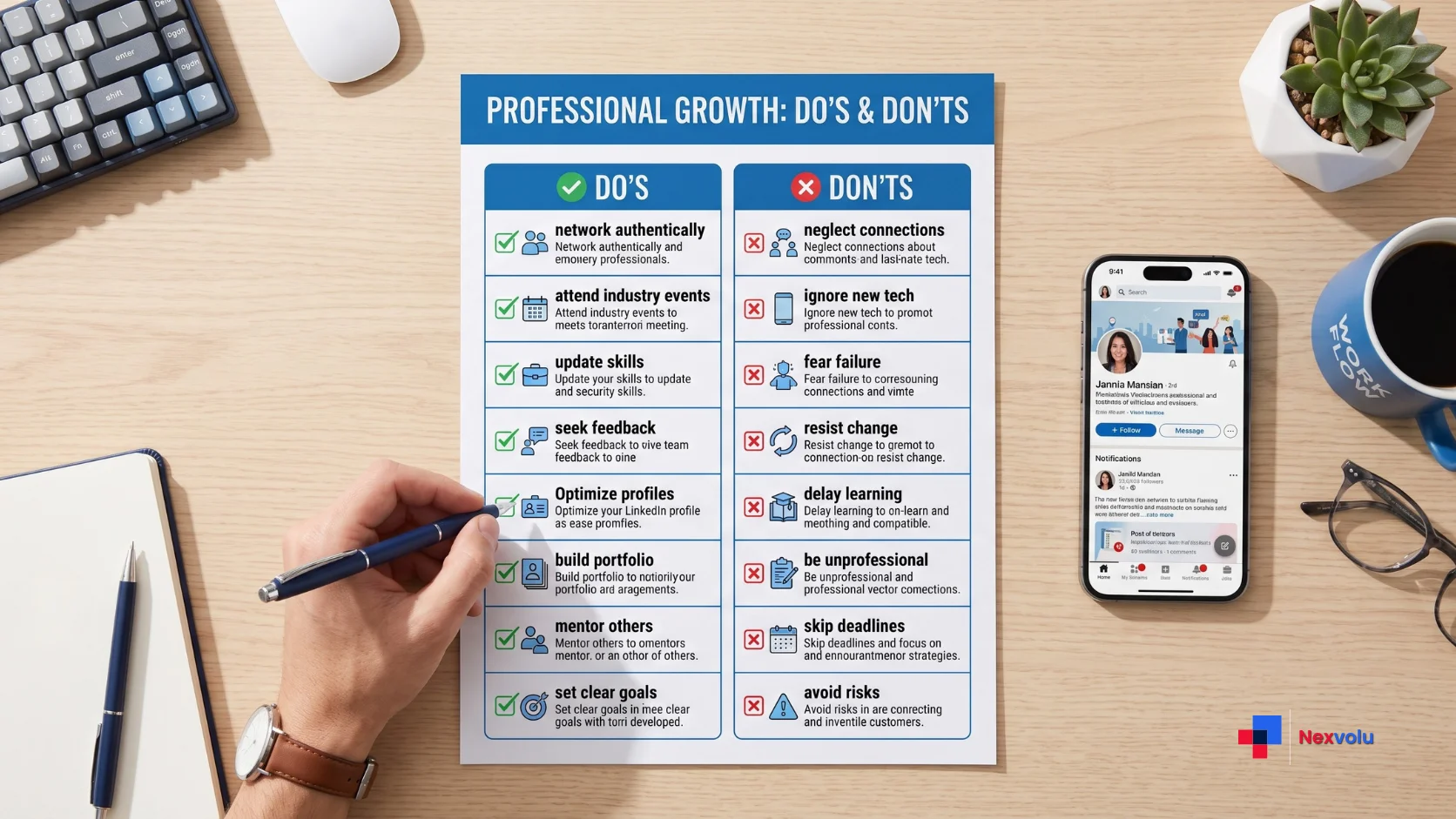
The New Rules of Posting on LinkedIn: A Do and Don’t Playbook
The safest strategy after this update is simple to state and hard to fake: use AI to sharpen your thinking, never to replace your voice. LinkedIn’s own help documentation says AI “is best used to augment your expression,” and every enforcement signal above points the same direction. Here’s the working playbook.
Do These Things After the LinkedIn AI Slop Button Update:
- Lead with something only you know. A client result, a screenshot of your own dashboard, a mistake that cost you money. Classifiers can imitate opinions; they can’t imitate receipts.
- Keep using AI as an editor. Draft messy, then let AI tighten grammar and trim filler. That mirrors exactly what LinkedIn’s new proofreader does, which tells you where the approved line sits.
- Write comments like a colleague, not a bot. Reference a specific line from the post. Disagree with something. Two specific sentences beat ten generic ones.
- Run the 60-second Slop Risk Audit before posting. Ask three questions: Could a competitor have posted this word for word? Does it contain one verifiable specific (number, name, date, screenshot)? Would you say this sentence out loud to a client? Two or more wrong answers means rewrite it.
- Get verified. LinkedIn is expanding profile verification alongside the crackdown. A verified human byline is cheap insurance when readers are primed to distrust.
Don’t Do These Things:
- Don’t publish raw model output. That’s the exact category the button exists to catch, and with 41% of longform posts already fully AI-written, readers’ pattern recognition is sharp.
- Don’t automate comments or engagement pods. This is the most explicitly enforced behavior on the list. LinkedIn blocks hundreds of thousands of automated comment attempts per day.
- Don’t run one template across 30 executive accounts. Scaled sameness looks like posting at scale to a classifier, even when each account technically has a human approver.
- Don’t chase volume over specificity. Five posts a week of nothing lose to one post a week of substance under a quality-scored feed.
- Don’t panic-delete AI-assisted history. LinkedIn’s policy targets generic unedited output, not AI assistance. Edited, specific, first-person posts aren’t the target.
Will the AI Slop Button Flag Your Posts? What B2B Teams and Ghostwriters Should Expect
If your content contains real perspective and verifiable specifics, the honest answer is: the LinkedIn AI slop button probably won’t touch you, and even if a few readers flag you, isolated flags won’t sink your account. Instead, the people who should worry are running volume playbooks built for the 2024 algorithm, and they tend to know exactly who they are.
Here’s our read on exposure by team type, based on what LinkedIn has said it enforces:
| Who you are | Risk level | The one change to make now |
|---|---|---|
| Founder writing your own posts with AI edits | Low | Add one verifiable specific per post |
| B2B content team, human-led with AI drafts | Medium | Kill shared templates; assign one voice per account |
| Ghostwriting agency running 10+ exec accounts | High | Interview clients for raw material; stop bulk scheduling identical structures |
| Anyone using auto-comment or pod tools | Severe | Stop today; this is blocked, not just demoted |
The Skeptic’s Case Against the LinkedIn AI Slop Button
A fair caveat: detection isn’t perfect, and skeptics have a point. Creator Richard van der Blom reported that one platform’s AI detector misjudged his writing 6 times out of 10 in his own testing, and marketers have raised the brigading question: what stops competitors from mass-flagging your posts? LinkedIn’s answer, implicitly, is that flags tune models rather than trigger automatic takedowns, so coordinated flagging can’t directly delete anyone. Still, expect false positives while the classifiers learn, and expect louder debates about what “slop” even means.
In addition, the workplace angle matters here. Most companies still haven’t written rules for this, and employees are guessing. We broke down the unwritten policies in Can I Use AI at Work? The Rules Nobody Explains, and LinkedIn just handed compliance teams a new reason to formalize them.
One more strategic note for B2B teams: distribution tactics that don’t depend on solo feed posts just got more valuable. Formats like the ones in our LinkedIn collaborative posts guide pair human co-authorship with built-in reach, which is exactly the direction the algorithm now rewards.
Lastly, if AI answer engines are part of your funnel, watch your own data. Nexvolu’s walkthrough of the Search Console generative AI report shows how to see whether AI surfaces already cite you, because the same authenticity signals LinkedIn rewards tend to earn citations there too.

Nexvolu’s Verdict
This is the most marketer-relevant platform change of 2026 so far, and most teams will respond to it wrongly or not at all.
Strip away the headlines and the LinkedIn AI slop button update did three things: it deleted an AI feature that made feeds worse, it recruited a billion members as slop detectors, and it told you in writing what loses reach. Platforms almost never publish their demotion criteria. LinkedIn effectively just did.
Our take: the button itself is the least important part. The classifier ramp-up behind it is what changes your numbers, because suggested reach, the growth channel every B2B team quietly depends on, now runs through a quality gate trained on human annoyance. As a result, teams that keep publishing template content will watch impressions sag and blame the algorithm. Teams that shift to specific, first-person content backed by AI editing will inherit the reach the slop loses. That’s the trade happening over the next two quarters, and it’s zero-sum.
We’d also bet this spreads. Once one platform proves users will happily label slop for free, every feed with a quality problem has a playbook to copy.
Nexvolu Score: 8/10 – a rare, genuinely pro-user platform reversal with clear rules for marketers; a point off for unproven classifier accuracy, and another for the false-positive risk human writers now carry.
Frequently Asked Questions
What is the LinkedIn AI slop button?
It’s a reporting option called “Seems like AI slop” in the three-dot menu on LinkedIn posts and comments, rolled out on July 30, 2026. Flagging a post hides it from your feed and sends a signal that trains LinkedIn’s slop-detection classifiers. It doesn’t delete the post or notify the author. LinkedIn’s chief product officer Hari Srinivasan framed it as a way to let members define slop, since “slop is hard to define and the definition changes.” Every flag becomes training data, which means the professional community, not a fixed rulebook, decides what counts as low-quality AI content. The flag sits alongside existing report options, takes two taps, and works on both posts and comments across desktop and mobile.
Will LinkedIn penalize AI-generated content?
LinkedIn will reduce the reach of generic, low-quality AI content, especially in suggested feeds, but it won’t punish thoughtful AI-assisted writing. The new classifiers demote posts scored as “AI-slop or generally low-quality content,” which cuts their distribution beyond your followers. In other words, that’s a reach penalty, not an account ban. LinkedIn’s own guidance says you’re responsible for anything you post, recommends reviewing and editing AI output, and describes AI as best used to “augment your expression.” So the practical line is clear: AI as your editor is fine, AI as your ghostwriter with zero human perspective is what loses distribution. Automated behavior is treated far more harshly; bulk posting and auto-comments get blocked outright, not just demoted.
Does flagging a post as AI slop delete it or notify the author?
No on both counts. Flagging a post as AI slop hides it from your own feed and quietly feeds LinkedIn’s detection models. The author never gets a notification, and the post stays live for everyone else. Reporting outlets confirmed the flag works privately, which was a deliberate design choice: it collects honest quality signals without triggering public shaming or retaliation. One flag also won’t wreck an author’s reach on its own. The models learn from patterns across many flags and many readers, so an occasional false flag from someone who just dislikes you carries little weight. If a post actually violates LinkedIn’s policies, the standard report options still exist alongside the slop flag.
Why did LinkedIn remove its “enhance your post” AI writing tool?
Because the tool contributed to the sameness problem LinkedIn is now fighting. “Enhance your post” rewrote member drafts with AI, and at feed scale that meant thousands of posts filtered through the same model started sounding identical. LinkedIn replaced it with a proofreader that fixes errors without changing your voice, which is a meaningful philosophical shift: the platform moved from “let AI write it for you” to “let AI clean up what you wrote.” A major platform deleting a shipped AI feature is rare, and it’s the strongest evidence in the whole announcement that LinkedIn believes distinct human voices, not polished output, are what keep members reading the feed.
How much LinkedIn content is actually AI-generated?
The best available estimate: 41% of longform LinkedIn posts (over 250 words) are fully AI-generated, according to AI-detection firm Pangram’s analysis of over a million posts its users encountered in 2026. LinkedIn made up roughly a third of the posts scanned but 62% of all AI-flagged content, making it the most AI-saturated major platform in the dataset. For comparison, X measured 25% fully AI-written. Meanwhile, LinkedIn hasn’t published its own percentage, but its enforcement numbers imply scale: hundreds of thousands of automated comment attempts caught daily and billions of automation attempts blocked in recent months. Pangram’s CEO called the figures a lower bound, since detection misses some machine-written text.
Can I still use ChatGPT or other AI tools to write LinkedIn posts?
Yes, and LinkedIn says so directly. Srinivasan acknowledged that many people use AI to refine their thoughts and that AI use isn’t inherently bad. LinkedIn’s help documentation allows AI-assisted content as long as you review it, edit it, and take responsibility for accuracy; it even recommends disclosing when a post leans heavily on AI. Instead, what changed is the risk profile of lazy usage. Unedited model output, template hooks, and generic insight-shaped filler are what the classifiers and the flag target. A safe workflow looks like this: draft your raw idea with real specifics, use AI to tighten and reorganize it, then reread every line and cut anything you wouldn’t say out loud. That final human pass is your protection.
What’s the difference between AI slop and AI-assisted content?
AI slop is content where the machine did the thinking: generic advice, recycled hooks, zero verifiable specifics, and no trace of lived experience. By contrast, AI-assisted content is where you did the thinking and the machine did the polishing: your client story, your numbers, your opinion, with AI fixing grammar and trimming filler. LinkedIn’s product choices draw exactly this line. It deleted the tool that rewrote your drafts and shipped one that proofreads without changing your voice. The 60-second test from our playbook applies here: if a competitor could have posted your content word for word, it’s slop regardless of who or what wrote it. If it could only have come from you, it’s safe regardless of how much AI touched it.
Can competitors mass-flag my posts to hurt my reach?
Not directly, based on how the system works. Flags don’t trigger automatic takedowns or instant demotions; they train LinkedIn’s classifiers, and a flagged post is only hidden from the feed of the person who flagged it. That design blunts brigading, since a coordinated flag campaign can’t delete your content or notify anyone. Marketers have still raised the concern publicly, and it’s fair to expect some noise while the system matures. The realistic risk isn’t sabotage; it’s that your content genuinely patterns like slop and accumulates honest flags from uncoordinated readers. If your posts carry real perspective and specifics, a rival’s flag campaign feeds the model contradictory data against everyone else’s behavior, which limits its impact.
How do I know if my post will be flagged as AI slop?
Run it through the three-question Slop Risk Audit before publishing. One: could a competitor have posted this word for word? Two: does it contain at least one verifiable specific, like a number, name, date, or screenshot? Three: would you say these sentences out loud to a client without cringing? Two or more wrong answers means rewrite before posting. Also watch for the tells readers now recognize instantly: rocket emojis, “Here’s what nobody tells you” hooks, perfectly parallel three-part lists, and conclusions that summarize instead of arguing. LinkedIn is also testing a private warning that tells you when a post sounds inauthentic before your audience reacts, so if you receive one, treat it as a free rewrite signal, not an accusation.
What should B2B content teams and ghostwriting agencies change first?
Kill shared templates before anything else. Scaled sameness is the most detectable pattern in this update: one post structure pushed across ten executive accounts looks like posting at scale to a classifier, even with human approvers in the loop. For example, agencies should shift billable hours from writing to interviewing, because twenty minutes of client conversation produces the specific stories and numbers that no model can invent. B2B teams should assign one distinct voice per account and stop bulk-scheduling identical hooks. Second priority: audit any tools in your stack that auto-comment or auto-engage, since that behavior is blocked outright, not just demoted. Third: get executive profiles verified, because verification is expanding as the trust layer beneath all of this.
Does the slop crackdown affect company pages and ads?
The announced enforcement targets feed content: posts and comments, with demotion concentrated in suggested content and posts shown outside your network. LinkedIn hasn’t announced slop scoring for paid ads, which run through separate review systems. Company pages aren’t exempt from feed dynamics, though: page posts compete in the same suggested feed, and verification is expanding to pages as well as profiles, which signals LinkedIn wants accountable identity behind organizational content too. Meanwhile, the indirect ad effect is worth watching: if organic feeds get cleaner and members trust them more, engaged attention should rise, which historically improves ad performance. Treat your page content by the same playbook rules as personal posts and you’re covered either way.
Will other platforms copy the AI slop button?
Expect it. LinkedIn just demonstrated that users will happily label slop for free, and crowdsourced labels are exactly the training data every platform’s quality classifiers need. Meta has already reversed course on an AI feature after backlash this year, Pinterest added AI content labels and “see fewer” controls, and YouTube tightened monetization rules for mass-produced content. The strategic takeaway for marketers is bigger than one button: authenticity signals are becoming ranking signals across every feed simultaneously. Teams that rebuild their content operation around first-person specificity once will be positioned for every platform’s version of this crackdown, while teams that optimize for one platform’s loopholes will keep getting caught by the next update.
Key Takeaways
- The LinkedIn AI slop button trains classifiers; patterns of flags, not single reports, cost you reach.
- Suggested content is where demotion bites, and it’s where B2B growth lives.
- AI editing is safe; unedited AI writing and any automation are the targets.
- One specific, first-person post beats five generic ones under a quality-scored feed.
LinkedIn just did something almost unheard of: it told a billion members exactly what kind of content it plans to bury, then handed them the shovel. The marketers who read that as a threat will keep fighting the classifier. The ones who read it as a brief will spend the next quarter collecting the reach everyone else loses. Your next post is the first test of the LinkedIn AI slop button era, so here’s the only question that matters: could anyone else have written it?
REFERENCES
- Hari Srinivasan’s: announcement post (LinkedIn, Jul 30, 2026)
- TechCrunch: LinkedIn adds a button to report AI-generated slop
- Fortune: LinkedIn’s “seems like AI slop” button and billions of blocked automation attempts
- Pangram: AI in Your Feed study
- 404 Media: LinkedIn and X are flooded with AI spam, browsing data suggests
- The Independent: LinkedIn’s AI slop button
- Social Media Today: LinkedIn wants to limit the reach of AI-generated content (May 2026)
- LinkedIn Help: Best practices for content created with the help of AI