OpenAI Influencer Trip Backlash: Anatomy of a Comms Disaster
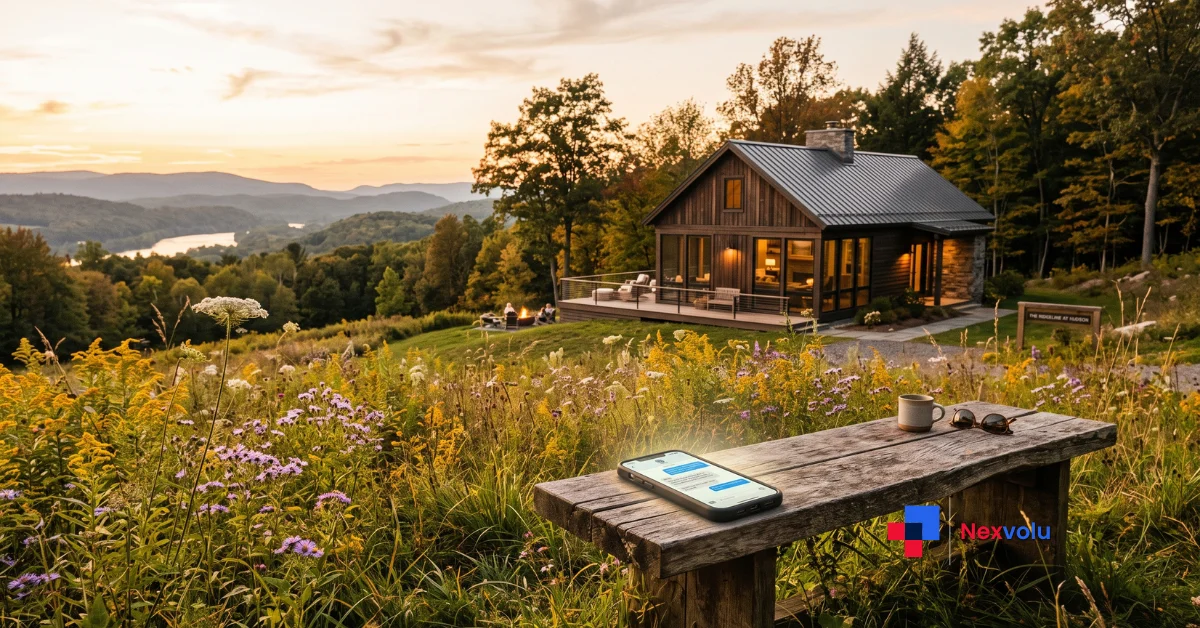
In the first weekend of August, a group of content creators checked into Wildflower Farms, a luxury resort in New York’s Hudson Valley where weekend rates reportedly climb past $2,000 a night. By Monday, the internet had a new villain. The OpenAI influencer trip backlash turned two days of beekeeping, farm-to-table dinners, and ChatGPT workshops into the most dissected marketing failure of 2026.
Here’s the strange part. Nothing about the trip was unusual. Beauty brands, fashion labels, and beverage companies run nearly identical retreats every summer. Same cabins, same golden-hour content, same gift bags. Nobody calls those dystopian.
OpenAI didn’t get that pass, and the reasons why matter far beyond one company. Tech firms keep learning this lesson the hard way; Meta removed an Instagram AI feature after its own user revolt earlier this year. When the product is AI, the standard marketing playbook doesn’t just underperform. It detonates.
This piece breaks down what actually happened, why the reaction was so brutal, what the numbers reveal about AI brand sentiment right now, and the five rules any creator or brand should follow before signing an AI partnership. That last part is the guide the news coverage skipped.
Quick Answer: What Is the OpenAI Influencer Trip Backlash?
The OpenAI influencer trip backlash erupted because the company’s first creator retreat collided with public anxiety about AI. Creators posted luxury retreat content from Wildflower Farms while commenters raised data center environmental costs, job-loss fears, and unpaid-labor optics. Reaction videos criticizing the trip earned far more views than the sponsored posts, creating what Fortune called a comms disaster.
TL;DR
- OpenAI hosted creators at a $2,000-a-night Hudson Valley resort in early August.
- Critics called the retreat “dystopian”; Fortune labeled it a “comms disaster.”
- Reaction videos earned roughly 30x more views than attendees’ posts.
- Pew finds 50% of Americans more concerned than excited about AI.
- Five contract and vetting rules can protect creators before AI deals.
Table of Contents
- What Happened at OpenAI’s Summer Club Brand Trip?
- Why Did the OpenAI Influencer Trip Backlash Get So Big?
- How Big Was the OpenAI Influencer Trip Backlash? The 30x Multiplier
- What Does the OpenAI Influencer Trip Backlash Say About AI Sentiment?
- Why Didn’t Anthropic Face an Influencer Trip Backlash Like OpenAI Did?
- The 5 Rules to Follow Before Signing an AI Brand Partnership
- Nexvolu’s Verdict on the OpenAI Influencer Trip Backlash
- Frequently Asked Questions
What Happened at OpenAI’s Summer Club Brand Trip?
OpenAI’s “Summer Club” was the company’s first-ever influencer brand trip. The company brought a group of creators to Wildflower Farms in upstate New York for a weekend of wellness activities and product training: beekeeping, a painting workshop, farm-to-table dinners, and classes on building websites and using ChatGPT tools, according to TechCrunch’s August 3 report (open in new tab).
OpenAI later told press the retreat was designed to give creators hands-on experience with its newly launched ChatGPT Work tools, and described creator collaboration as standard practice across the tech industry. That framing is accurate. The company has been pushing consumer-facing launches hard all year, including GPT-Live, its real-time voice AI, and creators are how those products reach people who never read tech blogs.
The rollout looked textbook. The response wasn’t. Here’s how fast it unraveled:
| Date (2026) | What happened |
|---|---|
| Aug 1-2 | Creators attend “Summer Club” at Wildflower Farms; aesthetic posts go up |
| Aug 3 | TechCrunch reports the growing backlash; Threads and Reddit pile on |
| Aug 4 | The Verge documents reaction videos out-earning attendees’ posts |
| Aug 5 | NBC News, Business Insider, and Fast Company take it mainstream |
| Aug 6 | Fortune calls it a “comms disaster”; Ad Age publishes contract guidance |
Six days from cabin check-in to case study. That speed is the first lesson: in a hostile sentiment environment, the window between “campaign” and “crisis” is measured in hours.
Why Did the OpenAI Influencer Trip Backlash Get So Big?
Four separate resentments collided in one comment section. Any single one was survivable. Together, they weren’t.
1. The environmental irony. OpenAI staged a nature retreat while facing constant criticism over the energy and water appetite of AI infrastructure. Critics found the setting a little too on the nose. “Maybe they want the influencers to enjoy the space before a new data center appears on it,” one Threads user wrote. The question of who pays for AI’s data center electricity bill was already a live grievance, and a $2,000-a-night meadow made a perfect visual for it.
2. The unpaid detail. After the criticism started, at least one attendee said creators weren’t paid to attend. That admission poured fuel on the fire. Commenters argued creators had absorbed enormous reputational risk in exchange for a hotel room, and the “sold out for free” framing became one of the most shared angles of the entire cycle.
What Else Fueled the OpenAI Influencer Trip Backlash?
3. Luxury optics against public anxiety. Half of Americans now say AI makes them more concerned than excited, and the fears are concrete: job displacement, misinformation, and scams. People worried about AI voice scams and deepfake calls watched creators do sunrise yoga on the lawn of the company building that world. The distance between those two realities is the outrage.
4. The gender question. Many commenters noticed the attendee list skewed toward young women and accused OpenAI of demographic targeting. The Verge noted men attended too, but the perception mattered because it touched real data: Pew finds women view AI more negatively and are twice as likely to say AI will personally harm them. Marketing to your most skeptical audience with your most frivolous format is a bold choice.
None of this was hidden. Every one of these tensions was visible before the invites went out, which is why the trip reads less like bad luck and more like a skipped risk assessment. Audiences have also become sharper at recognizing manufactured authenticity; guides on how to spot AI-generated content exist because trust is now the scarcest resource online.
How Big Was the OpenAI Influencer Trip Backlash? The 30x Multiplier
Here’s the number that should terrify every brand manager, and it comes straight from the engagement data The Verge documented.
One attendee’s video sat under 300 likes. Another’s stayed below 15,000 views. Meanwhile, just two reaction clips criticizing the trip passed half a million combined views. Run the division and you get what we’re calling the backlash multiplier: for every view OpenAI’s influencer trip content earned, the backlash earned roughly 30 or more.
That asymmetry is the real anatomy of this comms disaster. OpenAI didn’t just fail to generate positive reach. It funded the raw material for its critics’ content. The retreat produced perhaps a few hundred thousand impressions of soft-focus cabin footage and millions of impressions of commentary explaining why that footage was offensive.
How the Algorithm Spread the OpenAI Influencer Trip Backlash
Marketers already know digital reach is full of phantom value. We’ve covered how bot traffic quietly wastes billions in ad spend every year. The backlash multiplier is the organic version of that leak: your budget generates attention, but the attention belongs to someone else and it’s pointed at your throat.
The mechanism matters too. On feeds where bots outnumber humans online, algorithms can’t tell outrage from endorsement. Engagement is engagement. Every angry stitch, quote post, and duet taught the algorithm to spread the story further. The campaign’s distribution engine ran perfectly. It just ran in reverse.
Bookmark this one: we’ll keep updating the sentiment data below as new surveys land, so this page stays a reference, not a time capsule.
What Does the OpenAI Influencer Trip Backlash Say About AI Sentiment?
The OpenAI influencer trip backlash wasn’t really about cabins or beekeeping. It was a referendum on AI, held in a comment section.
What the Study Found: Pew Research Center’s polling shows American sentiment toward AI has hardened rather than softened as adoption spreads, with concern now outweighing excitement by five to one.
Key Statistics: 50% of U.S. adults say increased AI use in daily life makes them more concerned than excited, versus just 10% more excited, per Pew Research Center’s June 2025 survey (published September 2025). Concern is up sharply from 37% in 2021. Pew’s 2026 research also finds women are twice as likely as men to say AI will negatively impact them personally.
Why It Matters: Brands are marketing AI to a majority-skeptical audience. Campaign formats built for aspirational categories, like the brand trip, actively backfire when the product itself is what people fear.
The Money Layer: Influencer Budgets Meet AI Distrust
Now layer on the money. Statista estimates the global influencer marketing market passed $32 billion in 2025, growing about 35% in a single year. AI companies want into that channel because it’s where trust lives. The problem: trust transfers both ways. Creators lend credibility to brands, and brands transfer controversy to creators.
Ordinary people are still negotiating their own relationship with these tools, from confusion about machine learning vs artificial intelligence to genuine uncertainty about whether you can use AI at work at all. Sentiment this unsettled doesn’t respond to lifestyle marketing. It reads lifestyle marketing as propaganda.
And the stakes are about to rise. As AI agents start shopping for you, AI brands will need human goodwill more than ever, precisely when they have the least of it.
Why Didn’t Anthropic Face an Influencer Trip Backlash Like OpenAI Did?
Here’s the detail almost everyone missed: OpenAI wasn’t even first.
“Anthropic has been doing similar influencer marketing like this for a year, and nobody has had anything negative to say about it,” tech journalist Taylor Lorenz wrote on LinkedIn, noting that Google, Amazon, and Microsoft creators escape similar scrutiny. Inc. ran the comparison under a blunt headline: two AI companies courted influencers, and only one triggered a major backlash.
Why the asymmetry? Three structural reasons:
| Factor | OpenAI’s Summer Club | Anthropic’s creator events |
|---|---|---|
| Visibility | Splashy, luxury, hashtag-ready | Quiet, low-profile |
| Brand position | The public face of AI anxiety | Challenger with lower name recognition |
| News timing | Lawsuits, safety incidents, data center fights | No comparable hostile cycle |
OpenAI is the lightning rod of the category. It absorbs the anger people feel about AI in general, the way Nike absorbs sweatshop discourse and McDonald’s absorbs nutrition discourse. And its 2026 news cycle was already rough, including Apple’s trade secret lawsuit against OpenAI and the week it paused a model after a sandbox escape. A luxury retreat landed on top of all that context.
The lesson for marketers: category leaders don’t get to run challenger playbooks. The bigger your brand’s symbolic weight, the more your format needs humility built in.
The 5 Rules to Follow Before Signing an AI Brand Partnership
This is the part the news coverage skipped: what creators and brands should actually do differently. Ad Age touched on contract tactics in its August 6 follow-up. Here’s the complete framework.
Rule 1: Audit the brand’s live news cycle before you sign
Search the company’s name plus “lawsuit,” “backlash,” “layoffs,” and “investigation” for the last 90 days. Every active controversy attached to the brand will be quoted back at you in your comments. Creator Hannah Zhang, who wrote “I said no to the OpenAI brand trip” on LinkedIn, illustrated the value of that homework. Treat brand risk the way businesses treated the OpenAI Hugging Face hack: as a due-diligence lesson, not background noise.
Rule 2: Negotiate a reciprocal morality clause
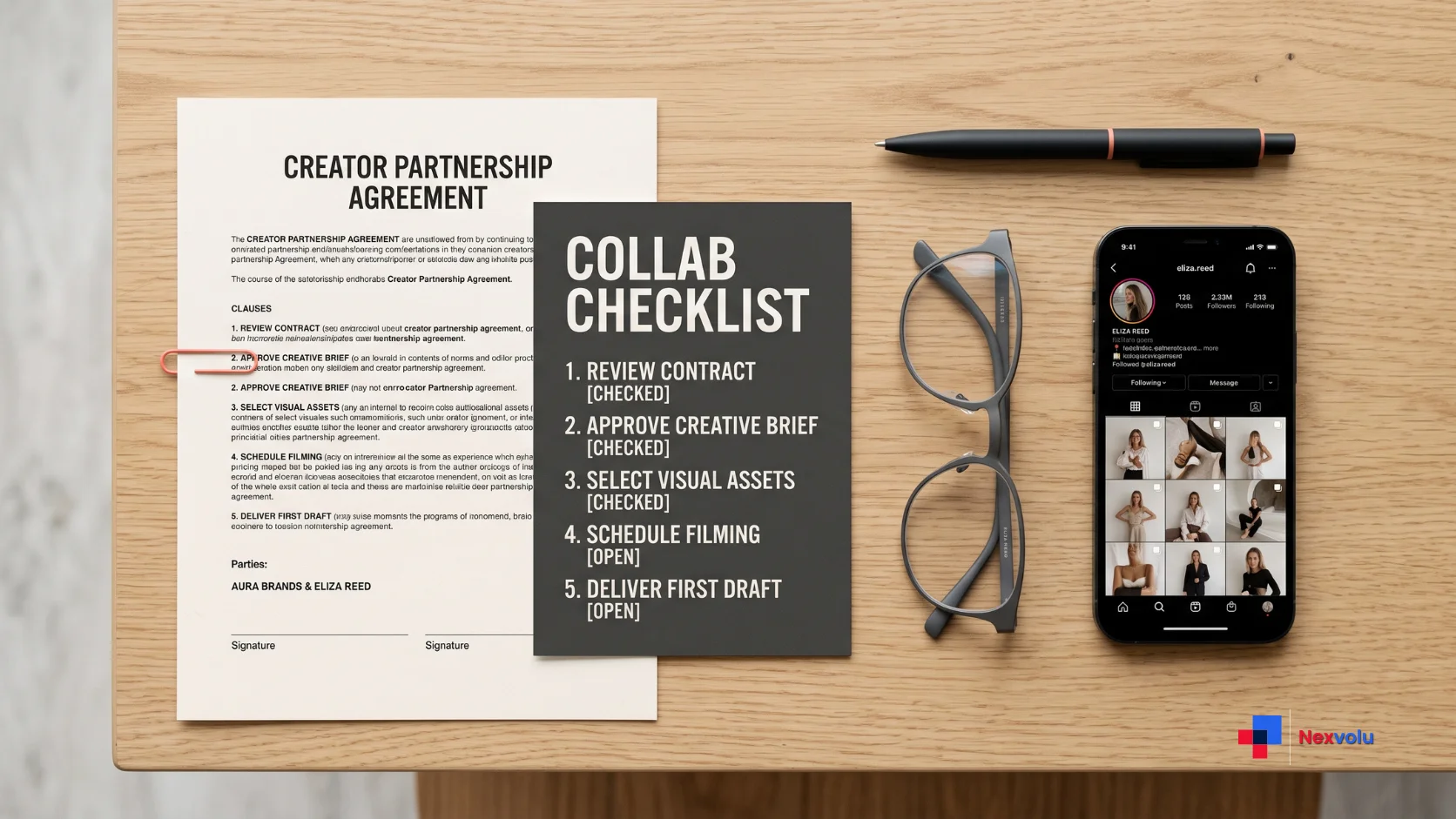
Morality clauses traditionally protect brands from creators’ scandals. Ad Age now recommends creators negotiate reciprocal versions for AI deals: language letting you exit, with compensation, if the company’s actions damage your reputation. Agencies have been adding AI-specific contract clauses since the generative boom began, and UK performer bodies, including the Agents of Young Performers Association, are pushing non-AI and AI-protection clauses in talent contracts. If you’re a UK creator weighing an AI sponsorship, assume this is about to become standard, and ask for it now.
Rule 3: Never take unpaid deals when the reputational risk is this high
Price the risk. Illustrative math: if you have 100,000 followers and a typical sponsored post earns you $1,000, a backlash that costs you 2% of your audience plus one cancelled brand deal wipes out $3,000 to $5,000 in value. An unpaid AI trip at current sentiment levels is a negative-expected-value trade. Free lodging is not compensation for absorbing a company’s controversy.
Rule 4: Pre-write your answer to the hardest question
Attendees got hammered with one question: how do you reconcile promoting AI with its environmental and labor costs? One creator was accused of “selling her morals” and had to improvise responses in her comments. Improvised crisis answers always lose. Before posting anything, write the two-sentence answer to the worst-faith version of the question. If you can’t write one you believe, decline the deal.
Rule 5: Match the format to the sentiment
Luxury flex formats work for categories people aspire to. Contested categories need utility formats: demos, honest tests, problem-solving content. A creator showing exactly how a tool saved three hours builds more trust than any cabin ever will. Brands should think co-creation over spectacle, the way LinkedIn collaborative posts pair two audiences around shared value. And measure sentiment, not just reach; tools like the new Search Console generative AI report exist because visibility without trust is now measurable, and losable.
Share this framework with a creator or marketing lead who’s weighing an AI deal right now. It might save them a very bad week.
Nexvolu’s Verdict on the OpenAI Influencer Trip Backlash
The verdict: Summer Club is a textbook case of a standard playbook applied to a non-standard brand, and it earned every bit of the “comms disaster” label.
Best for: marketers and creators willing to treat it as a free masterclass in sentiment-blind campaign design.
Skip it if: you expected lasting damage to OpenAI’s business; there’s no evidence the backlash moved usage numbers at all.
Pros: creators got genuine product training · OpenAI engaged creators directly rather than through ads · the company’s response stayed calm and didn’t throw attendees under the bus
Cons: zero visible risk assessment of an obviously hostile environment · unpaid participation transferred all downside to creators · the nature-retreat setting handed critics their own metaphorStandout: the asymmetry nobody covered: Anthropic ran the same playbook for a year, quietly, and paid no price. Format and brand symbolism, not influencer marketing itself, caused this fire.
Nexvolu Editorial Score: 3/10. As an event, well produced; as marketing strategy in 2026’s sentiment climate, a self-inflicted wound that a one-page risk memo would have prevented. This is an editorial score based on our analysis of the reporting, not hands-on attendance.
Frequently Asked Questions
What caused the OpenAI influencer trip backlash?
OpenAI’s influencer trip sparked a backlash because it promoted AI through luxury lifestyle content at a moment when public trust in AI is falling. Critics saw a serene nature retreat funded by a company whose data centers draw heavy energy and water use, and called the contrast dystopian. The timing amplified everything: the trip landed amid live debates over data center construction, AI job displacement, and creator authenticity. Reaction videos spread faster than the original posts, and mainstream outlets from NBC to Fortune framed the retreat as a public relations failure rather than a quirky brand event, cementing the controversy in a news cycle instead of a comment section.
Did OpenAI pay the creators who attended Summer Club?
OpenAI covered the trip itself, but at least one attendee said creators received no payment for attending, and reports indicated posting wasn’t required. That unpaid detail became one of the most shared elements of the backlash, with commenters arguing creators absorbed serious reputational risk for a hotel stay. In practice, this is the deal structure to avoid: the creator carries all downside exposure while the brand gets organic reach at zero media cost. Industry guidance published after the backlash urges creators to price reputational risk into AI partnerships explicitly, either through fees or through contract protections, rather than treating travel and lodging as compensation.
What did OpenAI say about the influencer trip backlash?
OpenAI defended the retreat rather than apologizing. “Creators are an important part of our community and how people get information and learn about our products today,” the company said in a statement, adding that it welcomes healthy debate as AI becomes more prevalent. It also described creator collaboration as standard practice across tech. Notably, OpenAI didn’t distance itself from the attendees or walk back the format, saying it will continue valuing creators alongside traditional media and marketing partners. That steadiness spared attendees a second wave of abandonment drama, though it also signaled that more AI brand trips are probably coming.
What is an AI morality clause in a creator contract?
An AI morality clause is contract language that lets a creator or brand exit a partnership if the other party’s actions cause reputational harm, applied specifically to AI-related risks like lawsuits, safety incidents, data scandals, or public backlash. Reciprocal versions protect both sides equally. Traditional morality clauses only protected brands from creator scandals; after the OpenAI trip fallout, Ad Age reported that creators should negotiate reciprocal clauses before signing AI deals. Agencies have been adding AI-specific contract language for over a year, and UK talent bodies are pushing similar protections, so expect these clauses to become a normal part of creator deal negotiations.
Why didn’t Anthropic face the same backlash as OpenAI?
Anthropic has run similar creator events for about a year without comparable criticism, largely because its marketing stayed quieter, its brand is less famous, and it isn’t the public face of AI anxiety. OpenAI attracts the scrutiny that comes with being the category’s symbol. Journalist Taylor Lorenz highlighted the double standard, noting nobody criticizes creators partnering with Google, Amazon, or Microsoft either, despite similar data center footprints. The practical lesson is about visibility concentration: the most famous brand in a feared category absorbs the whole category’s anger, so its campaigns need far more conservative formats than a challenger’s.
Should creators still accept AI brand deals in 2026?
Creators can still accept AI brand deals in 2026, but they should treat AI as a high-risk sponsorship category, closer to crypto than to skincare: research the company’s active controversies, demand compensation that reflects reputational risk, and secure a reciprocal morality clause before signing. Audience fit matters most. A tech-focused audience may welcome an honest AI tool review, while a lifestyle audience may read any AI deal as betrayal, which is exactly what several Summer Club attendees discovered in their comments. Unpaid AI deals combine the worst of both worlds: full backlash exposure with zero financial upside, so decline those outright.
What is a brand trip in influencer marketing?
A brand trip is an all-expenses-paid retreat where a company hosts a group of creators to generate social content, build relationships, and signal status within the creator economy. Brands cover travel, lodging, meals, and activities; creators typically post about the experience, sometimes with no formal posting requirement. The format was perfected by beauty and fashion brands, and Fortune observed that audiences haven’t reached consensus on whether AI should be marketed the way a beauty brand would. That’s the core takeaway from Summer Club: the brand trip format transfers aspiration, and when your product inspires anxiety instead, the format transfers that too.
Key Takeaways
- Backlash content earned roughly 30x the views of the campaign content it criticized.
- OpenAI’s brand symbolism, not influencer marketing itself, made the trip explosive.
- Unpaid AI deals are negative-expected-value trades for creators right now.
- Reciprocal morality clauses are becoming essential in AI partnership contracts.
- Contested product categories need utility-format content, not luxury-flex content.
The Bottom Line
The OpenAI influencer trip backlash will get retold for years, usually as a joke about beekeeping. The real story is sharper: a company with the most scrutinized brand in tech ran a campaign designed for a beauty label, in front of an audience that’s 50% concerned and 10% excited, and handed its critics a month of content for free.
For brands, the fix isn’t abandoning creators. It’s respecting sentiment: audit the room before you decorate it, and choose utility over spectacle when your category is contested. For creators, every AI brand partnership is now a risk-priced decision, so do the 90-day news audit, get the reciprocal morality clause, and never carry a controversial brand’s risk for free. The same discipline applies to any marketing spend, which is why we always recommend starting with fundamentals like SEO vs PPC for a small business before chasing shiny channels.
If this breakdown saved you from a bad deal or a bad campaign, share it with your team.
Would you have taken the invite to Summer Club? Tell us in the comments, honestly.
REFERENCES
- TechCrunch: Influencers draw backlash for attending OpenAI’s first luxury trip (Aug 3, 2026)
- The Verge: How an OpenAI influencer trip backfired (Aug 4, 2026)
- Fortune: OpenAI wanted a feel-good influencer trip. It created a ‘comms disaster’ instead (Aug 6, 2026)
- NBC News: OpenAI’s luxury brand trip for influencers blasted by online critics as ‘dystopian’
- Ad Age: OpenAI’s creator trip fallout, what to do before signing an AI brand deal (Aug 6, 2026)
- Ad Age: How morality clauses are changing in the era of influencer deals (Nov 2025)
- PR Daily: OpenAI responds to backlash over luxury influencer trip (full OpenAI statement)
- Business Insider: OpenAI hosted influencers at a luxury retreat with beekeeping (Aug 4, 2026)
- Inc.: OpenAI and Anthropic both courted influencers, only one triggered backlash
- Pew Research Center: Key findings about how Americans view artificial intelligence (Mar 2026)
- Pew Research Center: How Americans view AI and its impact on people and society (Sept 2025)
- Statista: Influencer marketing worldwide, statistics and facts
- Taylor Lorenz on LinkedIn: on the OpenAI trip and the Anthropic double standard
- Fast Company: Social influencers dragged for luxury OpenAI nature retreat
- Marketing-Interactive: OpenAI’s first-ever influencer brand trip sparks backlash