






Dodgers vs Cubs: Wrobleski’s 4-Homer Night Explained
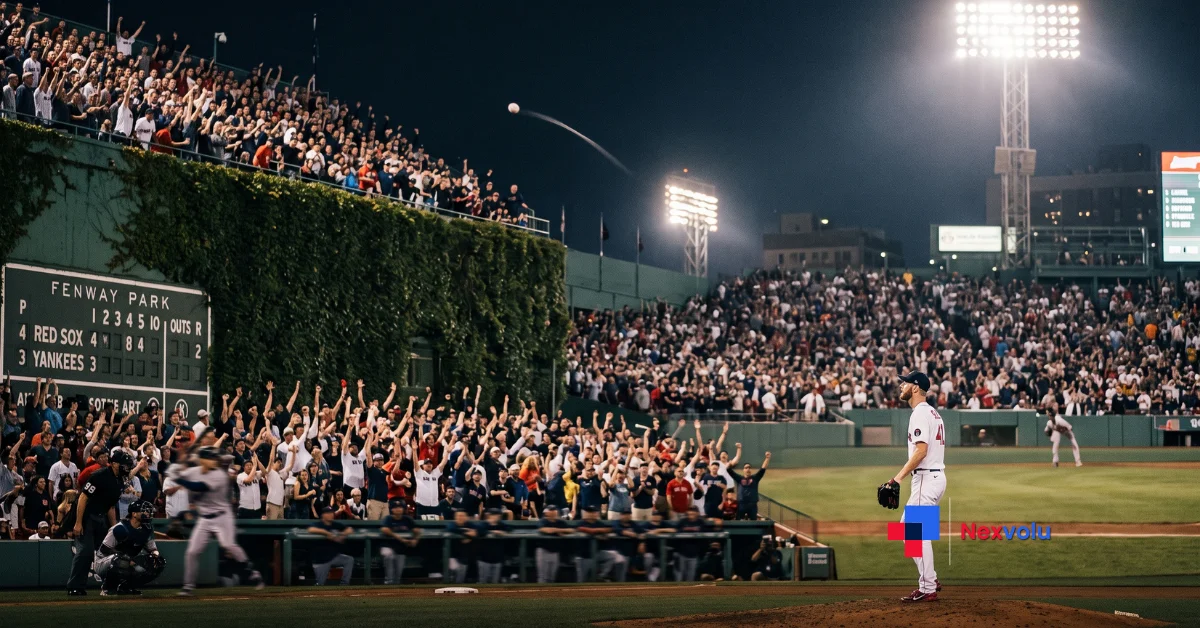
A three-run lead in the top of the first at Wrigley Field should feel like a head start. In the Dodgers vs Cubs opener on Monday night, however, it lasted about fifteen minutes.
The Dodgers vs Cubs series opener on August 3, 2026 turned into a 10-5 Chicago win, and the number that follows Justin Wrobleski out of it isn’t the final score. It’s four as in four home runs allowed, for the second start in a row.
That handed the left-hander a piece of franchise history no pitcher wants. He is the first pitcher in Dodgers history to allow four homers in multiple games in the same season, and he did it in back-to-back outings six days apart.
Here’s what most recaps of Dodgers vs Cubs skipped, though: singles never nickel-and-dimed him. Instead, every run he allowed left the ballpark. That’s a very specific kind of failure, and it clearly points somewhere more uncomfortable than “bad night at the office.”
So we reconstructed the scoring sequence inning by inning, ran the rate math on his last two starts, worked out roughly how many innings he’s carrying, and pulled apart what fans were searching for while the game was still going. The picture that comes out is not the one the box score hands you. If you’re following the division race, our wider 2026 MLB season coverage has the context around it.
Table of contents
- What happened in the Dodgers vs Cubs game at Wrigley Field
- Why Justin Wrobleski gave up four home runs again
- The Dodgers vs Cubs stat nobody is talking about
- Is the workload theory real? Let’s do the math
- Is pitch tipping actually the explanation?
- What Chicago’s four-homer night says about the Cubs
- What Dodgers vs Cubs search data reveals about fans
- Nexvolu’s Verdict
- Frequently asked questions
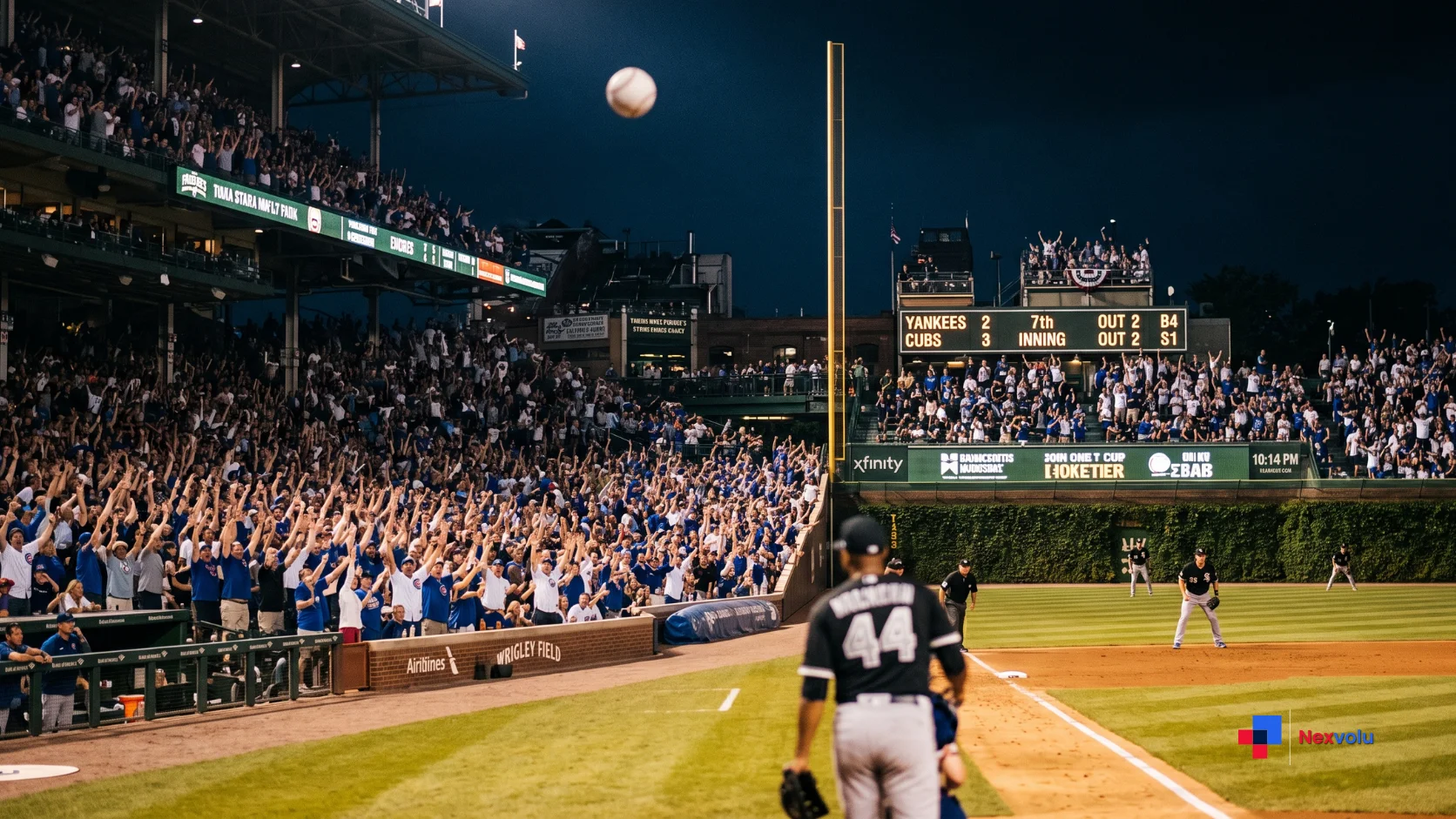
What happened in the Dodgers vs Cubs game at Wrigley Field?
The Chicago Cubs beat the Los Angeles Dodgers 10-5 at Wrigley Field on August 3, 2026. Dodgers starter Justin Wrobleski allowed four home runs and seven earned runs in 4⅓ innings. Tommy Edman homered early for Los Angeles, but Chicago answered with home runs from Seiya Suzuki, Kevin Alcántara, Carson Kelly and Michael Busch.
The swing happened fast. Shohei Ohtani and Andy Pages opened with back-to-back singles against Cubs left-hander Matthew Boyd, Edman drove a three-run shot to left, and Los Angeles had its 3-0 cushion before Chicago had come to bat. Boyd then settled in and retired the next three on fly balls including a loud boo-shower for Kyle Tucker, who flied out to right on his first return to a park he left in free agency.
From there it was all Cubs. Here’s the full scoring sequence:
| Inning | Team | What happened | Score |
|---|---|---|---|
| 1st | LAD | Tommy Edman 3-run homer off Matthew Boyd | 3-0 LAD |
| 1st | CHC | Seiya Suzuki 2-run homer on a 94.6 mph fastball | 3-2 LAD |
| 2nd | CHC | Kevin Alcántara 2-run homer, Cubs take the lead | 4-3 CHC |
| 3rd | CHC | Carson Kelly 2-run homer on a hung slider | 6-3 CHC |
| 4th | LAD | One-run rally | 6-4 CHC |
| 5th | CHC | Michael Busch solo homer on a sinker; Wrobleski pulled | 7-4 CHC |
| 6th | LAD | Teoscar Hernández solo homer onto Waveland Ave. | 7-5 CHC |
| 6th | CHC | Three-run rally off Edgardo Henriquez and Tanner Scott | 10-5 CHC |
Four of Chicago’s five scoring events were home runs. The Cubs’ four-homer highlight reel runs barely two minutes, which tells you how compressed the damage was.
Why did Justin Wrobleski give up four home runs again?
Because the mistakes were in the middle of the plate, and Chicago was ready for all of them.
The Suzuki homer is the defensible one. Wrobleski climbed the ladder with a 94.6 mph fastball in a 1-1 count his best weapon all year and Suzuki simply squared it up into the left-field bleachers. Wrobleski said afterwards he wasn’t “super upset” with that execution.
The other three are harder to explain away. He missed down the middle with a two-strike fastball and Alcántara, hitting ninth, clobbered it for the go-ahead blast. He hung a slider in the heart of the zone to cleanup hitter Carson Kelly. Then he challenged former Dodgers prospect Michael Busch with a sinker in the zone normally his soft-contact pitch and Busch barreled that one too. That was his last pitch of the night.
What should worry Los Angeles is the spread. The homers came from the two-hole, the nine-hole, the cleanup spot and a left-handed hitter facing a left-handed pitcher. So this wasn’t one hot slugger. Rather, it was an entire lineup that looked like it knew what was coming.
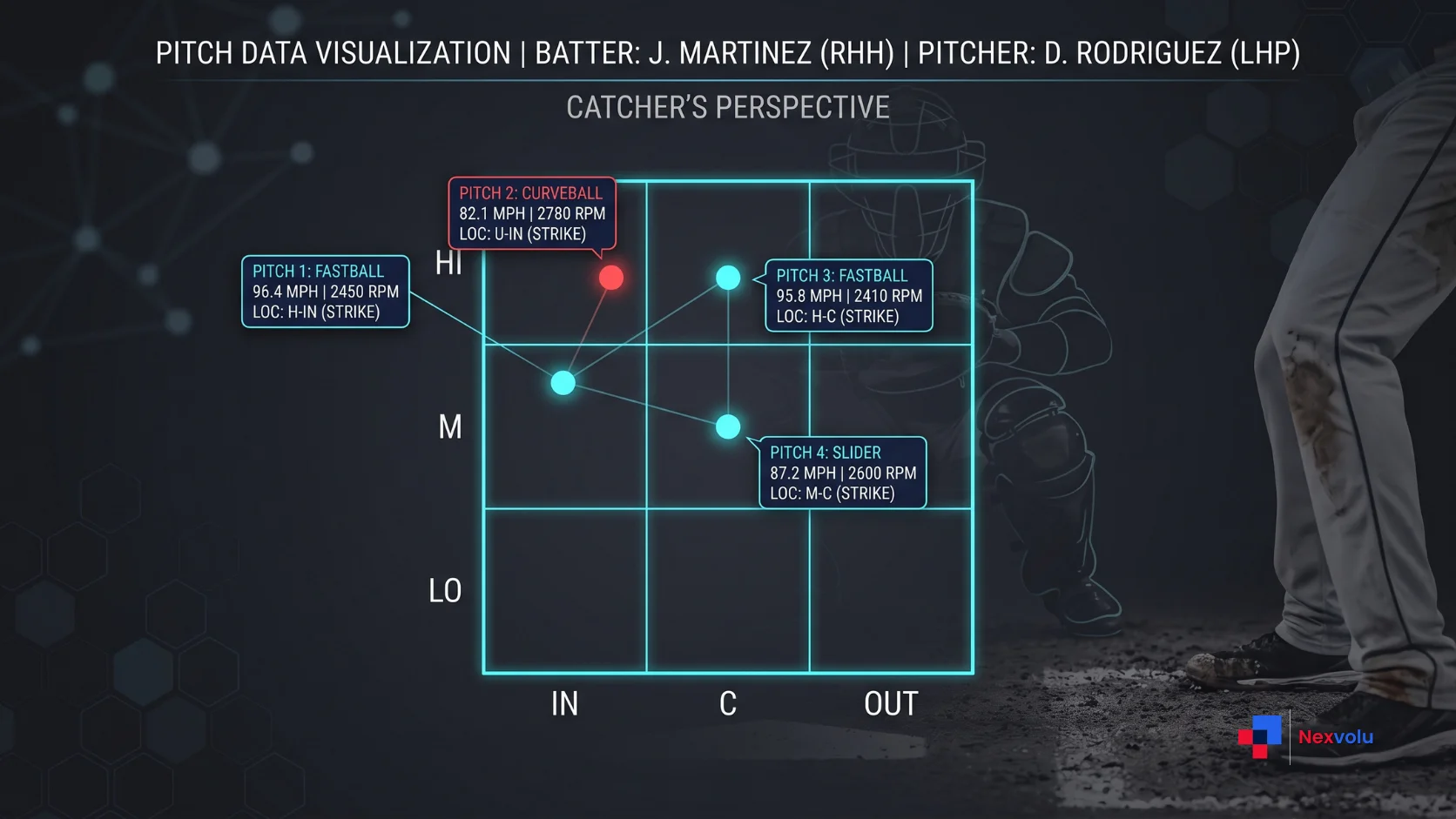
The Dodgers vs Cubs stat nobody is talking about: every run he allowed left the ballpark
Run the arithmetic on the scoring table and something jumps out. Suzuki’s two, Alcántara’s two, Kelly’s two and Busch’s one add up to seven exactly the number of earned runs the scorecard hangs on Wrobleski.
So 100% of his earned runs came on home runs. Not one run scored against him on a sequence of hits, a walk-and-single, an error or a sacrifice. Clearly, this is not a pitcher who lost the strike zone. In fact, his command held up well enough for a hitless fourth around a leadoff walk.
Stack the two starts together and the rate is brutal. Six innings against Seattle plus 4⅓ at Wrigley is 10⅓ innings, with eight home runs and 12 earned runs:
| Two-start span | Figure |
|---|---|
| Innings pitched | 10⅓ |
| Home runs allowed | 8 |
| HR/9 | 6.97 |
| Earned runs | 12 |
| ERA over the span | 10.45 |
A league-average starter sits closer to 1.1–1.3 HR/9. By contrast, Wrobleski has spent two starts running roughly five times that. Admittedly, rates over 10 innings are noisy, so nobody should treat 6.97 as a forecast. Even so, it marks the difference between “gave up some runs” and “cannot keep the ball in the yard,” and the second one points to a mechanical or informational problem rather than bad luck.
Enjoying this kind of breakdown? Share it with the friend who still thinks the box score tells the whole story.
Is the workload theory real? Here’s the math
Asked about his pitcher approaching a career-high workload, manager Dave Roberts downplayed it. “It just seemed like they were on everything,” he said, adding that Wrobleski’s “stuff is really good.”
We can put a rough number on the workload question using the two ERA figures that were reported. If a pitcher’s ERA moves from 2.62 to 3.31 after allowing 12 earned runs in 10⅓ innings, the innings total before that span has to be near 107 which puts him at roughly 117 innings on the season through August 3.
| Derived estimate | Value |
|---|---|
| Innings before the two-start slump | ≈107 |
| Innings after (through Aug 3) | ≈117⅓ |
| ERA change | 2.62 → 3.31 (+0.69, a 26% jump) |
Treat that as an estimate, not a stat-line quote we reverse-engineered it from reported ERAs and rounding. Still, it lands somewhere meaningful. A 26-year-old in his third year, in his first full season as a rotation regular, sitting near 117 innings with two months left is exactly the profile where late-season home-run spikes tend to show up. Of course, Roberts may be right that the stuff is intact. Even so, intact stuff and a tired pitcher aren’t mutually exclusive.
Is pitch tipping actually the explanation?
This is the part of the story that deserves more attention than it’s getting, mostly because the two people closest to it both raised it themselves.
Asked whether Chicago’s success came from predictable game-planning or from Wrobleski tipping his pitches, Roberts said he wasn’t sure: “That’s something I think we have to dig into.” He also noted that “when he did make mistakes, it just seemed like they went out of the ballpark.”
Wrobleski left the door open further, and this is the detail that matters most. “I changed the game plan pretty significantly today, and felt like they were still on some stuff,” he said.
Read that carefully. A pitcher who changes his sequencing and still gets hunted has effectively ruled out the simplest explanation. If the plan changed but the hitters’ timing didn’t, then the information is leaking from somewhere other than predictability grip, glove position, a tell in the delivery, something a dugout with video can spot. On the one hand, that’s a fixable problem, which is the optimistic read. On the other hand, two starts and eight home runs went by before anyone caught it.
What Chicago’s four-homer night says about the Cubs
The Cubs deserve more than a supporting role here. Before the game, Roberts himself called them “a playoff-contending team” and admitted his own club got “outplayed” and “outcompeted” in the Boston sweep.
Then Chicago went out and proved the first half of that sentence. Getting homers from the second, fourth and ninth spots in the order plus a left-on-left shot is the signature of a deep lineup, not a top-heavy one. And when the Dodgers cut it to 7-5 in the sixth, the Cubs didn’t sit on the lead they put up three more against Edgardo Henriquez and Tanner Scott and ended the conversation.
There’s a nice bit of symmetry in it, too. Busch, who hit the homer that ended Wrobleski’s night, is a former Dodgers prospect Chicago acquired for Jackson Ferris and Zyhir Hope and Hope was later part of the package Los Angeles sent out for Tarik Skubal. The deadline trees these clubs are building keep growing into each other.
What Dodgers vs Cubs search data reveals about what fans actually wanted to know
Here’s the layer nobody else publishes. Google Trends had `dodgers vs cubs` at 100K+ searches and +1,000% within about eight hours, one of only four sports trends in that tier on the board. One caveat before the numbers: bots now outnumber humans online, so treat every traffic figure as directional rather than exact.
| Rising query | Interest | Status |
|---|---|---|
| justin wrobleski vs cubs | 15 | Breakout |
| kevin alcantara | 9 | Breakout |
| tommy edman | 7 | Breakout |
| seiya suzuki | 6 | Breakout |
| carson kelly | 3 | Breakout |
| michael busch | 3 | Breakout |
Three observations worth having.
First, the losing pitcher’s name attached to the opponent – justin wrobleski vs cubs – was the single fastest-rising query of the night, ahead of every hitter. Fans didn’t search the win. They searched the collapse.
Second, and this is the fun one: Kevin Alcántara out-searched both Seiya Suzuki and Carson Kelly, 9 to 6 to 3. The number-nine hitter generated more curiosity than the number-two and the cleanup man. When an unfamiliar name does something outsized, the search behaviour follows the surprise rather than the star power.
Third, in the top-queries export, prediction-style searches like cubs vs dodgers prediction (52) and dodgers vs cubs prediction (51) dwarfed score-checking searches like cubs vs dodgers score (18). Fans arrive before the first pitch in far bigger numbers than they arrive for the result. As a result, a preview earns as much attention as a recap – the same front-loaded demand pattern that shows up in Search Console’s generative AI report.
Nexvolu’s Verdict
One-line verdict: This wasn’t a bad-luck night for Justin Wrobleski hitters punished every one of his mistakes the same way, so the Dodgers should treat the pitch-tipping question as urgent rather than curious.
Best for your attention if: you follow the Dodgers’ rotation closely, care about how a contender manages a young starter’s first full workload, or want the Cubs taken seriously as a contender.
Skip it if: you only wanted the final score. It’s 10-5 Cubs. You’re done.
Pros
- The underlying command hasn’t collapsed – Wrobleski threw a hitless fourth and got through 4⅓ innings on mistakes, not walks.
- Roberts is publicly willing to investigate tipping, which is the fastest fixable version of this problem.
- The Dodgers’ deadline haul, headlined by Tarik Skubal, means the rotation can absorb one struggling starter better than most clubs could.
Cons
- Eight home runs in 10⅓ innings is a rate no rotation can carry, whatever the cause.
- Changing the game plan didn’t help, which removes the easiest explanation.
- The four-game skid arrived right after a home sweep, so the roster talent isn’t translating on the field yet.
Standout point: Every single earned run against Wrobleski came via home run. Zero runs scored any other way. Naturally, that reads as a diagnostic clue rather than a coincidence.
Nexvolu Editorial Score: 6.5/10 – scored on the performance and what it signals, not on entertainment value. The command and stuff still grade well, but a pitcher who is hunted even after changing his sequencing has a real, unresolved problem heading into the stretch run. (Editorial opinion based on reported facts, not hands-on evaluation.)
Frequently asked questions
Who won the Dodgers vs Cubs game on August 3, 2026?
The Chicago Cubs won 10-5 at Wrigley Field on August 3, 2026, taking the series opener. It was the Dodgers’ fourth consecutive loss, tying their longest skid of the season, and it came immediately after the Boston Red Sox swept them at home.
The Dodgers actually led 3-0 in the first inning on Tommy Edman’s three-run homer. However, Chicago erased that by the second and never trailed again, closing it out with a three-run sixth. Ultimately, the result is a reminder that Los Angeles has been playing poorly for over a week, even while its trade-deadline additions dominated the headlines.
How many home runs did Justin Wrobleski give up against the Cubs?
Justin Wrobleski allowed four home runs in 4⅓ innings against the Cubs on August 3, 2026, giving up seven earned runs. It was his second straight start allowing four homers, making him the first pitcher in Dodgers history to do that twice in one season.
The previous outing came six days earlier against Seattle, where he allowed four homers and five runs across six innings. Together, the two starts add up to eight home runs in 10⅓ innings – a 6.97 HR/9 rate. Afterwards he called himself “pretty frustrated these last two” and said there was “no excuse.”
Which Cubs players homered against the Dodgers?
Four Cubs homered off Wrobleski: Seiya Suzuki hit a two-run shot in the first, Kevin Alcántara a go-ahead two-run blast in the second, Carson Kelly a two-run drive in the third, and Michael Busch a solo homer in the fifth. Teoscar Hernández also homered for Los Angeles.
What makes the group notable is how spread out it was through the batting order – Suzuki hit second, Kelly hit fourth, and Alcántara hit ninth. Busch, a former Dodgers prospect, hit the homer that ended Wrobleski’s night and got him pulled by Roberts.
What is Justin Wrobleski’s ERA now?
Justin Wrobleski’s ERA climbed from 2.62 to 3.31 across his last two starts, his worst mark since he entered the Dodgers’ rotation in early April. That’s a 0.69 jump, or a 26% increase, and eight home runs in a six-day stretch caused almost all of it.
For context on how good the season had been before this, a 2.62 ERA through roughly 107 innings is front-of-the-rotation work from a third-year pitcher. The slump has been severe enough to reset his season line, but a 3.31 ERA is still a solid full-season number which is why Roberts insists the stuff itself hasn’t gone anywhere.
Was Justin Wrobleski tipping his pitches?
Nobody has confirmed it, but both Wrobleski and Dave Roberts raised the possibility publicly. Roberts said the tipping question is “something I think we have to dig into,” and Wrobleski noted he “changed the game plan pretty significantly” against the Cubs yet felt hitters “were still on some stuff.”
That second quote is the important one. If a pitcher alters his sequencing and hitters remain on time anyway, then simple predictability largely drops out of contention, which shifts suspicion toward a physical tell in the grip or delivery. Therefore, expect the Dodgers to review video before his next start rather than rebuild his mechanics.
Where can you watch Dodgers vs Cubs games?
Each club’s regional sports network carries Dodgers vs Cubs games locally, out-of-market viewers can stream through MLB.TV, and national broadcasters pick up selected games. For any single game, though, MLB’s official schedule page confirms that day’s exact broadcast partners.
For games that have already finished, MLB Gameday carries the full box score, pitch-by-pitch data and highlight clips, and it archives the August 3, 2026 game in full. If you’re hosting friends rather than streaming alone, our watch-party styling guide transfers straight to a baseball night.
Dodgers vs Cubs: the bottom line
Three things to carry out of this Dodgers vs Cubs opener. First, Wrobleski’s problem is narrow and specific – every run he allowed was a home run, which is a solvable pattern rather than a broad collapse. Second, the pitch-tipping theory got much more credible the moment he admitted a new game plan didn’t help. Finally, the Cubs, homering from the second, fourth and ninth spots, look exactly like the playoff-contending team Roberts warned his own club about.
Watch his next start with one question in mind: does the tipping investigation change anything? If the mistakes still leave the yard, this stops being a slump and starts being a scouting report.
If you found this useful, share it with the group chat that’s already arguing about the rotation and tell us what you think in the comments: is this fatigue, tipping, or just two bad nights?
So which is it – is Justin Wrobleski tipping, tired, or unlucky?
References
- Maddie Lee, “Cubs tee off on Justin Wrobleski as Dodgers’ losing skid stretches to four games” – Los Angeles Times, August 3, 2026.
- Jack Harris, “Justin Wrobleski makes ugly Dodger history as home run barrage raises concerns” – New York Post, August 4, 2026.
- “Cubs smash four home runs vs. Dodgers” (video, 2:02) – *MLB.com / Chicago Cubs*, August 3, 2026.
- Dodgers vs. Cubs final box score, August 3, 2026 – MLB Gameday.
- Google Trends – Trending Now
Calculation note for transparency: the HR/9, span-ERA, and ~117-innings figures are Nexvolu’s own arithmetic derived from the innings, earned-run and ERA figures reported in sources 1 and 2. The innings estimate is explicitly labelled an estimate in the article.