









2027 Social Security COLA: Forecasts, Dates & Real Math
What Is the 2027 Social Security COLA?
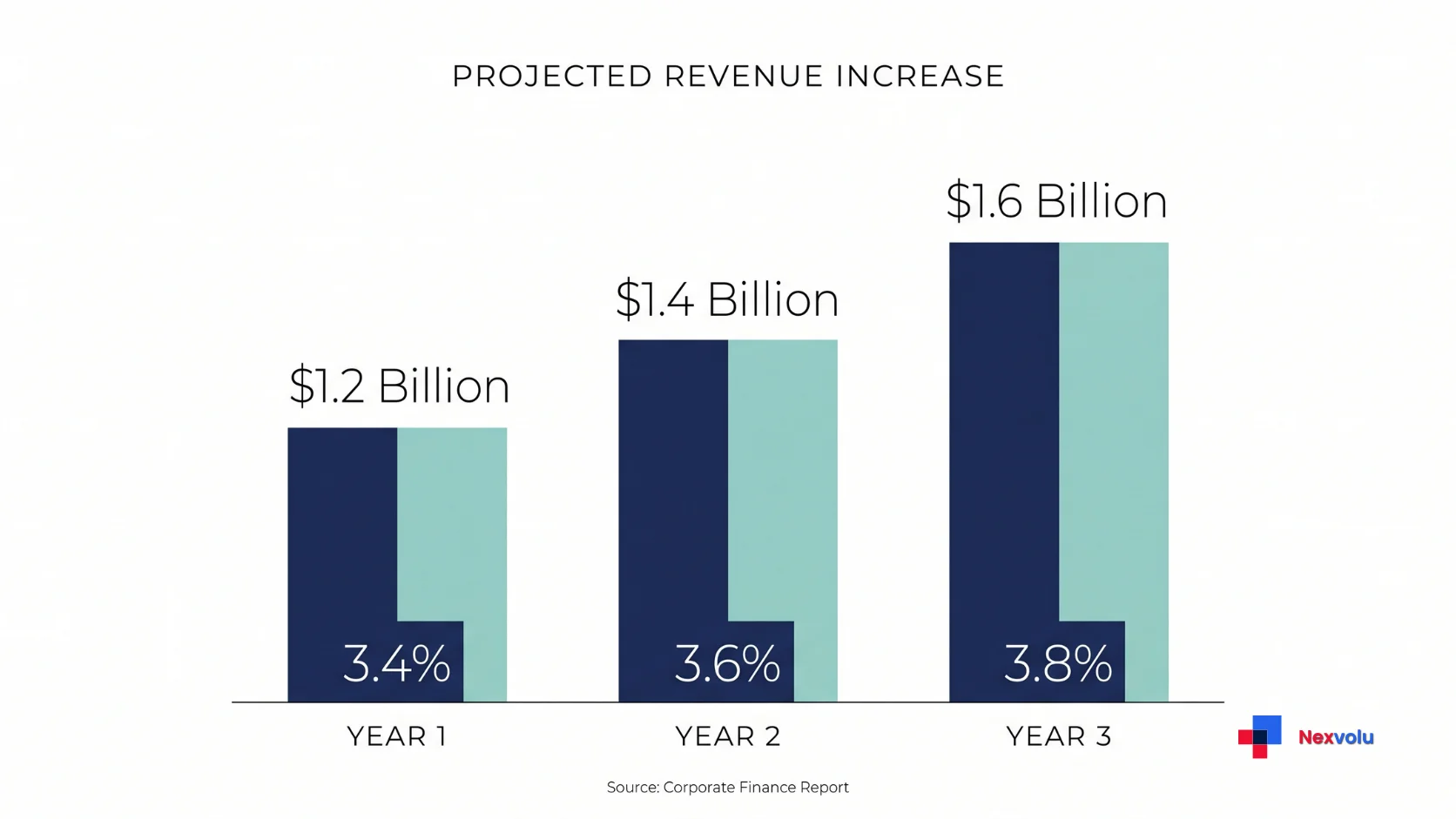
The 2027 Social Security COLA is the cost-of-living adjustment that will raise Social Security and SSI payments starting with checks received in January 2027. Specifically, It it is set by comparing average CPI-W inflation in July, August and September 2026 against the same quarter in 2025. Currently, Independent independent forecasts cluster between 3.6% and 3.8%.
That’s the short answer. However, What what follows is the part nobody else is publishing.
On August 3, 2026, “2027 social security cola” crossed 100,000 US searches in roughly eight hours on Google Trends, up more than 600%. Yet most coverage feeding that spike repeats one number from one advocacy group. So we ran the arithmetic ourselves.
How Much Will the 2027 Social Security COLA Be? Every Forecast in One Table
No forecast is official yet. Still, here’s where the credible ones stand as of in early August 2026.
| Forecaster | 2027 COLA estimate | Stated dollar effect |
|---|---|---|
| The Senior Citizens League (July 2026) | 3.8% | About +$74/month, to roughly $2,011 |
| AARP Public Policy Institute (July 14, 2026) | 3.6% | About +$75/month, on a $2,084 average |
| Mary Johnson, independent analyst | 3.7% | About +$77/month |
| David Enna, Tipswatch (July 26, 2026) | 3.6% | About +$75/month, to roughly $2,159 |
| CNBC (revised July 14, 2026) | 3.7%-3.8% | Not stated |
Notice something odd: the forecasts agree on the percentage but disagree on the dollars. That’s because each group uses a different “average benefit” starting point. For example, The Senior Citizens League has cited both $1,937.53 and $2,026.41 in separate releases this year, while AARP uses the June 2026 figure of about $2,084.
As a result, you’ll see “+$74,” “+$75” and “+$77” reported for the same forecast on the same day. For context on how last year’s number landed, see our 2026 Social Security COLA breakdown.
How the 2027 Social Security COLA Is Calculated (The Baseline Nobody Quotes)
The Social Security Administration does not use the inflation rate you see in the news. Instead, It it uses the CPI-W, the Consumer Price Index for Urban Wage Earners and Clerical Workers, and it only looks at three months.
Here is the formula in plain English:
- First, average the CPI-W index for July, August and September 2026.
- Then compare that to the average for July, August and September 2025.
- Finally, round the percentage increase to the nearest tenth.
Step two is the number almost no article prints. Because MOAA tracks the BLS data directly, so we can pin it down: the third-quarter 2025 CPI-W average was 317.265. That baseline is fixed and cannot change.
Meanwhile, The the June 2026 CPI-W index came in at 327.075, up 3.5% year over year, per the Bureau of Labor Statistics release of July 14, 2026. June was a down month in fact, the CPI-W fell 0.5% before seasonal adjustment as gasoline prices tumbled.
A known baseline, a known starting index, three unknown months. Therefore, It’s it’s solvable.
Nexvolu’s 2027 Social Security COLA Scenario Grid
This is our own calculation, not a reprinted forecast. First we took the June 2026 CPI-W index of 327.075, then applied a constant monthly change across July, August and September 2026, averaged the three months, and finally divided by the 317.265 baseline.
| Monthly CPI-W change (Jul–Sep) | Q3 2026 average index | Resulting 2027 COLA |
|---|---|---|
| 0.0% (index goes flat) | 327.075 | 3.1% |
| 0.1% per month | 327.730 | 3.3% |
| 0.2% per month | 328.385 | 3.5% |
| 0.3% per month | 329.041 | 3.7% |
| 0.4% per month | 329.699 | 3.9% |
| 0.5% per month | 330.357 | 4.1% |
Three things fall out of that grid, none of them in the mainstream coverage.
There is a hard floor near 3.1%. If prices froze completely for the rest of the summer, the 2027 COLA would still land around 3.1%, because since the June index is already that far above the baseline. So barring outright deflation, retirees are getting a bigger raise than 2026’s 2.8%.
The 3.8% consensus requires roughly 0.35% inflation every month – about 4.3% annualized. That’s possible, especially with gas prices climbing again. Even so, it sits in the upper half of the plausible range rather than the middle.
Each 0.1 percentage point is worth about $25 a year to the average retiree, and roughly $1.8 billion across the program. By comparison, the gap between 3.4% and 3.8% is $8.34 a month, or $100.03 a year, on a $2,084 benefit.
One caution on our own grid: inflation doesn’t move in straight lines, and summer months have turned negative in 2014, 2015, 2016, 2017, 2019 and 2022. In short, the grid shows the shape of the range, not a prophecy. For the mechanics, our guide to how inflation is measured unpacks the index itself.
What a 3.6% or 3.8% COLA Is Worth in Dollars
Here’s what each scenario adds to a monthly check, across the benefit levels people actually receive.
| Your current monthly benefit | At 3.4% | At 3.6% | At 3.8% |
|---|---|---|---|
| $1,000 | +$34.00 | +$36.00 | +$38.00 |
| $1,635 (average SSDI) | +$55.59 | +$58.86 | +$62.13 |
| $1,931 (average survivor) | +$65.65 | +$69.52 | +$73.38 |
| $2,084 (average retiree) | +$70.86 | +$75.02 | +$79.19 |
| $3,000 | +$102.00 | +$108.00 | +$114.00 |
| $4,018 | +$136.61 | +$144.65 | +$152.68 |
As a result, The the average retired worker on $2,084 lands between $2,155 and $2,163 a month – $850 to $950 more per year than 2026.
SSI scales identically. Since The the 2026 federal benefit rate is $994 for an individual and $1,491 for a couple, 3.6% would push those to roughly $1,029 and $1,544. Full figures are in our SSI payment amounts guide.
The Medicare Part B Clawback: Your Real 2027 Raise
Most people on Social Security have their Medicare Part B premium deducted straight from their check. Therefore, The the raise you actually see is the COLA minus the premium increase.
The 2026 Medicare Trustees Report projects a 2027 standard Part B premium of $209.50, up from the confirmed $202.90 in 2026 an increase of $6.60, or about 3.25%. CMS confirms the real figure in November. Meanwhile, we track the detail in our Medicare Part B premium explainer.
So we ran that $6.60 against each benefit level.
| Monthly benefit | Gross raise at 3.6% | After Part B | Effective COLA | Share of raise consumed |
|---|---|---|---|---|
| $1,000 | +$36.00 | +$29.40 | 2.94% | 18.3% |
| $1,500 | +$54.00 | +$47.40 | 3.16% | 12.2% |
| $2,084 | +$75.02 | +$68.42 | 3.28% | 8.8% |
| $3,000 | +$108.00 | +$101.40 | 3.38% | 6.1% |
| $4,018 | +$144.65 | +$138.05 | 3.44% | 4.6% |
The pattern is regressive, although it’s structural rather than intentional. Because the premium is a flat dollar amount, it eats a far larger share of a small check. For instance, a retiree on $1,000 loses 18.3% of their raise to Medicare, while a retiree on $4,018 loses just 4.6%.
Put differently: a $1,000-a-month beneficiary needs a 0.66% COLA just to break even on Medicare. At $800, the break-even is 0.83%.
And 2027 is actually the gentle year. Previously, Part B rose nearly 10% in 2026, wiping out much of that year’s 2.8% COLA before it reached anyone’s account.
So when you read “$77 more a month,” subtract $6.60 plus whatever Part D or Medigap does.
When Will the 2027 Social Security COLA Be Announced?
The official 2027 COLA will be announced on October 14, 2026, immediately after the Bureau of Labor Statistics publishes September inflation data. The increase then takes effect with benefits payable in January 2027, while SSI recipients receive their first adjusted payment at the end of December 2026.
There are only three data releases left that matter.
| Date | What lands | Why it matters |
|---|---|---|
| August 12, 2026 | July CPI report | First of the three COLA months |
| Mid-September 2026 | August CPI report | Two-thirds of the calculation locked |
| October 14, 2026 | September CPI + official COLA | The number becomes real |
Everything published before October 14 is a forecast. In other words, Anyone anyone presenting a 2027 figure as settled is guessing with confidence. For deposit dates in the meantime, check our Social Security payment schedule.
Why Critics Want to Change How the Increase Is Calculated
The CPI-W measures spending by urban wage earners and clerical workers people who are, by definition, still working. In total, it covers about 29% of the population. Because retirees spend proportionally more on healthcare and housing and less on gasoline and transport, the index arguably tracks the wrong basket.
Two alternatives dominate the debate.
CPI-E tracks households aged 62 and older. Social Security’s actuaries estimate it would raise the average annual COLA by about 0.2 percentage points. Notably, the Social Security 2100 Act, reintroduced in Congress, would switch to it.
Chained CPI adjusts for consumers substituting cheaper goods when prices rise. Actuaries estimate it would reduce the average COLA by about 0.3 percentage points, cutting the program’s 75-year deficit by roughly 17%, according to the Center for Retirement Research.
But switching indexes wouldn’t transform anyone’s retirement. For example, a CNBC analysis found a $1,000 benefit claimed in 2005 would be worth $1,601 today under CPI-W, $1,622 under CPI-E, and $1,555 under chained CPI.
One percent, after two decades.
Instead, the real erosion sits where the index doesn’t look. The Senior Citizens League’s 2026 Loss of Buying Power study found benefits have lost about 13.7% of their purchasing power since 2016, and would need to rise 15.7% roughly $295.85 a month to recover it. Ultimately, Medicare premiums and out-of-pocket healthcare costs drive most of that gap.
So a better index helps at the margin. Even so, it does not close $295.
What to Do Before the 2027 Social Security COLA Is Announced
Most COLA coverage ends at the forecast. Here’s the actionable part.
Budget on 3.3%, not 3.8%. Since the realistic band is 3.1% to 4.1% and the consensus sits in its top half, planning conservatively means an upside surprise rather than a shortfall.
Subtract $6.60 before you plan anything, then account for Part D or supplemental increases in the fall.
Check your gross benefit now, not in January. Log into your my Social Security account and confirm your gross benefit and current Part B deduction. Remember, the COLA applies to the gross amount rather than not your deposit, which is the most common misunderstanding in this topic’s the search data.
Watch August 12. The July CPI report is the first of the three months that count.
Don’t restructure anything around a projection. No credible planner shifts withdrawals or Roth conversions on an unofficial August estimate. Our retirement budgeting guide covers the sequencing properly.
Disclaimer: This article is for general informational and educational purposes only and is not financial, investment, tax, or legal advice. Benefit projections are estimates based on published government data and may change. Consult a licensed financial professional or the Social Security Administration before making financial decisions.

Nexvolu’s Verdict on the 2027 Social Security COLA
The verdict: A 3.6% to 3.8% COLA is a genuine improvement over 2026’s 2.8%. However, The the Medicare clawback and a decade of lost buying power mean it’s a catch-up payment, not a raise.
Best for: Retirees on mid-to-higher benefits, because they keep the largest share of the increase.
Skip the hype if: you’re on a benefit under $1,200, since nearly a fifth of your raise disappears into Part B before it reaches you.
Pros: A hard floor near 3.1% means the increase is close to guaranteed · The 2027 Part B rise is the smallest since 2023 · The COLA is automatic, permanent and compounds into every future year.
Cons: Flat-dollar Medicare premiums hit small checks hardest · The CPI-W still doesn’t track retiree healthcare spending · Nothing is official until October 14.
Standout: The floor. Almost no coverage points out that even zero summer inflation still produces roughly a 3.1% COLA. Consequently, The the “will there even be an increase?” anxiety in the search data is largely unfounded.
Nexvolu Editorial Score: 7/10 – a solid, above-average adjustment that does its job on paper, yet held back by a premium structure that quietly penalizes the people who need the money most. This is an editorial assessment of published data, not investment guidance.
Frequently Asked Questions About the 2027 Social Security COLA
What is the 2027 Social Security COLA projected to be?
The 2027 Social Security COLA is projected at 3.6% to 3.8%. Specifically, The Senior Citizens League forecasts 3.8%, AARP forecasts 3.6%, and independent analyst Mary Johnson estimates 3.7%. The official figure will be announced on October 14, 2026, once September inflation data is released.
Our own calculation, running the June 2026 CPI-W index of 327.075 forward against the fixed 317.265 baseline, produces a realistic band of 3.1% to 4.1%. However, reaching 3.8% requires roughly 0.35% inflation every month through September, which is achievable but sits at the upper end of the range.
How much more money will the 2027 Social Security COLA give me?
At 3.6%, the average retired worker receiving $2,084 a month would gain about $75, reaching roughly $2,159. Similarly, a $1,000 benefit rises by $36 and a $3,000 benefit by $108. The increase applies to your gross benefit before any deductions.
Your deposit will grow by less than that, though. Because the projected Medicare Part B increase of $6.60 comes out first, a $1,000 beneficiary nets about $29.40 rather than $36. So check your gross benefit in your my Social Security account rather than working from your bank deposit.
When will the 2027 Social Security COLA be announced?
The Social Security Administration will announce the 2027 COLA on October 14, 2026, right after the Bureau of Labor Statistics publishes September inflation data. The adjustment then takes effect with benefits payable in January 2027, while SSI recipients get their first increased payment at the end of December 2026.
Three data releases remain: the July CPI report on August 12, the August report in mid-September, and the September report on October 14. Each one shifts the forecasts, so any number published before mid-October is an estimate rather than a decision.
Why is the 2027 Social Security COLA higher than the 2026 COLA?
The 2027 COLA is tracking higher because CPI-W inflation accelerated during 2026. For instance, the index rose 4.4% year over year in May and 3.5% in June, well above the levels that produced 2026’s 2.8% adjustment. Tariffs and an energy price spike are the main drivers.
There’s a mechanical reason too. The June 2026 CPI-W index of 327.075 already sits about 3.1% above the third-quarter 2025 baseline of 317.265. That gap is locked in, so even flat prices for the rest of the summer would deliver an increase larger than last year’s.
Will Medicare take my entire Social Security raise in 2027?
No. The 2026 Medicare Trustees Report projects the standard Part B premium rising $6.60, from $202.90 to $209.50, or about 3.25%. Therefore, on a 3.6% COLA, that consumes roughly 8.8% of the average retiree’s increase rather than all of it.
The burden is uneven, though. Because the premium is a flat dollar amount, it takes 18.3% of the raise for someone on $1,000 a month and only 4.6% for someone on $4,018. In practice, a beneficiary receiving $1,000 needs a 0.66% COLA just to break even on Medicare alone.
What is CPI-W and why does it matter for the COLA?
CPI-W is the Consumer Price Index for Urban Wage Earners and Clerical Workers, a subset of the main CPI covering about 29% of the US population. Social Security uses it because the 1972 legislation specified it. Importantly, it measures the spending of working households, not retirees.
That mismatch is the core of the reform debate. Since retirees spend more on healthcare and housing and less on gasoline and transport, critics argue the CPI-E, which tracks people aged 62 and over, would be fairer. Social Security’s actuaries estimate CPI-E would add about 0.2 percentage points a year.
Will switching to CPI-E fix Social Security’s buying power problem?
Probably not on its own. For example, a CNBC analysis found that a $1,000 benefit claimed in 2005 would be worth $1,601 today under the current formula and $1,622 under CPI-E, a difference of about 1% after twenty years. By contrast, chained CPI would have produced $1,555.
Meanwhile, the Senior Citizens League’s 2026 study found benefits have lost about 13.7% of their buying power since 2016, needing a 15.7% increase to recover. Because the real gap comes from healthcare costs the index barely captures, an index swap helps at the margin rather than solving it.
How does the 2027 Social Security COLA affect SSI payments?
SSI payments rise by the same percentage as Social Security benefits. Since the 2026 federal benefit rate is $994 a month for an individual and $1,491 for a couple, a 3.6% adjustment would lift those to roughly $1,029 and $1,544 respectively, before any state supplement.
Timing differs slightly, though. Because SSI is normally paid on the first of the month and January 1 is a holiday, SSI recipients receive their first COLA-adjusted payment at the end of December 2026 rather than in January.
The Bottom Line
Three things to carry away.
First, the increase is close to locked, since even zero inflation for the rest of the summer inflation delivers roughly 3.1%, with a realistic ceiling near 4.1%.
Second, the number you read in October is not the number you receive. Subtract $6.60 for Part B, then your supplemental coverage.
Finally, the formula debate matters less than the coverage suggests. CPI-E would have added about 1% over two decades while real buying power fell 13.7%. Ultimately, the problem is healthcare inflation rather than the index.
Mark August 12. That’s when the first of the three months deciding your 2027 adjustment becomes public.
Found this useful? Share it with someone who’s been asking what their check will look like in January.
What would a 3.6% raise actually change in your monthly budget and is it enough? Tell us in the comments.
REFERENCES
- Social Security Administration – Latest Cost-of-Living Adjustment (2026)
- Bureau of Labor Statistics – Consumer Price Index Summary, June 2026 (July 14, 2026)
- MOAA – COLA Watch – source of the Q3 2025 baseline
- AARP – Social Security COLA 2027 estimate (July 14, 2026)
- The Senior Citizens League – COLA Watch & 2026 Loss of Buying Power study
- CMS – 2026 Medicare Trustees Report (June 2026)
- Tipswatch – Forecasting Social Security’s 2027 COLA (July 26, 2026)
- Center for Retirement Research, Boston College – Social Security’s COLA and the index debate
- Social Security Administration – SSI Federal Payment Amounts, 2026
- Plan Your Complete Retirement – Completely Free & No Signup