




Learning how to get cited by ChatGPT starts with a smaller goal than most sellers describe. You want your business named inside an answer, with a link a reader can click. You need to win the handful of questions your buyers ask before they spend money.
Citation has two gates. First, the engine has to find your page. Second, it has to pick your page over every other page it found.
AirOps tracked this gap in a study of ChatGPT. Across 15,000 prompts, ChatGPT pulled in 548,534 pages and put only 15 percent of them in a final answer. The engine read, judged, and dropped the other 85 percent. This guide is written for a small business, not an agency with a research team. It sticks to what studies measured, and it says where the evidence stops. AEO answer engine optimization is the name for this work, and the order matters: fix access first, then put the answer where the engine looks first.
What ChatGPT and Perplexity actually do when they answer
ChatGPT answers most questions from training data, not the live web. An analysis of more than 700,000 conversations found only about 18 percent triggered at least one web search. Your page only enters the game when the question needs current facts, prices, or a named provider.
When a search does fire, the engine breaks one question into several smaller searches. AirOps calls this fan-out, and its study counted 43,233 total queries from 15,000 starting prompts. A page about pricing can surface for a fan-out query about cost even when it never ranked for the original question.
In contrast, Perplexity works differently. It searches the web for nearly every answer and shows citations on every answer. Qwairy counted 21.8 citations per question on Perplexity against 7.92 on ChatGPT across 118,101 answers in the third quarter of 2025.
Both engines still lean on Google rankings. AirOps found 55.8 percent of the pages ChatGPT cited ranked in the top 20 on Google for at least one query. Pages at position one appeared as citations 43.2 percent of the time.
Google said the same thing in May 2026, when it published its first guide for generative AI features and said optimizing for AI search is still SEO. AI Overviews and AI Mode pull from the same Google index as regular search. A page has to sit in that index and qualify for a snippet before it can appear in either one.
The two numbers every AEO pitch quotes, and what they really mean
Two studies carry this whole field. Both are real, and people quote both in ways their authors would not recognize. The first is the GEO paper. Pranjal Aggarwal and colleagues at Princeton University and IIT Delhi published “GEO: Generative Engine Optimization” at KDD 2024, after posting it to arXiv in November 2023. They built a benchmark called GEO-bench with 10,000 queries across 25 domains. Then they rewrote source pages in nine different ways and measured how much of the generated answer each version earned.
The headline result: the best methods boosted visibility by up to 40 percent. Adding quotations from credible sources did best of all, up 41 percent on the paper’s main metric, position-adjusted word count. Adding citations and adding statistics each landed in the 30 to 40 percent range. Keyword stuffing did the opposite, cutting visibility by 8 percent.
Read the method section before you repeat the headline. The researchers built their own test engine on GPT-3.5, fed it the top five Google results, and measured share of the answer, not whether the answer named a page.
The one live engine in the paper tells a calmer story. On Perplexity, quotation addition improved visibility by about 22 percent, and statistics addition by about 9 percent. Those are still lab numbers from a 2023 and 2024 version of Perplexity, and nobody can promise you 40 percent.
How to get cited by ChatGPT: the Kevin Indig study
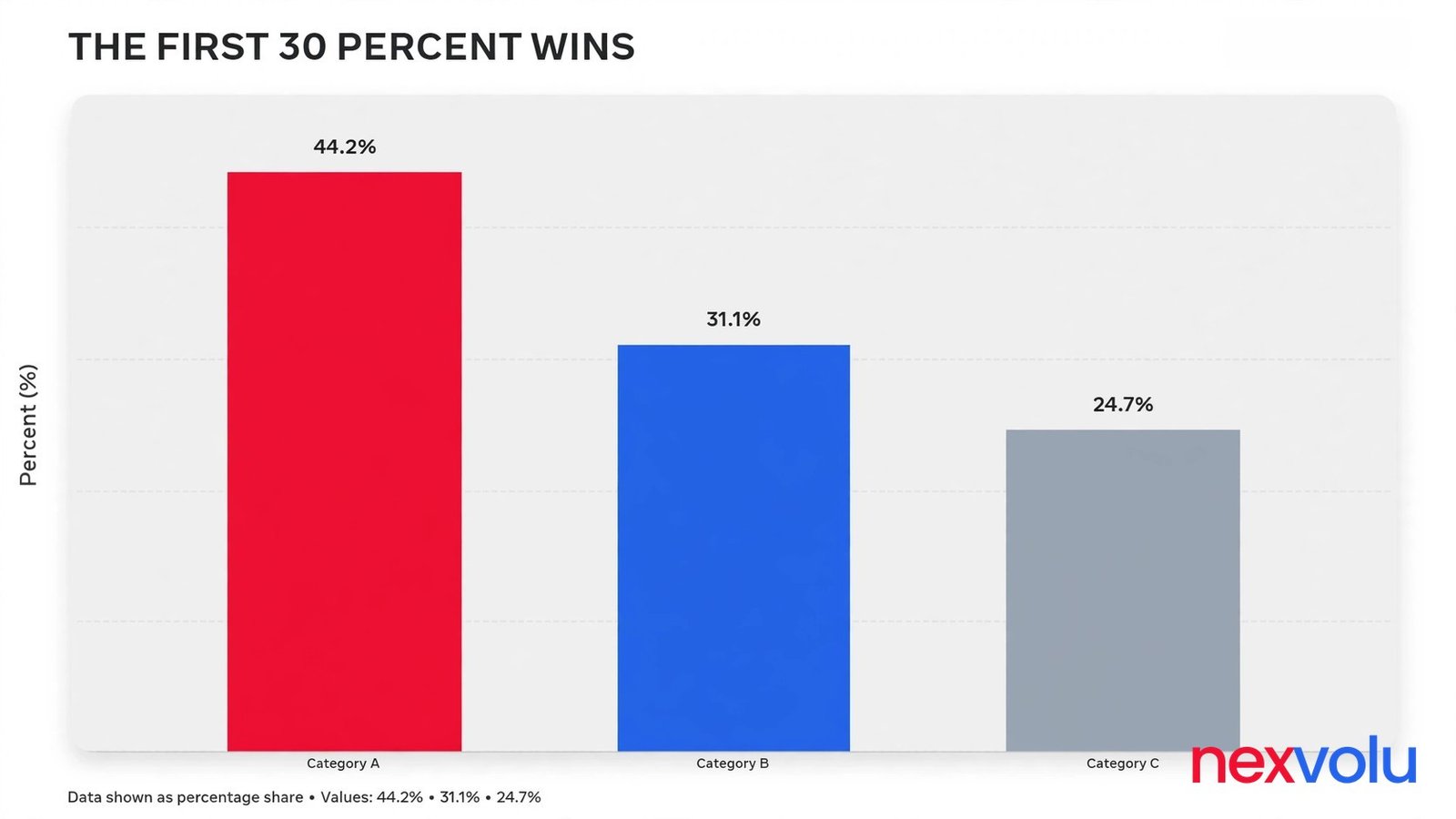
The second study comes from Kevin Indig, a growth advisor who writes the Growth Memo newsletter. His team analyzed 3 million ChatGPT responses and 30 million citations, then isolated 18,012 verified citations to map where cited passages sit on a page. The pattern is stark: 44.2 percent of citations came from the first 30 percent of the cited page. 31.1 percent came from the middle, and 24.7 percent came from the final third.
Indig calls it a ski ramp. Citation probability starts high, drops sharply after the opening third, then tails off toward the footer.
Cited passages used definitive language, phrases like “X is” or “X refers to”, nearly twice as often as uncited text. They were twice as likely to include a question mark, and 78.4 percent of citations tied to questions came from headings. Cited text also averaged 20.6 percent proper nouns, against 5 to 8 percent in typical English text, and it read easier, at a grade level of 16 against 19.1 for lower performing text.
None of this proves a formula. Indig measured ChatGPT only, on one dataset. But the direction lines up with the GEO paper and with the AirOps data: put the answer early, name real things, cite real sources, and write sentences a tired reader can parse at speed.
How to get cited by ChatGPT: the 7 steps that earn the citation
Work the steps in order. Each one unlocks the next. A page no crawler can fetch will never get cited, no matter how well you wrote it.
Budget about two hours per page for steps two through four. Do the steps on five pages first, not fifty.
- Let the search crawlers in. Open your robots.txt file and check it allows OAI-SearchBot, PerplexityBot, or Googlebot. OpenAI runs OAI-SearchBot for ChatGPT search, which is separate from GPTBot, the training crawler. Blocking GPTBot opts you out of training only, while blocking OAI-SearchBot keeps you out of ChatGPT search answers. Perplexity publishes PerplexityBot the same way. Check yours before you do anything else, and check that no security plugin or firewall rule blocks these user agents after robots.txt allows them.
- Put the answer in the first 30 percent of the page. Indig measured 44.2 percent of ChatGPT citations coming from the first 30 percent of content, so the opening of your page carries nearly half the value of the whole page. Rewrite the top of each money page so the first paragraph answers the main question with a specific number or a named source. Cut the long introduction and the brand story. A bakery that ships nationwide should open with what it ships and what it costs.
- Cite sources, add statistics, and quote a named voice. These were the three strongest methods in the GEO paper. Quotations led at 41 percent, while citations and statistics each landed in the 30 to 40 percent range. Every claim that involves a number, a date, or a rule should link to the primary source for it. Every section that makes a recommendation should carry one statistic with a year attached. Every guide should quote one person or one document by name.
- Write headings as questions and answer them directly underneath. Indig found cited content twice as likely to include a question mark, and most question-tied citations came from headings. Take the exact questions buyers ask you, by email, on calls, or in search, and make them H2s. Then answer each one in one to three sentences before you add detail. Keep the first sentence of the answer short and definitive, and save the nuance for the second sentence.
- Make your business one entity everywhere. Use the same business name and the same one-line description on your website. Repeat them on your Google Business Profile and your social pages. Repeat them in every directory that lists you. Add Organization schema to your homepage with a stable identifier and your description. The schema will not get you cited on its own, but it helps the engine resolve which business a claim belongs to, so it attributes the citation to you instead of a namesake.
- Earn mentions on sites you do not own. AirOps found cited pages skew toward third-party coverage, and the gap is the hardest part of this work for a small business. A mention in a local news story, a trade publication, a supplier directory, or a genuine customer review carries more weight than ten pages on your own site. Start with the easy wins. Ask suppliers to list you. Ask happy customers to name you in reviews that describe the work.
- Measure citations, not crawler visits. Log files tell you a bot fetched your page. They cannot tell you the engine named you in an answer. Once a week, ask ChatGPT and Perplexity the five questions your buyers ask most, in fresh chats, and record whether your business appears and whether the link is yours. Keep the prompts identical each week so the trend means something. Most readers take the answer and never click, but a citation with no click still puts your name in front of a buyer at the exact moment they decide.
Perplexity plays by different rules
Perplexity is the friendlier engine for a small business, and the reason is arithmetic. It cites far more sources per answer than ChatGPT, and it searches the web for nearly every question instead of answering from training data. Qwairy measured 21.8 citations per question on Perplexity against 7.92 on ChatGPT across 118,101 answers in the third quarter of 2025.
Perplexity also leans harder on live retrieval, so fresh pages matter more. Update the date and the facts on your key pages when prices, rules, or features change, and say what changed. Perplexity shows its sources on every answer, so a reader can see your name and click through without the engine having to vouch for you first.
ChatGPT rewards brand familiarity. It answers many questions from training data, and a business that appears in training data and in news stories has a head start no page edit can buy in a month. If your budget only stretches to one engine this quarter, pick Perplexity for how-to and comparison content, and pick ChatGPT for the brand work in step six. Track them separately, because a tactic that lifts one can leave the other flat.
How to get cited by ChatGPT: llms.txt, add the file, drop the fantasy
An llms.txt file is a short Markdown file at yourdomain.com/llms.txt. It gives AI tools a curated summary of your business and a list of links to the pages that matter most. Jeremy Howard of Answer.AI proposed it in September 2024. It takes about 20 minutes to write, it costs nothing to host, and for getting cited by ChatGPT or Perplexity, the evidence says it does almost nothing.
Start with what the platforms say. Google published its first guide for generative AI features on May 15, 2026, and updated it on June 15, 2026, with a note on llms.txt. The guide says you do not need to create new machine-readable files, AI text files, markup, or Markdown to appear in generative AI search. Google Search ignores such files, so creating one will neither help nor harm your visibility.
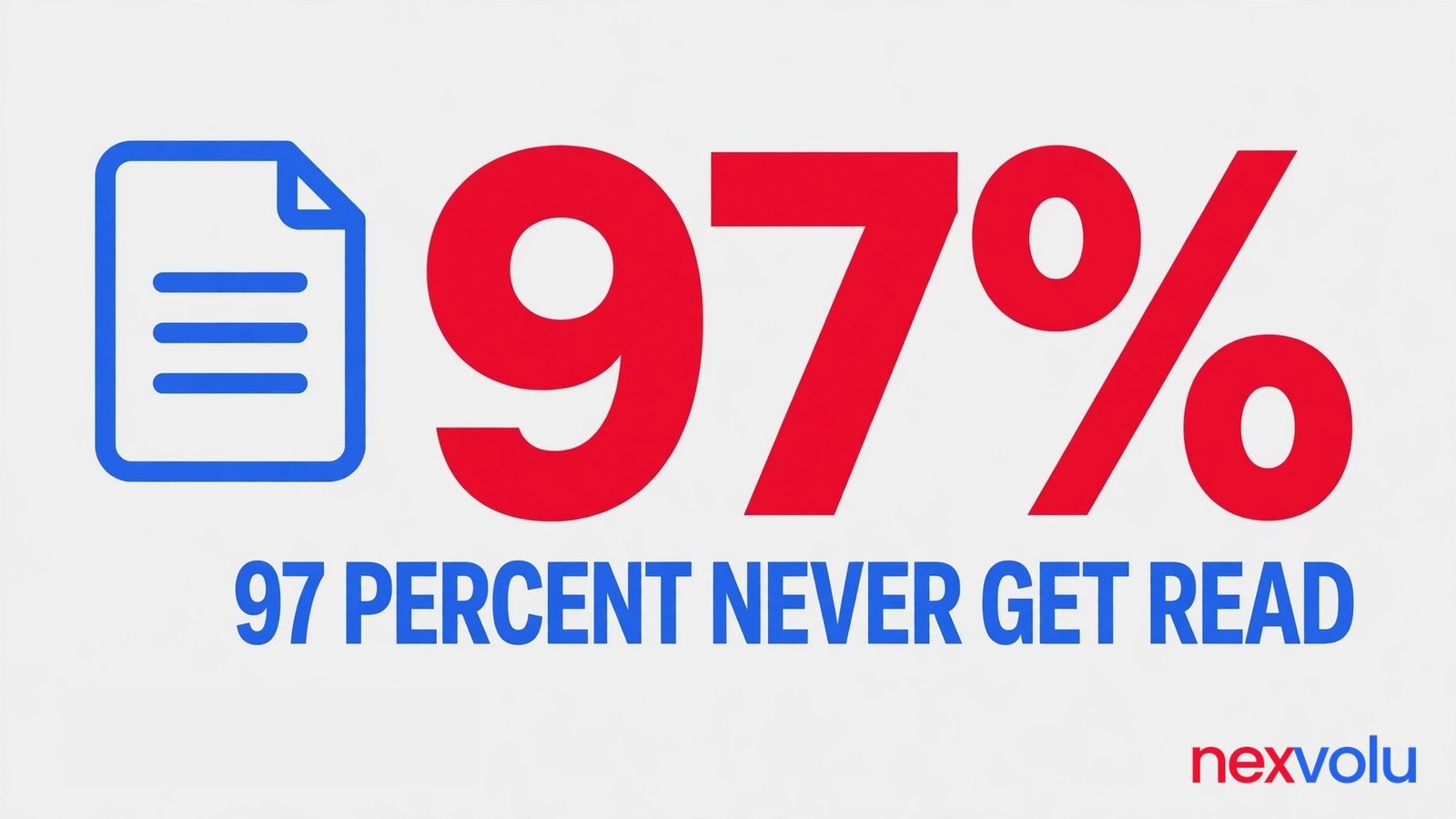
Then look at the server logs. Ahrefs studied 137,210 domains in May 2026 and published the results in June 2026. About 28 percent of those domains published an llms.txt file, and 97 percent of those files received zero requests in the whole month.
Of the 3 percent that did get traffic, the crawlers that fetch pages for live AI answers sent only 1.1 percent of requests, about 233 in total. SE Ranking reached the same verdict across about 300,000 domains, finding no link between having the file and how often a domain got cited.
How to get cited by ChatGPT: why add an llms.txt file
So why add one at all? Two reasons survive the evidence. First, developer tools and AI agents do read it.
For example, Cursor uses it. The OpenAI Agents SDK uses it. Anthropic agent guidance recommends it.
Second, it costs 20 minutes and forces you to decide which five pages matter most. Write it and publish it, then forget about it. Do not pay anyone to optimize it, and do not let it jump the queue ahead of steps one through seven.
A good file has five links at most. Link your homepage and your pricing page. Add your most useful guide and your contact page.
Add one page that proves you do the work, like a case study or a customer story page. Write one sentence under each link saying what the page answers.
What is hype
However, most AEO advice is unproven, and the field moves too fast for any guide, including this one, to stay right for long. These are the claims to treat with the most doubt.
For example, schema markup as a citation lever has no study behind it. The GEO paper tested text edits. It never tested schema, FAQ blocks, or summary boxes.
In fact, Google says structured data is not required for AI features and no special schema exists for them. Add Organization and Article schema because it is good practice.
A fixed number of FAQs per page has no study behind it either. FAQPage schema belongs on a page only when the questions and answers are visible on the page, and only when buyers actually ask those questions. Five invented questions do nothing. Three real ones, written the way buyers phrase them, do the work in step four.
Keyword stuffing is the one tactic with a measured negative result. The GEO paper found it cut visibility by 8 percent on its benchmark. Repeating the phrase “how to get cited by ChatGPT” in every paragraph teaches the engine that your page reads like spam. Use the phrase where it fits, then use close phrasing after that.
How to get cited by ChatGPT: refuse paid mentions and score tools
Paid mentions and link schemes deserve a flat refusal. A citation you bought is a citation that can vanish when the seller gets caught, and it teaches the engine nothing about your business. Spend the money on a useful guide or a customer story instead.
In addition, AEO score tools deserve doubt too. No outside tool can see how ChatGPT or Perplexity picks sources. These systems do not publish their weights, and their behavior changes without notice. A tool can count your headings and check your robots.txt, but it cannot tell you your citation probability.
The short version is simple. Two studies with real measurements support four moves.
Let crawlers in. Lead with the answer. Cite sources with numbers and quotes. Write question headings.
How to get cited by ChatGPT: a 30 day plan for one person with no budget
Week one is access and measurement. Check robots.txt and your firewall rules. Run the five buyer questions through ChatGPT and Perplexity in fresh chats and write down where your business appears today.
Week two is rewriting. Take one page a day and rewrite its opening so the answer sits in the first paragraph with a number or a named source. Turn its headings into buyer questions.
Week three is entity work and outside mentions. Fix your business name and description so they match everywhere. Email two suppliers and one trade body. Email one happy customer and ask for a review that names the work you did.
Week four is the llms.txt file and a second measurement. Write the file with five links and publish it. Then run the same five questions again. Record what changed, then pick the next five pages and repeat the cycle.
How to get cited by ChatGPT: questions small business owners ask
How long does it take to get cited by ChatGPT? No study gives a timeline, and anyone who quotes one is guessing. The work in this guide takes about a month to implement on five pages. Measure weekly and judge the trend over two to three months, not the result of one week.
Does ranking first on Google guarantee a ChatGPT citation? A top ranking helps but it guarantees nothing. AirOps found pages at position one got cited 43.2 percent of the time. A top ranking puts your page in the retrieval set, and the citation still depends on what the page says and where it says it.
Should a small business hire an AEO agency? Only after you finish the steps in this guide yourself. An agency cannot fix a blocked crawler or a buried answer faster than you can.
Do I need to be on every AI engine? Pick the engine your buyers use. Perplexity gives a small business more room because it cites more sources per answer. ChatGPT gives fewer citations and rewards brands it already knows.
How to get cited by ChatGPT: start with the page that already ranks
Open your analytics, find the page that already brings in search traffic, and rewrite its opening today. One page, one answer, one number, one source. That is the cheapest test in this whole guide, and it tells you within weeks whether the front-loading pattern works for your niche. Then do the next page.
Related reading
- Search Console Generative AI Report: What It Shows and What to Do Next
- How to Fact-Check AI Answers Before You Trust Them
- How to Write Better AI Prompts for Marketing Work
- Crawled, Currently Not Indexed: What It Means and How to Fix It
Sources
- Aggarwal et al, GEO: Generative Engine Optimization, KDD 2024, arXiv 2311.09735
- Search Engine Land, 44% of ChatGPT citations come from the first third of content, February 18 2026
- AirOps, ChatGPT retrieval and citation study
- Linehan, Ahrefs, We Analyzed 137K Sites: 97% of llms.txt Files Never Get Read, June 15 2026
- Google, Optimizing your website for generative AI features on Google Search, May 15 2026, updated June 15 2026, summarized by Kompozy
- SE Ranking llms.txt study of about 300,000 domains, summarized by WebYes
- LaunchCodex, How ChatGPT actually picks sources
- AuthorityTech, AEO checklist, 2026 research
- Sprites, Answer Engine Optimization (AEO): The 2026 Playbook
Sobia Aslam writes about AI and digital marketing for small businesses, with a focus on tested advice over hype. Read more at nexvolu.com